Text Info Strip

Kyle Simmonds Crowned Overall Division 1 SACA MVP

The 2025/26 domestic cricket season concludes with Western Province all-rounder Kyle Simmonds named Division 1 Overall SACA MVP. Simmonds earned…

Read More

Liam Alder Named Overall SACA MVP for Domestic Division 2

Following the completion of all domestic fixtures, Liam Alder of the Garden Route Badgers finished at the top of the…

Read More

TWELVE YEARS OF RESEARCH-BASED PLAYER SERVICE

Over the past 12 years, the South African Cricketers’ Association (SACA) has cemented its dedication to evidence-based practice through a…

Read More

ICC CRICKET COMMITTEE MEETING OUTCOMES


International Cricket Structure


The committee received a presentation on ICC’s plans to bring greater structure and context to international cricket by creating dedicated competitions in each of the game’s three formats, and there was unanimous agreement from committee members that the current structure of international cricket needed to change.

The committee was very supportive of the efforts to widen the audience for Test cricket across all member countries, and acknowledged the success of the inaugural day-night Test between Australia and New Zealand in Adelaide.

It stressed, however, that day-night Test cricket needs to be delivered to a consistently high standard across all member countries if the concept is to be successful, noting that the combination of ball, pitch, lighting levels and environmental conditions needed to allow for an even contest between bat and ball at all proposed day-night Test venues.

The committee also discussed a number of other issues relating to Test cricket, believing a coordinated approach to the marketing of Test cricket was needed, and also expressing concern about the quality of Test pitches, and in particular the common practice of home countries overtly preparing surfaces to suit their own teams.


Use of Technology

The ICC Cricket Committee had a long discussion about the future use of technology in international cricket, and particularly umpiring, after receiving a presentation from the MIT engineers on their testing of the current technologies used as part of the Decision Review System (DRS).

The presentation covered the performance of edge-detection systems (both heat-based and sound-based systems), and ball-tracking with predictive path, highlighting the strengths and weaknesses of each type of technology, and how each could contribute to increasing the number of correct decisions made across international matches.

The presentation was positively received, and the committee believed that the ICC needs to take a more prominent role in the management of the DRS technologies used in international cricket, by firstly establishing a structure and tighter processes to approve new technologies, and then to ensure a more consistent application of the technologies used from match to match.

A detailed report, along with a list of recommended changes to DRS protocols will be finalised over coming weeks and presented to the ICC Chief Executives’ Committee and Board meetings at the end of June.


MCC research into the balance between bat and ball

 MCC sought the committee’s guidance on the desirability of making changes in order to redress the balance between bat and ball. The Committee received a research paper from MCC citing a wealth of scientific and statistical evidence showing bats have become more powerful in recent years, primarily due to having larger ‘sweet-spots’.

The committee’s view was that MCC should strongly consider limiting the dimensions of cricket bats to help achieve a better balance between bat and ball.


Concussion substitute

 The committee considered a proposal from Cricket Australia for a “concussion substitute” to be trialled for two years in domestic first-class cricket.

The committee acknowledged the seriousness of the issue of concussion in cricket, and stressed the need for consistent concussion policy to be implemented in all countries, but its view was that the current Laws and playing conditions allow players to receive the best possible medical treatment, and further change to the regulations in this area is not required at present.


Helmet safety

The committee considered the matter of helmet safety following a presentation on injury surveillance trends by ICC medical consultant Dr Craig Ranson. The committee expressed concerns that there were still too many instances of international cricketers wearing helmets which did not meet the latest British Safety Standard (BSS).

It recommended that the ICC should enforce the wearing of the latest BSS compliant helmets in all international cricket.


Suspect illegal bowling actions

The committee noted considerable progress in policing suspect actions in international cricket and encouraged all countries to continue their efforts to screen bowlers in domestic competitions before they reached international level.


Women’s cricket update

The committee received a report from Clare Connor, the Chair of the ICC Women’s Committee, on the impact of the recent ICC Women’s World Twenry20 in India, which showed the women’s event received greater exposure than ever before and attracted 24.5 million TV viewers in India alone, as well as generating an average audience of 100,000 in the USA on Willow TV.

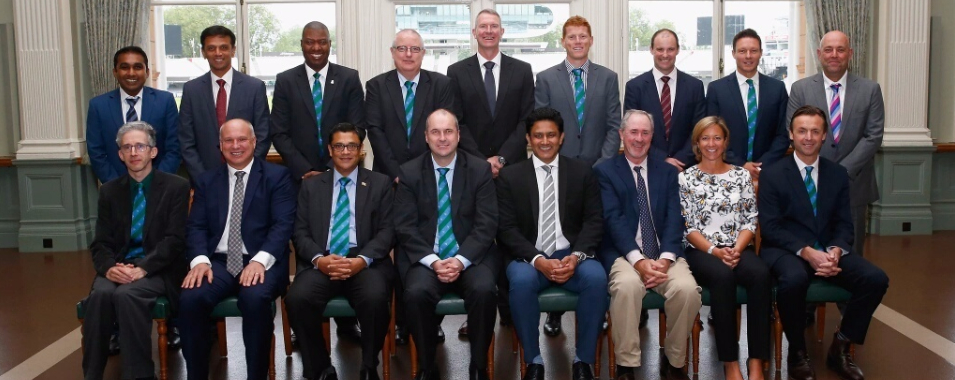
The Chairman of the ICC Cricket Committee Anil Kumble said: “We have had positive and constructive discussions across a wide range of different issues and I would like to thank all the members for their valuable contributions and input.

“The main thing that came out of the meeting was regarding Test cricket. The new structure was discussed and everybody was positive and forthcoming in supporting that. The committee acknowledged the importance of efforts being made to promote and grow Test cricket, be it through the introduction of meaningful competition structures, better pitches and marketing.

“Our recommendations will now be taken forward to the next ICC Chief Executives’ Committee and the ICC Board meeting in Edinburgh in July.”
Share:

Text Info Strip

PLAYERS VOICE THEIR CONCERNS OVER DAY-NIGHT TEST MATCH

AB de Villiers, South Africa’s Test captain, has voiced concerns over the day-night match in Adelaide and has suggested that a few Australia players may also be reluctant to go ahead with the game.

The third Test of the series between Australia and South Africa has been allotted to Adelaide between November 24 and 28, according to the 2016-17 summer fixtures released by Cricket Australia, but there is no confirmation yet on whether this will be a day-night game. With the possibility of a No. 1 Test ranking at stake in the match, de Villiers said that that a day-night game could be “fundamental change” to the itinerary.

“At the moment, we are not too keen on playing in the proposed day-night Test match due to a few concerns that have come from a number of sources involved in the maiden Test played last year,” he told Independent Media. “We had a meeting with Steven Smith and some of the Australian players when they toured here earlier this year, and the consensus from our talks were that there are just too many unknowns. Players from both teams were reluctant to go ahead with it.

“South Africa and Australia have a great cricketing rivalry, and this is a series that we value. We could well be playing for an opportunity to regain the No.1 Test ranking, so playing a day-night match is a fundamental change to the itinerary.

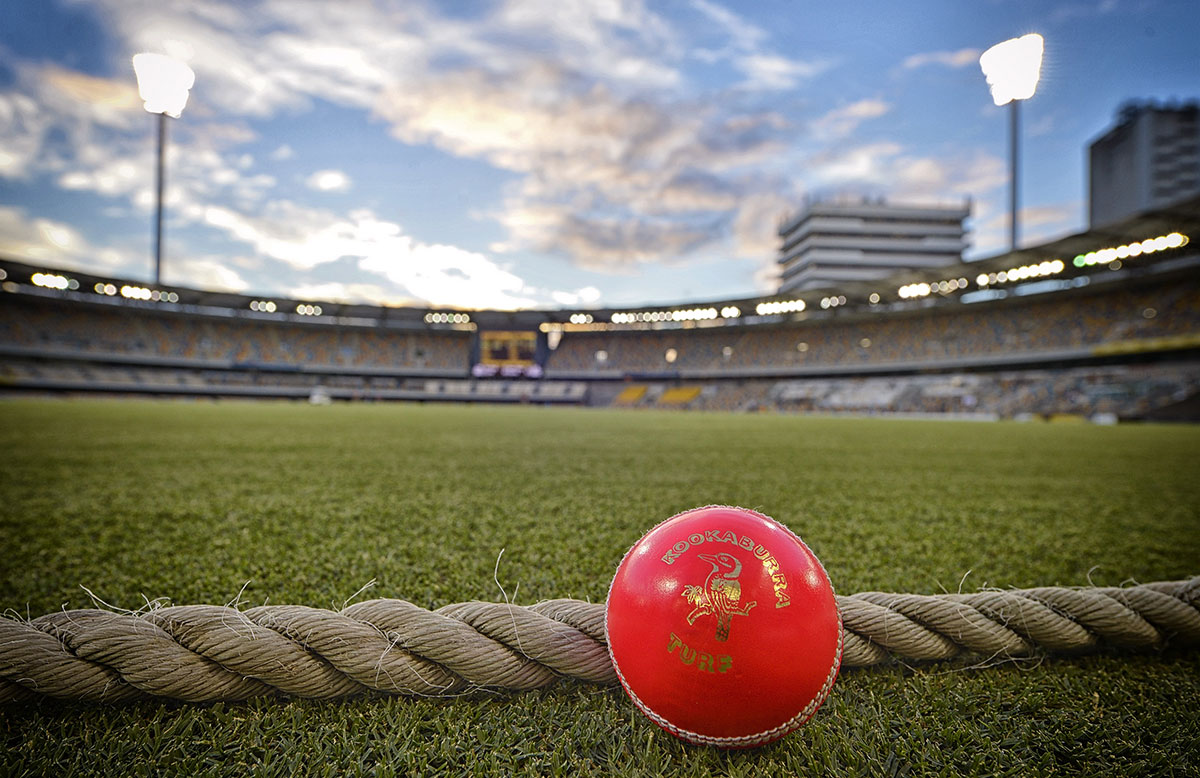
The first ever day-night Test, between Australia and New Zealand in Adelaide last year, was dominated by quick bowlers and ended in three days with a three-wicket win for the hosts. De Villiers raised doubts about the durability of the pink-ball used in the format, and said that alterations to the pitch, to reduce wear and tear on the ball, were also a significant factor.

“The pink ball has had some issues with how it responds to 80 overs of Test cricket and that is one of the key issues that we feel plays a big role in the success of the day-night Test,” De Villiers said. “The pitch also had to be ‘doctored’ to minimise the abrasive wear and tear to the pink ball, which seems to happen quicker than the red ball, and this is also an area we feel is a big factor in the run of play.”

De Villiers did not believe that a practice match could help his side adjust to the pink ball: “I don’t think it (warm-up game) will. I don’t think it’s something that you acclimatize to in one match and the intensity of an international cricket match also brings in other factors which are hard to replicate in a warm-up match.”

South Africa fast-bowler Dale Steyn, meanwhile, said he is keen to play a day-night Test in his career. “I don’t want to go through my whole career without playing a day-night game,” Steyn told cricket.com.au in Rajkot where he is playing the IPL . “How cool are they? I thought it looked awesome when New Zealand and Australia played one. It looked entertaining, there was a big crowd. The ball is pink – it’s something different. You want to test your skills with that whole thing and it’s very exciting.”

Share:

Text Info Strip

MCC wants change on ‘umpire’s call’ lbws

The MCC World Cricket Committee has welcomed the development of technology that could allow the third umpire to call no-balls, and it has also recommended that fielding teams should not lose a review for lbw decisions in the “umpire’s call” zone. The committee has also commissioned a report into the balance between bat and ball, and specifically highlighted the quality and size of modern bats as an area of concern.

It was the World Cricket Committee, an independent think-tank made up largely of former international cricketers, that six years ago recommended serious consideration be given to playing day-night Tests. The current committee, chaired by Mike Brearley, met this week in Adelaide in the lead-up to the inaugural day-night Test between Australia and New Zealand, and technology was a key part of the discussion.

“The committee received a report from Simon Taufel on technology designed to allow front foot no-balls to be monitored by the third umpire,” the World Cricket Committee said in a statement. “It felt that a fast, automated system for the calling of front-foot no-balls would be a welcome enhancement to the game.

“The committee also debated the ‘umpire’s call’ for lbws and felt there should be no loss of a review for the fielding side if the ball is shown to be clipping the stumps in the umpire’s call zone; this could then allow the removal of the reallocation of two reviews after 80 overs.”

The committee also discussed whether there should a be a limit to the size of the edges and overall depth of cricket bats. It said that the dimensions and quality of bats had started to distort the game but recognised that other elements such as boundary sizes, shot selection, player fitness, quality of pitches and behaviour of balls also played a part.

“It was decided that further game-wide consultation is needed and has commissioned a report to be written and brought back to the committee for its next meeting, at Lord’s, in July 2016,” the committee said.

It also said it would monitor the success of the ECB’s recently-announced trial in which the away team will be given first chance to bowl first in county matches, and the toss will only take place if they decline to take the bowl-first option. If such a change made it to Test cricket it could alter the dynamics of home-ground advantage; the committee said it was concerned that too much advantage currently sat with the home team.

“The MCC World Cricket committee is concerned that home advantage in Test Cricket now carries too much significance,” it said. “In the last three years, over 70% of Test victories have been achieved by the home team.

“There are other factors contributing to this trend, such as shorter tours and a lack of adequate player preparation in local conditions, but there are indications that pitches are increasingly being prepared to suit the home team. The committee would like to see a game-wide agreement that ground authorities be left alone to produce pitches that reflect local conditions whilst encouraging a fair balance between bat and ball.”

And, not for the first time, the committee expressed its strong desire for a World Test Championship to take place in an effort to provide greater context for all international cricket. Most ODIs should also count towards qualification for the next World Cup, the committee said.

“The committee believes that the game needs to address these issues as a priority,” it said. “In so doing so, more thought needs to be given to how the game to distinguish and market the three formats to ensure that they complement each other in a highly competitive market place.”

Share: