Text Info Strip

Kyle Simmonds Crowned Overall Division 1 SACA MVP

The 2025/26 domestic cricket season concludes with Western Province all-rounder Kyle Simmonds named Division 1 Overall SACA MVP. Simmonds earned…

Read More

Liam Alder Named Overall SACA MVP for Domestic Division 2

Following the completion of all domestic fixtures, Liam Alder of the Garden Route Badgers finished at the top of the…

Read More

TWELVE YEARS OF RESEARCH-BASED PLAYER SERVICE

Over the past 12 years, the South African Cricketers’ Association (SACA) has cemented its dedication to evidence-based practice through a…

Read More

DU PLESSIS TO MISS OPENING TEST

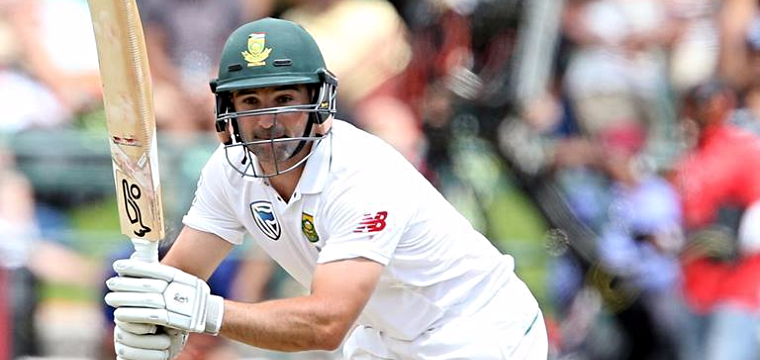
Standard Bank Proteas test captain, Faf du Plessis will miss the opening Test against England at Lord’s to remain with his wife after the birth of their first child. Dean Elgar will stand in as captain, leading South Africa for the first time.

Du Plessis will rejoin the squad later in the week to prepare for the second Test at Trent Bridge which begins on July 14.

In du Plessis’ absence, South Africa look set to pick Theunis de Bruyn ahead of newcomer Aiden Markram, who was included in the squad as cover for du Plessis. De Bruyn was preferred over Markram in the tour match at New Road last week, and made his debut in South Africa’s most recent Test against New Zealand after Stephen Cook was dropped from the opening berth. De Bruyn scored 12 runs in the match and selection convener Linda Zondi confirmed that when the batsman was reconsidered for a Test spot it would not be as an opener. This is, therefore, an opportunity to blood him in the middle order.

“Theunis played the one Test match in New Zealand. There’s been a sense of fairness to players,” Russell Domingo, South Africa’s coach, said. “We haven’t really discarded a player after one Test match, or two or three innings. At the moment he would be ahead in the pecking order, ahead of a guy like Aiden.”

Even if Markram is made to wait, South Africa will still have at least one newcomer to the XI come Thursday. Heino Kuhn is set to partner stand-in skipper Elgar at the top of the order which means half of South Africa’s top four will be fairly inexperienced. Hashim Amla, with 103 Test caps, will bat at No.3 with Temba Bavuma and JP Duminy at No.5 and 6 respectively.

South Africa can call on seniority in the bowling department, though. Vernon Philander was passed fit after sustaining an ankle injury during a county stint at Sussex. His availability was particularly pleasing to Domingo, who regards Philander as among the tougher prospects for batsmen.

“Vernon is a fantastic bowler for us. He is probably the hardest bowler to face in our side and when he is not there, we tend to struggle a little but because he gives us that control but also gives us the cutting edge if there is something in the wicket and also balances our side with his batting. He is a fantastic cricketer.”

Philander will form part of a three-pronged pack alongside Kagiso Rabada and Morne Morkel. Duanne Olivier, Chris Morris and Andile Phehlukwayo are the reserves.

With the focus on the make-up of their own XI as they “try to find out what the best combination is,” as Domingo put it, South Africa have not spent too much time weighing up their opposition. Like South Africa, England are under a new captain in Joe Root – although his is a permanent appointment – and Domingo suggested his side would look to a test a top order which continues to be juggled around.

“We haven’t looked too closely at their side. Ben Stokes, Joe Root, Alastair Cook, Stuart Broad, James Anderson are five seriously experienced players who are all match winners in their own right. They are a good side but they’ve also got some uncertainties,” Domingo said. “There’s a new opening batter in Keaton Jennings who has only played a handful of Tests and Gary Ballance has come back into the side. There are certain areas where they may be a little uncertain about that we want to expose.”

Share:

Text Info Strip

PROTEAS WIN SERIES AFTER RAIN WASHES OUT FINAL DAY’S PLAY

Rain was the winner on the final day of the Standard Bank Proteas’ international season as an abandoned final day of the third Test against New Zealand meant they finished with a draw at Seddon Park in Hamilton on Wednesday.

The result also ensured South Africa won the series 1-0 thanks to their eight-wicket win in the second Test in Wellington, while it ended a dream summer – they won every series – in second place on the ICC rankings, having started it in seventh back in August last year.

But it was a disappointing end to the tour for the Black Caps after they held all the aces heading into day five, only to be denied by the weather.

Over 50 mm of rain reportedly fell in the period between stumps on day four and lunch on day five, starting with heavy overnight downpours that left the ground drenched.

Despite the rain stopping for periods, it seemed to return each time the mop-up operation was underway, leaving umpires Bruce Oxenford and Rod Tucker with little choice but to call off proceedings.

The Proteas had their backs to the wall going into the last day on 80/5 in their second innings and still trailing by 95 runs. All hope rested on captain Faf du Plessis and Quinton de Kock, both on 15, but they were not required to continue their innings.


Share:

Text Info Strip

ELGAR LEADS PROTEAS REVIVAL

Dean Elgar struck one of the finest centuries for his country to help the Standard Bank Proteas fight back from early trouble to end day one of the first Test against New Zealand with honours even at the University Oval in Dunedin on Wednesday.
 
The left-hander showed nerves of steel as he batted through the day to end unbeaten on 128 (262 balls, 22 fours) – South Africa reaching stumps on 229/4.
 
Elgar’s seventh career century was his second-longest in terms of balls, with the highest being the 316 deliveries he faced for 127 against Australia in Perth last year. It also came on the back of the tourists being in a huge hole at the start after they slipped to 22/3 in the first 19 overs against a disciplined Black Caps attack. Faf du Plessis (52 off 118 balls, 7 fours) and Temba Bavuma (37 not out) were also integral to the recovery.
 
The visiting captain won the toss at the start and took the rare option to bat first, the first time such a decision had been made in 22 Test matches in New Zealand – the last being in a clash between the hosts and Pakistan in Wellington during 2011. But it looked a questionable call as Stephen Cook (3), Hashim Amla (1) and JP Duminy (1) were all dismissed early, the latter pair removed within the space of five Neil Wagner (2/59) deliveries.
Elgar, who was dropped by wicketkeeper BJ Watling on 36, and Du Plessis then dug in as they put on 126 for the fourth wicket to give the innings a significant boost.
 
After the skipper fell to Jimmy Neesham (1/29), Bavuma proved the perfect foil with a typically determined 101-ball knock that enabled a further 81 to be added to the total with the visitors ending the day in the ascendancy.
Share:

Text Info Strip

PROTEAS WOMEN PREPARE FOR NZ SERIES

The Momentum Proteas have spent the past this week at the Cricket South Africa Centre of Excellence in Pretoria as they begin final preparations for two big tours against New Zealand and Australia in the coming months.

The 18-women contingent met for a camp that will see a final 15 chosen for the seven-match One-Day International series against New Zealand’s White Ferns beginning on 8 October in Kimberley. The first three matches form part of the ICC Women’s Championship, the qualifying competition for next year’s ICC Women’s World Cup.

The country’s national women’s team are coming off a successful tour of Ireland where they comfortably won a ODI series 3-1 and drew their two-match T20 sequence.

They will boast a full-strength squad when they face New Zealand.

“For us it’s actually been a good week so far,” coach Hilton Moreeng said. “We have a lot of fringe players in the squad, all the players from the KIA League as well as all the players from the Ireland tour where a lot of learning happened (are here).

“I think for us it was important to touch base with each and every player to make sure we sharpen our skills because we’ve got two tough tours coming.”

“As far as the ICC challenge is concerned, we need to make sure we win these tours in order to qualify in the top four.”

The Momentum Proteas are currently fifth in the race for the World Cup, only a point behind New Zealand, which makes their meeting even more important.

Moreeng also reflected on the trip to Ireland.

“It was very encouraging, especially if you see how the youngsters carried themselves in very tough conditions,” he continued. “I don’t think anyone in the team (under normal circumstances) experiences those sort of conditions when it’s wet, rainy and cold, so those sort of conditions took some getting used to. The players were put out of their comfort zone and how they came across and the results we got from some of these players was very good.”

“One of the things that was very positive was how our batters applied themselves on those difficult wickets. It shows with the records that were broken on the tour.

“As a team, I think we are developing and maturing. We’re moving in the right direction and it shows that we’re slowly getting where we want to be as far as the depth is concerned.”

With so many players putting their hand up in the absence of the star names, it has also brought about a selection headache for the selectors.

“We have to look at everything that has transpired in the last two months. I think we had a good winter where all the contracted players and fringe players here, about 18 of them whom we worked with daily in the National Academy over the winter,” Moreeng added.

“The results showed. It’s important to take that going into the New Zealand tour where the first three games are extremely important, but we’ll take it one game at a time.

“It’s always difficult when you’re playing a home series regarding the pressure that you have to deal with, but mentally, I think the girls are in a good place.

“The intensity and work we’ve done this week has been very impressive, so we’re very happy with where the squad is as a whole. We can’t wait to get started.”

Share:

Text Info Strip

ICC CRICKET COMMITTEE MEETING OUTCOMES


International Cricket Structure


The committee received a presentation on ICC’s plans to bring greater structure and context to international cricket by creating dedicated competitions in each of the game’s three formats, and there was unanimous agreement from committee members that the current structure of international cricket needed to change.

The committee was very supportive of the efforts to widen the audience for Test cricket across all member countries, and acknowledged the success of the inaugural day-night Test between Australia and New Zealand in Adelaide.

It stressed, however, that day-night Test cricket needs to be delivered to a consistently high standard across all member countries if the concept is to be successful, noting that the combination of ball, pitch, lighting levels and environmental conditions needed to allow for an even contest between bat and ball at all proposed day-night Test venues.

The committee also discussed a number of other issues relating to Test cricket, believing a coordinated approach to the marketing of Test cricket was needed, and also expressing concern about the quality of Test pitches, and in particular the common practice of home countries overtly preparing surfaces to suit their own teams.


Use of Technology

The ICC Cricket Committee had a long discussion about the future use of technology in international cricket, and particularly umpiring, after receiving a presentation from the MIT engineers on their testing of the current technologies used as part of the Decision Review System (DRS).

The presentation covered the performance of edge-detection systems (both heat-based and sound-based systems), and ball-tracking with predictive path, highlighting the strengths and weaknesses of each type of technology, and how each could contribute to increasing the number of correct decisions made across international matches.

The presentation was positively received, and the committee believed that the ICC needs to take a more prominent role in the management of the DRS technologies used in international cricket, by firstly establishing a structure and tighter processes to approve new technologies, and then to ensure a more consistent application of the technologies used from match to match.

A detailed report, along with a list of recommended changes to DRS protocols will be finalised over coming weeks and presented to the ICC Chief Executives’ Committee and Board meetings at the end of June.


MCC research into the balance between bat and ball

 MCC sought the committee’s guidance on the desirability of making changes in order to redress the balance between bat and ball. The Committee received a research paper from MCC citing a wealth of scientific and statistical evidence showing bats have become more powerful in recent years, primarily due to having larger ‘sweet-spots’.

The committee’s view was that MCC should strongly consider limiting the dimensions of cricket bats to help achieve a better balance between bat and ball.


Concussion substitute

 The committee considered a proposal from Cricket Australia for a “concussion substitute” to be trialled for two years in domestic first-class cricket.

The committee acknowledged the seriousness of the issue of concussion in cricket, and stressed the need for consistent concussion policy to be implemented in all countries, but its view was that the current Laws and playing conditions allow players to receive the best possible medical treatment, and further change to the regulations in this area is not required at present.


Helmet safety

The committee considered the matter of helmet safety following a presentation on injury surveillance trends by ICC medical consultant Dr Craig Ranson. The committee expressed concerns that there were still too many instances of international cricketers wearing helmets which did not meet the latest British Safety Standard (BSS).

It recommended that the ICC should enforce the wearing of the latest BSS compliant helmets in all international cricket.


Suspect illegal bowling actions

The committee noted considerable progress in policing suspect actions in international cricket and encouraged all countries to continue their efforts to screen bowlers in domestic competitions before they reached international level.


Women’s cricket update

The committee received a report from Clare Connor, the Chair of the ICC Women’s Committee, on the impact of the recent ICC Women’s World Twenry20 in India, which showed the women’s event received greater exposure than ever before and attracted 24.5 million TV viewers in India alone, as well as generating an average audience of 100,000 in the USA on Willow TV.

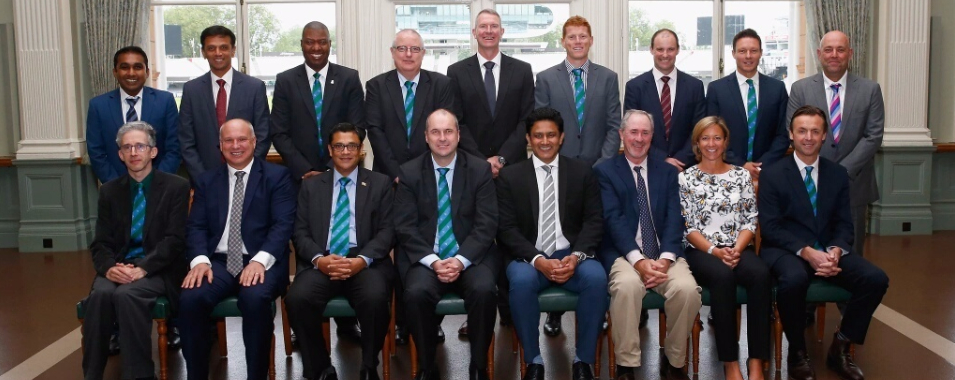
The Chairman of the ICC Cricket Committee Anil Kumble said: “We have had positive and constructive discussions across a wide range of different issues and I would like to thank all the members for their valuable contributions and input.

“The main thing that came out of the meeting was regarding Test cricket. The new structure was discussed and everybody was positive and forthcoming in supporting that. The committee acknowledged the importance of efforts being made to promote and grow Test cricket, be it through the introduction of meaningful competition structures, better pitches and marketing.

“Our recommendations will now be taken forward to the next ICC Chief Executives’ Committee and the ICC Board meeting in Edinburgh in July.”

Share:

Text Info Strip

PROTEAS SLIP DOWN THE ICC TEST RANKINGS

Australia have opened up a six-point gap over India at the top of the ICC Test team rankings. This follows the annual update with the results from 2012/13 no longer included in the calculations and outcomes from the 2014/15 series weighted at 50 percent.

India now lead third-placed Pakistan by just one point. Pakistan have benefitted from the annual update as defeat against South Africa, 3-0, in 2012/13 no longer counts, while the 2-0 loss to Sri Lanka in 2014/15 has its weighting reduced to 50 percent.

The annual Test update has resulted in South Africa dropping from third position to sixth after conceding 17 points. This is due to South Africa’s victories over England, Australia, New Zealand and Pakistan in 2012/13 all being dropped from the rankings calculations.

The annual update has also affected the West Indies, who have retained their eighth position but have dropped from 76 points to 65 points. This is because their victories over New Zealand, Bangladesh and Zimbabwe in 2012/13 have all been dropped from calculations.

The gap between the West Indies and ninth-ranked Bangladesh has been slashed from 29 points to just eight points.

With Sri Lanka and Pakistan set to visit England for three and four Tests respectively, Australia travelling to Sri Lanka in July for three Tests and South Africa hosting New Zealand in August for two Tests, the series outcomes may well result in significant movements on the team rankings.


Share:

Text Info Strip

ICC World T20 INDIA 2016 SCHEDULE ANNOUNCED

The International Cricket Council (ICC) on Friday announced the groups and schedule of the ICC World Twenty20 India 2016, which will be staged across eight venues in India from 8 March to 3 April.

A total of 58 tournament matches, including 35 men’s matches and 23 women’s matches, will be played in the 27-day tournament in Bengaluru, Chennai, Dharamsala, Kolkata, Mohali, Mumbai, Nagpur and New Delhi. New Delhi and Mumbai will host the semi-finals on 30 and 31 March, respectively, while Eden Gardens in Kolkata will be the venue of the 3 April finals. The women’s semi-finals and final will be followed by the men’s knock-out matches. There is a reserve day for the finals.

The men’s event will carry a total prize money of $5.6million, which is an 86 percent increase from the 2014 tournament, while the total prize money for the women’s event is $400,000, which is a 122 percent increase from the Bangladesh event.

There have been five different winners of the men’s event while the England women’s team won the inaugural tournament at home in 2009 before Australia won three straight titles in the West Indies, Sri Lanka and Bangladesh in 2010, 2012 and 2014, respectively.

According to the men’s event format, eight sides in two groups of four, will feature in the first round matches with the group winners joining eight sides in the Super 10 stage (two groups of five teams). The top two sides from both the Super 10 Groups will then qualify for the semi-finals. In the women’s event, the 10 sides will be divided into two groups and the top two sides from each group will progress to the semi-finals.

The first round matches in the men’s event will take place in Dharamsala and Nagpur from 8-13 March and will feature Bangladesh, Netherlands, Ireland, debutant Oman (all in Group A), Zimbabwe, Scotland, Hong Kong and Afghanistan (all in Group B). In a double-header on the opening day on 8 March, Zimbabwe will face Hong Kong in the afternoon match, to be followed by the evening match between Scotland and Afghanistan. Both the matches will be played in Nagpur.

The group winners will join Australia, England, New Zealand, Pakistan, South Africa, Sri Lanka, West Indies and host India in the Super 10 stage, which will be played alongside the women’s event from 15-28 March.

Men’s defending champion Sri Lanka has been placed in Super 10 Group 1 along with South Africa, West Indies, England and the Group B winner. It will open its title defence against the Group B winner in Kolkata on 17 March, and play West Indies in Bengaluru on 20 March, England in New Delhi on 26 March and South Africa in New Delhi on 28 March.

Host India, which won the inaugural tournament in South Africa in 2007, is in Super 10 Group 2 along with 2009 winner Pakistan, Australia, New Zealand and the Group A winner. India will launch its campaign in Nagpur against New Zealand on 15 March, while it will go head to head with Pakistan in Dharamsala on 19 March. Its other matches will be against the Group A winner in Bengaluru on 23 March and Australia in Mohali on 27 March.

2009 champion Pakistan will take on the Group A winner in Kolkata on 16 March, before locking horns with traditional rival India in Dharamsala on 19 March. Its remaining two matches will be in Mohali against New Zealand and Australia on 22 and 25 March, respectively.

England, which won the 2010 tournament in the West Indies, takes on 2012 winner the West Indies in Mumbai on 16 March, followed by matches against South Africa (18 March in Mumbai), the Group B winner (23 March in New Delhi) and Sri Lanka (26 March in New Delhi).

After taking on England in its tournament opener, the West Indies will square off against Sri Lanka (20 March in Bengaluru), South Africa (25 March in Nagpur) and the Group B winner (27 March in Nagpur).

Meanwhile, in the women’s tournament, 2009 champion England is in Group B along with the West Indies, India, Pakistan and Bangladesh, and will start off against Bangladesh in Bengaluru on 17 March. Its other matches will be against India (22 March in Dharamsala), West Indies (24 March in Dharamsala) and Pakistan (27 March in Chennai).

Australia women, who will be bidding to win the title for the fourth straight time, is in Group A along with South Africa, New Zealand, Sri Lanka and Ireland. Their opening match will be against South Africa (18 March in Nagpur), followed by matches against New Zealand (21 March in Nagpur), Sri Lanka (24 March in New Delhi) and Ireland (24 March in New Delhi).

ICC Chairman Mr Shashank Manohar, who attended the launch ceremony in Mumbai, said: “India is a country where cricket is a religion and not many places can match the passion for the game like India. I am fully confident that the Board of Control for Cricket in India will deliver an outstanding world cricket event, just like the ICC Cricket World Cups in 1987, 1996 and 2011.

“The ICC and BCCI are fully committed and will work together to make this a memorable event. I invite fans from across the world to witness fast-paced cricketing action on the field and enjoy the hospitality and culture of India, off it.”

ICC Chief Executive David Richardson said: “The ICC World Twenty20 is an event which puts the world’s best cricketers in the shortest format of the game against each other in a nation versus nation contest.

“The Twenty20 format provides the perfect vehicle by which the ICC can further globalise the game, providing international exposure and opportunity to our top Associate and Affiliate members. The ICC World Twenty20 event structure is designed to provide highly competitive matches throughout, with eight evenly-matched sides fighting it out in the first round and the best two then getting in the mix with the top eight ranked teams in the Super 10 stage where the intensity and competition will be of the very highest level.”

BCCI Secretary Mr Anurag Thakur said: “We, as hosts, are fully prepared to organise one of the most entertaining spectacles in world cricket. We draw experience from hosting three ICC Cricket World Cups and are ready to make the ICC World Twenty20 India 2016 one of the most memorable events.

“Our preparations are in full swing, and BCCI and ICC is working together to make it a lifetime experience for the players and the fans. India is a vibrant country – young, full of colour, energy and exuberance – and is very much like the concept of Twenty20 cricket itself. We would encourage everyone involved with the game to experience the best of India.”

The ICC World Twenty20 trophy was also present at the ceremony before it leaves Mumbai for Scotland on Sunday, 13 December, as part of the Nissan Trophy Tour. The trophy will return to New Delhi on 1 February after visiting 11 countries.

Share: