
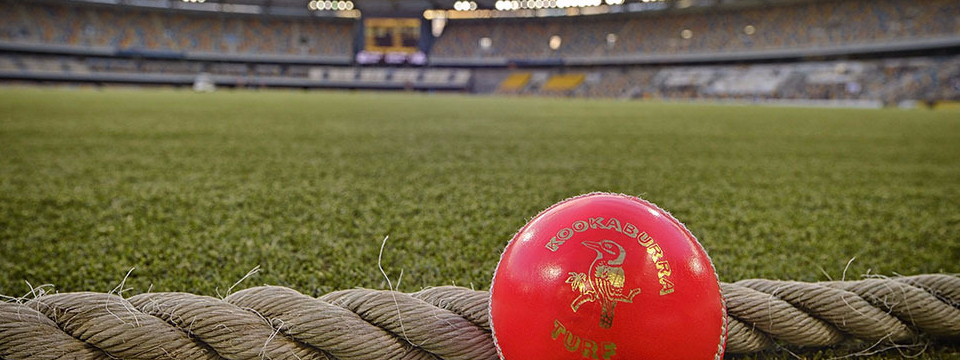
Following the inaugural day/night Test Match in Adelaide last week, FICA Executive Chairman, Tony Irish today made comment after consultation with players and conducting a player survey following the Test Match.
“It was good to see so many fans at the Adelaide Test Match and it was successful as an event, however, the pink ball experiment must be part of a bigger picture, and it alone is not the answer to making Test cricket the best it can be.” Irish said.
“Adelaide has historically been a well supported Test Match, and a social event. Players enjoy playing in front of big crowds, and it was a terrific atmosphere. What we saw in Adelaide is one aspect of a significant amount of work that needs to go into making the entire game compelling for spectators, players, and commercial partners. The structure of bilateral cricket, and of the game itself need to be addressed globally.”
“As representative body of players from 7 of the 10 test playing nations, FICA commends the players for their adaptability with a significant change to the game. We also recognise the amount of work that went into this game. FICA is supportive of innovations that can improve the spectacle and spectator interest, whilst maintaining the essence of the sport.” Irish continued.
“It is important to note however, that the change from the red to pink ball is significant. The players still have concerns around the ball itself, and one must take into account that the Adelaide Oval conditions were tailored to suit the pink ball and help it last. This led to results that were uncharacteristic for an Adelaide Test Match. Furthermore, questions also remain as to the suitability of day/night Test Matches in other parts of the world, where conditions are not as favourable as in Adelaide.”
In a post match player survey of twenty (20) players who played in the Match, some of the key results were:
- The pink ball did not show similar signs of wear and tear to the red ball (80%);
- The pink ball swung more than the red ball (80%), especially at night;
- The ball was not easy to see when batting or fielding at dusk (70%), and to a lesser extent at night (50%);
- The day/night conditions affected the length of the match (85%);
- Those who played were generally supportive of experimenting with day/night Test matches, but were strongly of the view that the ball still requires improvement.
“In trialling day/night Test matches, we are essentially adding another new format to the international cricket structure which already lacks clear and common direction as to the best interplay between formats, and the best way for players to balance the growing conflict in club versus country commitments.” Irish said.
“We know players value playing for their countries, and playing in events that have meaning and context. We also know how much they value the essence of Test cricket. With the advent of domestic T20 tournaments around the world, there is also now a growing alternative market to international cricket for the worlds best players.” Irish continued.
“The game must address its structure as a whole, and the players should be an integral part of planning and improving it in its entirety moving forward.”
“Cricket will be in the best position to grow if players are properly embraced as partners in the game.”