Text Info Strip

Kyle Simmonds Crowned Overall Division 1 SACA MVP

The 2025/26 domestic cricket season concludes with Western Province all-rounder Kyle Simmonds named Division 1 Overall SACA MVP. Simmonds earned…

Read More

Liam Alder Named Overall SACA MVP for Domestic Division 2

Following the completion of all domestic fixtures, Liam Alder of the Garden Route Badgers finished at the top of the…

Read More

TWELVE YEARS OF RESEARCH-BASED PLAYER SERVICE

Over the past 12 years, the South African Cricketers’ Association (SACA) has cemented its dedication to evidence-based practice through a…

Read More

FICA RESPONDS TO OUTCOMES OF ICC BOARD MEETING

Sanctioning of Events & Player Release

In light of recent developments cricket is in need of a regulatory framework which recognises all elements of the global game and which will be effective now and in the future. In establishing this framework, FICA believes that the following should be recognised:

1. International cricket and Domestic T20 are both good for the game and are integral parts of the game’s future.
2. Domestic T20 is growing the game globally with fans and providing opportunity for players. International cricket needs to be strong and attract the best players. Establishing an appropriate balance between the two is critical for the future.
3. Cricket’s focus should be less on restricting players from playing where they are valued and more on positive measures to ensure an attractive system including in relation to scheduling, economic models and the creation of world class environments.
4. The movement of players is a fundamental aspect of growing and developing the game globally in both existing and new markets.

FICA is concerned that the narrowly defined objectives for a regulatory framework published by the ICC will not set the game up appropriately for the direction in which it is moving. If regulation is not effective it will not have the desired outcome, so this is as important for the future of international cricket as it is for the entire game. FICA has proposed broader and additional objectives based on a global vision. FICA believes that objectives must also include reference to the players’ fundamental employment rights, including players being able to play where they are valued.

FICA is further concerned at reports following the ICC meetings that blanket regulation is to be introduced to restrict players to playing in three T20 leagues and believes that any arbitrary restriction is likely to constitute a restraint of trade in most countries. Any regulations should be designed to minimise the likelihood of successful legal challenge.

“FICA believes that a fit-for-purpose global regulatory framework is necessary,” said FICA Executive Chairman, Tony Irish. “We will however continue to oppose blanket or arbitrary restrictive measures imposed on players without agreement. We urge the ICC to resolve imbalances and tensions caused by the structure of the game, scheduling and game economics through positive measures which will also allow the game to grow globally. FICA wants to be part of this endeavour.”

Code of Conduct

FICA supports holistic measures to protect the spirit and integrity of the game.

The ICC has predominantly focused on increasing its ability to punitively punish players, to the exclusion of more holistic or industry-wide measures that FICA believes would be most effective. FICA is concerned that some of the ICC’s measures also reduce players’ access to a fair hearing which becomes even more important when punishments are significantly increased.

In developing the game’s response to the issue of player behaviour, FICA encourages the ICC to also consider mechanisms to ensure that cricket officials are also held to the same standard of behaviour as the players.

Elements of the more holistic measures which FICA has proposed include:

– Conducting a thorough collaborative review and simplification process to bring the Code of Conduct to life

– Adopting one set of laws, rules or charter for all players and officials

– Sanctions which focus on rehabilitation and education, not just punishment

 – Greater clarity, education and training regarding the Code and Spirit of Cricket for players and officials, including targeted campaigns, as have been successfully used in other sports

– Mechanisms to ensure greater consistency in the application of the Spirit of Cricket and Code of Conduct

Consideration of how the game deals with the principle of “double jeopardy” where an issue has already been dealt with under a global code

“FICA will continue to urge the ICC to look to these wider measures to effectively deal with conduct across the entire game,” said Irish.

Share:

Text Info Strip

FICA RESPONDS TO ICC MEDIA STATEMENT FOLLOWING KOLKATA MEETINGS

FICA commends the ICC on introducing T20I status for all member international teams. In line with FICA’s 2016 International Cricket Structural Review, FICA supports inclusiveness across the game and the view that T20 is one key vehicle to growing and globalising the game.

FICA notes that new minimum standards will be developed to ensure T20I is sustainable and affordable. FICA encourages that aim to be balanced with the need to ensure appropriate protections are in place for players and other stakeholders as the game grows in volume and prominence in more countries.

Future Tours Program (FTP)

FICA notes that a new FTP between 2019-2023 was signed off in Kolkata and commends the ICC for taking steps towards creating more context in some international cricket. FICA is concerned that it has not seen the FTP, and looks forward to clarification on:

How the formats relate to each other and operate in a global calendar that is easy to understand for fans and players alike; and
How scheduling for the next five years addresses the positive but relentless growth of domestic T20 and clear shifts in the player employment market, many of which were highlighted in FICA’s Men’s Employment Report 2017 released earlier this month
FICA continues to advocate for clarity and simplicity in the global cricket calendar, and a balance between new domestic T20 and traditional international cricket focused markets.

Regulations

FICA notes the formation of a working group to consider issues around ensuring international cricket remains attractive to players. It is hoped that this working group will appreciate the critical importance of engagement with players and their collective representatives in order to establish a workable framework. Clarity in the calendar, incentivisation, and a fit for purpose regulatory framework will be important for the game and players moving forward.

FICA continues to oppose arbitrary or restrictive regulations imposed on players that are not part of a collectively agreed framework.

Player Behaviour

FICA is supportive of collaborative processes to address issues in the game and is encouraged that the culture across cricket at various levels will be reviewed.

FICA is concerned that the main published focus of the ICC review appears to be stricter and heavier sanctions on players. The players are a product of the professional and organisational environments they operate in, and any global review and process should not simply focus on player sanctions. A genuinely collaborative negotiation of codes based on reciprocity with those who run the game, coordinated global education, and syncing of international and domestic processes where possible, will all be important to the success of overall measures.

Concussion

FICA welcomes the introduction of concussion guidelines and looks forward to further engaging with the ICC to ensure that guidelines are based on science, and enforceable consistent standards to ensure players around the world are protected by the game.

Cricket Committee

FICA congratulates Belinda Clark on her appointment to the Cricket Committee. FICA continues to urge the ICC to afford women’s players the same right that men’s players have to a player nominated representative on the Cricket Committee, or other appropriate body. In FICA’s latest global player survey, 100% of women’s players believe this should happen.

FICA Executive Chairman Tony Irish said: “The global game is at a stage where the player dynamic that exists between the traditional international cricket landscape and the T20 leagues landscape has become one of the key factors driving the direction of the game. Collaboration with players and their representatives has never been more important and will be vital to success in the implementation of some of the important outcomes of this round of ICC meetings.”

For further information, please contact media@thefica.com

Share:

Text Info Strip

FICA Establishes Player Advisory Committees

The Federation of International Cricketers’ Associations (FICA) today announced the establishment of its men’s and women’s Player Advisory Committees.

The committees, comprised predominantly of current senior international players nominated by their home players’ association, complement FICA’s ongoing program of structured engagement with its member players’ associations and players around the world, to ensure it is accurately representing collective player views and interests at the global level.

The committees will each hold a structured annual meeting via tele-conference and will also engage informally on a regular basis throughout the year. They will focus on both cricketing and employment related issues that affect players globally.

The committees will play a part in ensuring that players have a strong and unified voice on important issues at the top of the game.

The FICA Player Advisory Committees are:

Men’s  

Ross Taylor (New Zealand)         

Jason Holder (West Indies)

William Porterfield (Ireland)       

Shakib Al Hasan (Bangladesh)    

Aaron Finch (Australia) 

JP Duminy (South Africa)             

Kyle Coetzer (Scotland)

Kumar Sangakkara (Sri Lanka)    

Vikram Solanki (FICA President – England)           

Graeme Smith (FICA Independent Board Member – South Africa)            

Tom Moffat (FICA Chief Operating Officer)         


Women’s

Heather Knight (England)

Hayley Matthews (West Indies)

Alyssa Healy (Australia)

Dane Van Niekerk (South Africa)

Amy Satterthwaite (New Zealand)

Mary Waldron (Ireland)

Lisa Sthalekar (FICA Independent Board Member – Australia)

Tom Moffat (FICA Chief Operating Officer)

Commenting on the formation of the Player Advisory Committees:

Ross Taylor said:
“It’s important that player views are heard and contribute to the future of the game. Through FICA and our players’ associations, we want to continue to lead some thinking on important areas in the game and the formation of these committees is a great step for players collectively around the world.”

Dane Van Niekerk said:
“The committees are a great initiative and part of making sure that the players’ views contribute to decisions in the game.”

Lisa Sthalekar said:
“The women’s game is going from strength to strength and the players are a big part of that. It is essential the players collectively have a strong voice and are fairly and professionally represented as the game develops. I am looking forward to working with the committee as FICA continues to evolve its important role.”

Jason Holder said:
“This is a big part of ensuring player issues are discussed and genuinely represented globally and I’m looking forward to being involved.”

Share:

Text Info Strip

FICA RESPONDS TO THE ICC ANNOUNCEMENT OF NEW INTERNATIONAL COMPETITION STRUCTURES

The Federation of International Cricketers’ Associations (FICA) Responds to the International Cricket Council (ICC) Announcement of New International Competition Structures

Overall Cricket Structure

FICA acknowledges the amount of work that has been done, and that a step forward has been taken, by the ICC and various country Boards in formulating and agreeing a Test league and ODI league. FICA remains concerned however that, as part of the changes, the new overall cricket structure does not address existing weaknesses and imbalances in the global playing landscape, and the need to ensure an appropriate balance between international cricket and the domestic T20 leagues.

“Whilst some of what ICC has now agreed is positive, notably in regard to the ODI league, we feel that the game has missed a significant opportunity to provide real clarity and consistency to the overall global structure,” said Tony Irish, Executive Chairman of FICA.

“One of international cricket’s biggest challenges is the increasing prioritisation by players of T20 leagues ahead of international cricket and this can only be addressed by appropriate structural change. FICA’s 2016 International Cricket Structure Review (FICA International Cricket Structural Review ), which was shared with the ICC, is based on collective player views, player labour market data and player insights from around the world. It identified key areas which we, and the players, believe needed to be addressed as part of a much needed change in the global structure aimed at ensuring the health and viability of international cricket.”

“The introduction of Test and ODI leagues to create context and sporting narrative was one these but others include, for example, the removal of the inherent conflict for players between international cricket and domestic T20 leagues, balancing all three formats of the game, removing scheduling conflicts by adopting clear internationally recognised scheduling windows, adopting a centralised approach to potential innovations such as day/night and four day Tests and developing a clear pathway and meritocratic opportunity for developing nations. These really should have been addressed in one new structure.”

ODI League

FICA welcomes the introduction of the proposed ODI league and in particular the fact that the number of matches is clearly regulated to ensure the volume of cricket is controlled and that matches without context are not played outside the league structure.

“Although it’s not ideal that teams won’t play all other teams during the cycle the league is otherwise clear in its structure and regulation and it also provides meaningful opportunities to 13 teams,” said Irish. “We will still need to see how effective it is in feeding into the ICC Cricket World Cup.”

Test League

Whilst FICA acknowledges some context has now been introduced into Test cricket it is clear that optimal change has been restricted by the fact that context is being wrapped around existing bilateral scheduling arrangements instead of the other way around. FICA believes that regulation in the Test structure to ensure clarity and consistency doesn’t go far enough.

“The fact that countries will play different numbers of Test matches in a series depending on the opposition will mean that any points system will not be simple and easily understandable,” said Irish. “We will have to see exactly how the points will work but I think it’s a challenge to run a genuine league when some countries will be playing significantly more matches than other countries in the same league table.”

“It is also left up to countries to play Test matches outside the competition structure which is likely to be confusing, and simply adds volume without context. Perhaps some of these non-league matches will be against new Test nations but then it’s a pity that there is no clear pathway for those countries to advance or enter the competition based on merit.”

Four Day Tests

FICA notes that four day Test matches will not be part of the Test league.

“We are not sure of the objective of playing four day Tests right now,” said Irish. “The format doesn’t need trialing as it’s played in most domestic first class competitions. We see the benefit that four day Tests could bring to an overall competition structure but the benefit of change is not clear if it’s not part of a structure. In these circumstances we don’t see the need to tinker with what many treasure as part of the heritage and tradition of the game.”

Conclusion

“Although FICA was involved in conceptual discussions on these leagues neither we, nor the players, have been part of the final development of the competition structures. I think we should have been, especially because the player labour market and player decision-making are significant drivers of what the future of the game will look like.”

“It seems that the agreed structure will be locked-in for some time. We will now have to see whether the changes have gone far enough to sufficiently enhance international cricket.”

Share:

Text Info Strip

FICA CONGRATULATES THE ACA & AUSTRALIAN PROFESSIONAL CRICKETERS ON MOU AGREEMENT

The Federation of International Cricketers’ Associations (FICA) today congratulated the Australian Cricketers’ Association (ACA) on successfully negotiating a Memorandum of Understanding (MOU) on behalf of its members for the next five years based on the same partnership principles that have served the game so well, and including female players for the first time.

On behalf of the FICA Board, Tony Irish, FICA Executive Chairman said:

“We commend the ACA and Australia’s male and female players for the unity they showed during this difficult process. The ACA and the players they represent have come under enormous pressure in trying circumstances over the last year, and the outcome they have achieved is testament to that unity.”

“We particularly acknowledge the players who have stood up and spoken out, on behalf of their fellow professionals, and we applaud them for their leadership.”

“The majority of Australia’s professional cricketers were forced into unemployment and told they would not be back-paid. The ACA was deprived of vital information for much of the negotiating period. Repeated calls for the involvement of CA’s chief executive and proposals to mediate the issues (both of which would have led to a resolution of this dispute at an earlier date) were ignored. Yet despite all this the players and their players’ association showed tremendous resolve in ensuring that a fair revenue share model was retained, and that Australia’s female players were included in this arrangement”.

“This outcome is significant not only for the Australian players but also for players elsewhere around the globe. Revenue share is a key component in ensuring that players are genuine stakeholders in the game and we consider it to be international best practice in professional cricket around the world. The inclusion of women cricketers in this also leads the way in the women’s game which continues to grow and professionalise globally.”

FICA looks forward to continuing to assist and support other member players’ associations, and the newly formed Scottish Cricketers’ Association, being the first formally established players association in an ICC associate country. FICA will also continue to assist professional cricketers who wish to establish players’ associations in those countries where they currently don’t exist.

Share:

Text Info Strip

FICA EXTENDS SUPPORT TO THE ACA & AUSTRALIAN PROFESSIONAL CRICKETERS

The Federation of International Cricketers’ Associations (FICA) today extended its support to the Australian Cricketers’ Association (ACA) and its members. 230 professional cricketers, whom it represents, have been rendered unemployed following the ending of the Memorandum of Understanding (MOU) between the players and Cricket Australia (CA) and the failure of CA to negotiate a new agreement with the ACA based on the same partnership principles of the previous MOU.

FICA is concerned with CA’s desire to end the percentage revenue sharing model that has so successfully underpinned the partnership between the players and administrators in Australia for twenty years. The model has not only been hugely successful for Australian cricket but has been a model of best practice adopted by associations in cricket and other sports, worldwide.

FICA is also seriously concerned with CA’s approach to its dealings with the ACA throughout this ongoing process. FICA commends the ACA and the Australian players for their unity and resolve and for their consistent attempts to negotiate with CA in a professional and transparent manner, including their willingness to use independent mediation to reach a resolution.

FICA notes the indications given by CA that it may attempt to restrict now un-contracted players from competing in other cricket events by refusing to grant them a No Objection Certificate (NOC) or threatening them with future playing bans. FICA reiterates its strong opposition to any artificial restrictions that unfairly attempt to prevent players from earning a living and that have not been agreed with players or their representatives. FICA believes that such restrictions would be open to legal challenge in most jurisdictions as a restraint of trade.

The entire FICA Board has offered its support to the ACA and the Australian players.

Vikram Solanki, FICA President said:
“The players are the game. History has shown that where country boards work in genuine partnership with players and their representatives the game thrives and succeeds. Cricket is at a crucial moment in its history, with new and competing markets for players, fans and broadcasters. I believe that boards should be working more collaboratively with players in the current cricket landscape, not pushing them away.”

Tony Irish, FICA Executive Chairman and SACA CEO said:
“FICA and its member associations stand shoulder to shoulder in support of the ACA and the Australian cricketers in their current dispute with their board. As an important stakeholder in the game, players and their associations deserve to be treated with professionalism and respect. It is in the interests of everyone in the world game that the situation in Australia is resolved quickly and in a manner that is acceptable to the players collectively.”

Lisa Sthalekar, FICA Independent Board Member and ACA Executive Member said:
“It has been heartening to see the unity shown from the male and female players across Australia at a time when they have come under immense pressure. I know there is a lot of support around the world for the principled stance they are taking to maintain a genuine partnership for all players, not just a few.”

Graeme Smith, FICA Independent Board Member said:
“I was part of a revenue share partnership model for many years as a player and this was a critical factor in fostering the relationship between Board and players. In the current cricket environment where players have other options I don’t understand why a board would want to change a partnership that has proved to be successful.”

Share:

Text Info Strip

FICA CONGRATULATES NEW ICC MEMBERS AND URGES ICC TO PRIORITISE STRUCTURE

The Federation of International Cricketers’ Associations (FICA) today congratulated Ireland and Afghanistan on achieving full membership of the ICC and Mr Imran Khawaja on election as deputy chairman of the ICC Board and responded to other reported outcomes of last week’s ICC meetings in London.

Ireland and Afghanistan

FICA congratulates Afghanistan and Ireland on becoming full members of the ICC.

“The promotion of Ireland and Afghanistan to full member status is welcomed by FICA and we look forward to more countries being able to take this step in the future as one aspect of the global expansion of the game,” said FICA Executive Chairman Tony Irish.

International Structure

FICA notes, from media reports, that there appears to be some progress made on Test match and ODI structures, but that there still appears to be no formal outcome on this.  FICA continues to urge the game to prioritise changes to the overall playing structure in order to achieve the most sustainable future for the game and for its players.

The player trends and the shifts in the games’ employment market, highlighted in previous FICA reports, have continued over the last twelve months and the game is becoming increasingly club based and fragmented, creating different markets for players.  The latest T20 league in South Africa, along with the proposed English league, are yet further indications of the clear direction of the game and that the alternative domestic T20 market for players will continue to grow.

“Because of the current playing structure of the game, players are being increasingly forced to choose between the traditional employment market involving international cricket and the more financially attractive new markets in domestic T20 leagues” said, Irish.

“The international game is being seriously challenged by these domestic leagues for time, resource, players and fans not only as a consequence of their attractive nature but also because of failing traditional structures.”

“Putting the best possible structures and context around international cricket is vital to improve the international cricket product, but it is also critical that such structure creates a situation where domestic T20 and international cricket can co-exist, and not compete.  I fear for the future of international cricket if this change doesn’t happen soon.”

FICA believes solutions to imbalances in the structure of the game in the shifting landscape can be found in some of the following:

  • a genuine global structure and scheduling framework for all three formats.
  • a balance between the traditional and new markets which promotes the best players being able to play in a balance of both.
  • a collaborative international approach which includes looking at scheduling windows and at how other sports balance club versus country conflicts.
  • a fit for purpose global regulatory framework agreed with and bought into by, the players.
  • a decreased focus on tinkering with micro issues and delivery mechanics which simply ‘plaster over’ some of the current failings.

Financial Model and Governance

FICA congratulates Mr Imran Khawaja on his election as deputy chairman of the ICC Board and welcomes the appointment of a representative of the Associate countries to this position.

FICA also welcomes a further step towards the unwinding of the ‘Big Three’ financial arrangements and a shift towards recognized principles of good governance and, notably, both the inclusion of a female independent director on the ICC and a more equalized voting system around its table.

“It is hoped that the fairer distribution of financial resources across the game will now be utilized in each country in such a way that it maintains the playing strength of that country.   It is also hoped that the governance changes at ICC will promote prioritization of the global interests of the game ahead of regional interests” concluded Irish.

Share:

Text Info Strip

OUTCOMES FROM FICA EXECUTIVE MEETING IN LONDON

The Federation of International Cricketers’ Associations (FICA) today made comment following a FICA Executive meeting at the Oval in London that focused on the rapidly changing global cricket and player career landscapes.

The Changing Global Cricket and Player Career Landscapes

The rapidly changing global cricket and player career landscapes were discussed at length, including the impact of domestic T20 leagues in delivering various career paths and choices for players around the world. FICA will continue to advocate for the balancing of traditional cricket structures with new markets and domestic T20 cricket.

The meeting resolved to continue to oppose any unfair restrictions on freedom of movement that are imposed on players in the current landscape without the agreement of players and discussed the need for a new regulatory framework agreed with player representatives in an improved global cricket structure.

FICA Supports ACA and Australian Players

Alistair Nicholson, the CEO of the Australian Cricketers’ Association and Executive member of FICA, briefed the Executive on the ongoing dispute in Australia.

The meeting commended the ACA and Australian international and domestic players, men and women, for remaining united during attempts to divide them.

FICA affirmed its full support for the ACA and player revenue sharing principles, which it considers to be global best practice in maintaining player stakeholding in the game in each country. It also discussed the importance of governing bodies respecting players’ chosen representatives.

FICA to Meet with Male and Female Player Groups in the UK

The meeting reiterated the need to ensure proper collective representation of players at all levels, with an increasing focus on the representation of female players.

The importance of direct engagement with all player groups was re-affirmed, in ensuring that their views and opinions on key issues are represented effectively.

FICA will meet with male and female player groups during the ICC Champions Trophy and Women’s World Cup events in the UK.

Continued Support for the Formation of an Indian Players’ Association

FICA confirmed its commitment to assisting Indian cricketers to set up an independent players’ association after the Lodha Committee and Indian Supreme Court ruled that an association should be formed.

It noted that both India’s national and domestic players are key stakeholders in the world’s largest cricket economy. Assisting where possible to ensure those players have an independent collective voice, as well as creating player wellbeing, personal development and education programs will continue to be a priority.

Establishment of Scottish Cricketers’ Association

FICA confirmed its commitment to assisting players from associate countries to form players’ associations.

The Executive noted the formation of the Scottish Cricketers’ Association (SCA) as a significant step for players in Scotland and in associate countries generally. FICA looks forward to welcoming SCA as a new member of FICA, subject to formalities at the FICA Annual Meeting in September.

Health, Safety, Security

Passing on accurate and up to date security information to players continues to be a priority focus for FICA.

Security experts briefed the Executive on the current security landscape in all cricket countries, including in relation to both men’s and women’s ICC events in 2017.

Anti-Corruption

The meeting noted the ICC Anti-Corruption Unit’s commitment to forming a partnership with players, through their chosen representatives, and FICA looks forward to finalising a framework for such partnership.

Commenting on the meeting, FICA Executive Chairman, Tony Irish said:

“This was a forward thinking meeting and included in-depth discussions on the direction the game is moving and how we as the world players body need to deal with that.”

“The global cricket landscape is providing more choice and more variety for career direction for players around the world. Players are no longer constrained by the traditional vertical career pathway that focused on international cricket. The domestic T20 leagues, which are increasing in number and sophistication are presenting multiple new career options for players. It is critical that the right balance is found between the traditional and the new markets”.

“It is more important than ever to ensure players are represented collectively around the world. FICA and its players’ associations have committed to continuing to work closely together across all operational areas.”

Share:

Text Info Strip

FICA RESPONDS TO ICC MEETINGS OUTCOME

The Federation of International Cricketers’ Associations (FICA) today responded to the outcomes of this week’s ICC meetings in Dubai.

“Decisions made at this critical juncture are not only significant for the future of the game, but also impact directly, and indirectly, on players around the world,” said FICA Executive Chairman Tony Irish.

Financial Model

In regard to the ICC’s financial model, FICA welcomes the unwinding of the ‘Big Three’ financial arrangement which promoted the interests of three countries above everyone else.

“FICA hopes that this will lead to greater financial clarity, consistency and transparency across all countries” said Irish. “The global game needs as many countries as possible to be economically healthy, but it will now be equally important to ensure that all countries apply sufficient resource to ensuring that their teams are competitive and that they are able to retain their best players in international cricket.”

Governance

In regard to the ICC’s governance, FICA welcomes the shift in the ICC’s constitution and governance structures but believes changes should go further.

“We will continue to urge the ICC to make those changes necessary to ensure that it becomes a truly independent global governing body, making decisions for the good of the global game” said Irish.

International Structure

FICA notes that no decisions have been taken relating to new competition structures for the three formats of the men’s game and on a global scheduling framework.

“This is a critical time in the game for a new global playing structure and framework” said Irish. “This structure must provide the right balance between international cricket and domestic T20 leagues, and accommodate clear trends in the global player employment market and the global cricket economy. The discussions on this at the ICC have been going on for some time now and I can’t emphasise enough how important it is for players that a better structure is finalised. FICA continues to urge the ICC to prioritise this issue.”

FICA also notes the ongoing work by the ICC Women’s Committee in developing and evolving clear competition structures for women’s cricket.

Development

FICA commends the ICC for committing to pay outstanding salaries for the national contracted players of Nepal while the Cricket Association of Nepal is suspended.

“FICA hopes that the ICC and Member Boards will take a similar approach in relation to the significant amounts which are due to players around the world for playing in events sanctioned by the ICC and/or Member Boards” said Irish.
“FICA and our member players’ associations have an important role to play, on behalf of all of the players we represent around the world, in working with key stakeholders in international cricket and domestic leagues and competitions to move the game forward in a positive way.”

Share:

Text Info Strip

WORLD PLAYERS ASSOCIATION UNVEILS STRATEGY

UNI World Athletes, which brings together 85,000 players across professional sport through more than 100 player associations in over 60 countries, has today unveiled its new strategic vision – #WorldPlayersUnited – to ensure the voice of the player is heeded in the running of sport.

The new vision sees UNI World Athletes become the World Players Association. #WorldPlayersUnited involves placing the voice of the players at the centre of world sport’s decision-making through a powerful strategic focus on three pillars:

I. Voice
Build the voice of the players and the power of the player association movement

II. Dignity
Embed the fundamental rights of the players in world sport

III. Humanity
Work to embed the human rights of everyone involved in the delivery of sport, included affected groups such as workers, local communities, journalists and fans.

“#WorldPlayersUnited introduces the organised and highly respected voice of the players and their organisations to the leadership of world sport,” World Players Executive Director Brendan Schwab said. “In so doing, it envisages a future world of sport that is very different to the one that exists today.”

“Our vision is to champion the dignity of the player and the humanity of sport.”

“We have a three-part goal in the pursuit of this vision. First, the human rights of everyone involved in the delivery of sport must be protected, respected and fulfilled. Second, the same must be true for the players. And, third, the impact of sport must be positive, including in sporting, economic, environmental and cultural terms.”

“The attainment of this goal in full is necessary if sport is to retain its social licence. The future world of sport will therefore be underpinned by adherence to universal principles and international law.”

World Players President Don Fehr, the Executive Director of the National Hockey League Players Association said, “The purpose of World Players is to ensure that the players across sports who have common interests get together and play their role so that the key decisions in world sport that affect them are no longer made without their agreement.”

“As a guiding principle, we hold that all players should be free to negotiate the terms upon which they are involved in world sport, and to be represented by persons and organisations of their choice.”

“The players are very concerned about human rights, very concerned about labour rights and recognise that neither means very much without a prompt and effective remedy.”

World Players Vice President Theo van Seggelen, the Secretary General of FIFPro, the world football players’ union, said, “The world’s footballers are united with players across sport to ensure the rights of all players are respected and that international sport is governed free of corruption, cheating and the abuse of human rights. We will act across the world with solidarity. Players who are members of a player association in one country or sport can rely on the support of World Players and our affiliated player associations.”

The World Players Association is a sector of UNI Global Union. Its General Secretary Philip Jennings, who has been instrumental in the development of World Players, praised the new strategy.

“It is incredibly important to see the players of the world organise around both their rights and the rights of everyone involved in sport. The rate of player unionisation is increasing dramatically around the world for both men and women. Everyone involved in sport needs decent work and a fair wage, be they players, construction workers preparing for Mega-Sporting Events or workers involved in sports’ supply chains.”

Major player associations affiliated to World Players include
• FIFPro, the world football players’ union
• the Federation of International Cricketers’ Associations (FICA)
• the International Rugby Players’ Association (IRPA)
• the European Elite Athletes’ Association (EU Athletes)
• the National Football League Players Association (NFLPA)
• the National Hockey League Players Association (NHLPA)
• the National Basketball Players Association (NBPA)
• the Japanese Professional Baseball Players Association (JPBPA)
• the Australian Athletes’ Alliance (AAA)

World Players Executive Committee

• Don Fehr (Canada), the Executive Director of the NHLPA (President)
• Theo van Seggelen (The Netherlands), the Secretary General of FIFPro (First Vice President)
• Jeff Reymond (France), the General Secretary of EU Athletes (Vice President)
• Omar Hassanein (Ireland), IRPA Board member and CEO of the Irish Rugby Union Players Association
• Tony Irish (South Africa), FICA Executive Chairman and CEO of the South African Cricketers’ Association
• Paul Marsh (Australia), AAA Board member and Australian Football League Players Association CEO
• DeMaurice Smith (United States), the Executive Director of the NFLPA
• Dejan Stefanovic (Slovenia), FIFPro Board member and president of the Slovenian footballers and athletes union
• Frederique Winia (The Netherlands), the Director of International Relations of FIFPro
• Takuya Yamazaki (Japan), Legal Counsel and Board member of the JPBPA
• Philip Jennings, the General Secretary of the UNI Global Union (ex officio)

World Players Executive Director
Brendan Schwab

UNI Global Union
The World Players Association was formally established in December 2014 as an autonomous sector of UNI Global Union (UNI). It has been known as UNI World Athletes until today’s announcement.
Based in Nyon, Switzerland, UNI represents more than 20 million workers from over 900 trade unions in the fastest growing sectors in the world – skills and services, including media and sport. UNI and its affiliates in all regions are driven by the responsibility to ensure jobs are decent and workers’ rights are protected, including the right to join a union and collective bargaining.

To arrange an interview with Brendan Schwab or for more information please contact: Richard Elliott, Director of Communications UNI Global Union, richard.elliott@uniglobalunion.org +41 79 794 9709

@WorldPlayersUtd ¦ @uniglobalunion ¦ @BrendanSchwab
www.uniglobalunion.org/sectors/worldplayers

Share:

Text Info Strip

Vikram Solanki Appointed FICA President

The Federation of International Cricketers’ Associations (FICA) today announced the appointment of former England international, Vikram Solanki as FICA President. Solanki represented England on more than 50 occasions between 2000 and 2007 and amassed almost 30,000 first class and List A runs during his professional career. He holds a law degree, is a current assistant coach of Surrey County Cricket Club and is a former Chairman of the Professional Cricketers’ Association (UK). Solanki replaces Jimmy Adams as FICA President.

Commenting on his appointment, Solanki said:

“I am privileged to accept the position as FICA President and look forward to having a hands on contribution to the organisation and to the player cause around the world. It is an important time for cricket, for FICA and for the players it represents.”

“I am excited to have the opportunity to be a part of ensuring that the players’ voices are heard and that they are involved in shaping the future of the global game.”

Solanki replaces outgoing, long-serving FICA President and former West Indies captain, Jimmy Adams who has taken up the role of Director of Cricket at the West Indies Cricket Board.

Commenting on his departure, Adams said:

“It has been an honour to be a part of FICA over a number of years. I am proud of the work FICA does and the direction it is going. It is critical that players have a global voice and FICA will continue to be that voice in the future.”

FICA Executive Chairman, Tony Irish said:

“The FICA Board wishes Jimmy Adams all the best in his new role and thanks him for the significant contribution he has made to FICA during his tenure.”

“We are happy to have secured Vikram Solanki as our new President. Vikram’s background as both an international player and as a player advocate will be a big asset to FICA. His appointment will complement the appointments of Lisa Sthalekar and Graeme Smith as Independent Board Members in 2016, ensuring we have an experienced Board which oversees our representation of players around the world.”

Share:

Text Info Strip

FICA RESPONDS TO PCB STATEMENT REGARDING PSL FINAL IN LAHORE

The Federation of International Cricketers’ Associations (FICA) today responded to a statement issued by the Pakistan Cricket Board (PCB) in which the PCB criticised FICA for its alleged “careless and cavalier approach” to security issues relating to the playing of the PSL final in Lahore, and stated that FICA has done great disservice to the cause of cricket in general and to Pakistan cricket.

FICA relies on advice given by expert security consultants, Eastern Star International (ESI), in relation to security risks to players and teams who may contemplate playing in what may be considered high-risk cricket environments. ESI are highly credible specialist security consultants with many years of experience working in cricket. ESI has supplied security services over several years to a number of cricket boards and international teams around the world and to the International Cricket Council (ICC).

FICA has gone through a similar process to that followed in previous years relating to players playing cricket in Pakistan. It obtained advice from ESI related to security risks to cricketers playing in the PSL final in Lahore.

FICA sent a confidential memorandum to players’ associations and to affiliated cricketers, and their agents, highlighting the advice received from ESI relating to the elevated security risk for them of playing in Pakistan. The elevated risk is in line with advice from government agencies and diplomatic missions of several countries regarding travel by foreigners to Pakistan.

FICA recognises that players play in T20 leagues around the world as individuals and that players make individual choices relating to whether or not they wish to participate in a league or match. FICA’s memorandum to players and player agents accordingly did not advise players not to participate in the PSL final in Lahore, but informed players that they do so at their own risk and that players should check any insurance cover that may apply.

Since the 2009 terrorist attack on the Sri Lankan team in Lahore Pakistan has played bi-lateral home series matches against ICC full member countries in the United Arab Emirates (UAE) for security reasons. The only full member men’s team to tour Pakistan in this time was Zimbabwe in 2015. The ICC declined to send its match officials to Pakistan to officiate in this series for security reasons. A suicide bomber detonated an explosive device outside the stadium in Lahore shortly before the 2nd ODI of the series, killing himself and a policeman.

The PCB is staging all PSL matches, except the planned final in Lahore, in the UAE for security reasons. Several months ago the PCB consulted FICA in relation to provisions of the standard player contract for the PSL. When FICA expressed possible security concerns relating to playing the final in Lahore the PCB was not responsive to FICA on this issue.

“Players around the world from affiliated countries have always looked to FICA to provide them with information relating to security risks of playing in various parts of the world”, said Tony Irish, FICA’s Executive Chairman. “It is our responsibility to provide this information, which we obtain from highly credible security experts, so that players can make informed decisions.”

“We have great sympathy for fans and players in Pakistan who have not been able to consistently watch international teams and high quality foreign players playing cricket in their country for several years. FICA has no vested interest in this matter and is completely independent of the PSL. We consider the PSL a good opportunity for players and we would like to see it succeed. However the safety and security of players is, and will continue to be, a high priority matter for FICA.”

Share:

Text Info Strip

LISA STHALEKAR & GRAEME SMITH JOIN FICA BOARD


Former international captains Lisa Sthalekar and Graeme Smith were appointed as Independent Board Members of the Federation of International Cricketers’ Associations (FICA) at the FICA annual meeting held in Cape Town between 10-12 October.

The meeting covered a wide range of issues that are important to players and the game globally. The meeting was attended by FICA president and former West Indies player Jimmy Adams, former Australian and South African captains Lisa Sthalekar and Graeme Smith, FICA Board Members and Head of UniWorld Athletes Brendan Schwab.

International Cricket Structure

The Board held lengthy discussions on the significant issues around the structure of international cricket. The discussions were guided by FICA’s 2016 International Cricket Structural Review, player insights, player surveys and FICA’s ongoing dialogue with the ICC and the ICC Member Boards.

It was resolved that FICA will continue to play an active role in discussions at all levels, with the objective of ensuring that the games’ governing bodies deliver a better structure that is fit for purpose, acknowledges the changing landscape of professional cricket and allows players’ career self-determination, giving them the opportunity to represent both club and country around the world.

Commenting on the structure of international cricket, Graeme Smith said: “players around the world are trying to build successful careers in a game that is rapidly changing. It is our role to ensure that players’ interests are protected, that players are a part of guiding the direction of the game and ensuring that structures and schedules are as good as they can be.”

Player Associations

The Board agreed that FICA should assist, guide and lead the development of associate country players setting up new associations in their countries.

In addition, it was agreed that FICA would, as a matter of priority, look to assist the Indian professional cricketers to develop their association, as recommended by the Lodha Committee and mandated by the Indian Supreme Court. FICA will explore all relevant avenues open to it to assist and to make a valuable contribution in this process, which it believes will be a positive for the players in India and for the game in India and globally. 

Women’s Cricket and FICA

Following the decision taken at the 2015 FICA annual meeting that both male and female players should be represented, the Board welcomed the appointment of Lisa Sthalekar as an Independent Board Member.

Commenting on her appointment, Lisa Sthalekar said: “I am delighted to be appointed to the FICA Board, and am looking forward to playing an active role around the FICA Board table. Women’s cricket is the fastest growing part of the game and ensuring all players are represented globally will be a huge positive for players and the game.”

Employment Rights

The Board discussed a number of cases of systematic non-payment of players and the shortcomings within the international contract structure. It was highlighted that the potential exists for this system to get worse. The Board mandated continued efforts to protect players fundamental employment rights.

In addition, the Board resolved to ensure that any unreasonable labour market restrictions are not imposed on players, and that artificial restrictions on player movement should not be viewed as a quick-fix solution for structural imbalances in the game.

Player Welfare and Integrity

The Board received two presentations from key players’ association staff on the twin issues of player welfare, wellbeing and career transition and anti-corruption and integrity.

The Board agreed that it is vital that players’ associations, both individually and collectively play a formal role in all areas of player welfare and integrity issues.

Specifically, FICA urges the ICC and ICC Member Boards to formally agree to partner with player collective representatives in the fight against corruption.

Commenting on the outcomes of the meeting, Tony Irish, FICA Executive Chairman said: “the FICA Board has endorsed our operational direction and has mandated our Executive to continue to make a significant, evidence based, considered and professional contribution for players in the game. FICA will continue our efforts to build relationships around the world with the ICC, Member Boards, MCC, league owners and other key stakeholders in the game to ensure that the global cricketers’ voice is heard.”


Share:

Text Info Strip

FICA URGES ICC TO DELIVER CLEAR & COMPELLING FUTURE

Following completion of FICA’s annual player survey, and ahead of further discussions at ICC level on the structure of international cricket, the Federation of International Cricketers’ Associations (FICA) today urged the ICC to deliver a clear and compelling future for international cricket, which includes meaningful change to competition structures. FICA is supportive of improving, and adding context to all three formats of international cricket, ensuring a structure that delivers better clarity and balance between the formats, and one that will address the continued decline in popularity of much of international cricket. Cricket needs a new international structure now to allow it to survive and thrive in the future.

“It is clear that there is a ground swell of opinion around the world that the current structure of international cricket is not serving the game globally, and that the status quo is not good enough for the long term future success of cricket” Tony Irish, FICA Executive Chairman said.

“We have been involved in the ongoing discussions on the structure of the game, on behalf of players, and there is no doubt that the game’s stakeholders have a unique opportunity to be bold and to provide a compelling future for the international game. The entire cricket economy, including all professional players, both international and domestic, is highly dependent on international cricket. To ensure its survival the game needs to evolve. It has many strengths and its rich history must be protected, but it is time to significantly move the game forward. That is not an easy task, but thinking globally, and not based on regional or country interests, is a good place to start” Irish continued.

“To date, the issue that has been talked about most is Test cricket, but we believe that this review is about creating clear visions for all three formats of international cricket, and balancing them alongside the continued expansion and success of the various domestic T20 cricket leagues. We know from our player surveys, and our engagement with players, that they are facing a conflict between international cricket and domestic T20 cricket leagues. This is a fundamental issue that we want any future structure of the game to address. Our concern is that if nothing is done, international cricket may very soon lose more and more of its best players to free agency and the T20 leagues.”

“This re-structuring of international cricket should be about providing a better sporting product for fans, players and broadcasters. ICC management has done some excellent work on this, and we strongly encourage Member Boards to look beyond their own individual country interests in taking this forward. We understand that not everyone is in agreement over the divisional Test structure currently proposed, but this should not derail the entire process. We urge the game to thoroughly explore all potential options to create a coherent new structure that adds more context and meaning to all matches. It is time for global, collective thinking.”

World Player Views
• AB de Villiers, South Africa: “We have already raised our intensity and urgency just knowing that a Test league might happen. There is nothing like the pressure and adrenaline that comes with knowing you need to win matches. It’s time for all international matches to have more meaning.”
• Jason Holder, West Indies: “Creating windows (for domestic T20 tournaments) would make the whole situation a lot easier as players would not be forced to choose. If players could play both domestic T20 and international cricket, it would definitely help to keep players in international cricket.”
• Shakib Al Hasan, Bangladesh: “It would be a great thing for Bangladesh to play more regular international cricket. I have been playing for 10 years and have only played 42 Tests. If I was from India or England I would have had the opportunity to play double that amount.”
• Steve Smith, Australia: ”We want our best players to be on the park as much as possible playing for our countries, and at the moment that isn’t always happening. Players should absolutely have a say in the future of the game. We are the ones out there doing the job, we have a close up view of what’s happening in the game, and it is important we are involved in decision making.”
• Ross Taylor, New Zealand: “We need to find ways of keeping our players. To survive as a cricket nation, we need our top players playing for New Zealand and not retiring early.”

Additional Player Data

FICA has recently conducted its 2016 player survey of 193 current professional players from all seven FICA affiliated countries, including 111 international players. Notable, selected results relevant to the structure of cricket include:
• Despite overwhelmingly indicating that Test cricket is the most important format to play in, more than 52% of all international respondents in the current structure still indicated that they would consider rejecting a national contract in favour of free agency in domestic T20 leagues;
70% of all respondents think there should be “ring fenced” windows in the calendar for certain domestic T20 events to prevent clashes with international cricket;
75% of all respondents think that closing the wage gap between domestic T20 and international cricket would help to retain players in international cricket;
72% of all respondents would support the introduction of a divisional Test competition to add more meaning to each match;
75% of all respondents would support the introduction of a Test match final/play off match.

FICA International Cricket Structural Review
FICA released its International Cricket Structural Review earlier this year, in which FICA encouraged the ICC and Member Boards to focus on the following key issues in the ongoing discussions:

1. Global thinking: for the good of the global game;

2. Balancing the three formats better and working together with domestic T20: introducing windows for T20 leagues where possible;

3. International cricket should be “best v best”: players should not be forced to choose between club and country, and scheduling between formats should generally not conflict;

4. All International cricket needs context and it needs to be competitive: new competition structures with context, based on merit, should enable this;

5. Providing clarity in the calendar and fair protections for players: in regulations and contract structures;

6. Retaining talent in the international game by redistributing money more equitably to help close player wage gaps between domestic T20 and international cricket: this does not mean players from top earning countries should be paid less. Players from all countries should be paid fairly

7. Clear pathways for associate countries, based on merit

FICA’s full International Cricket Structural Review can be found at: http://www.thefica.com/wp-content/uploads/2016/07/L-FICA-International-Cricket-Structural-Review-2016-single-page.pdf

Share:

Text Info Strip

MASTERS CHAMPION LEAGUE FAILS TO HONOUR PLAYER CONTRACTS IN FULL


FICA Executive Chairman, Tony Irish today made comment in relation to the inaugural Masters Champions League (MCL) event held in Dubai in January earlier this year. The MCL was run by Zafar Shah and event organisers Grand MidWest Sports.


“A significant number of players who played in the MCL have not been paid their contractual entitlements. As far as we are aware only one team, the Gemini Arabians has been paid in full and on time.” Irish said.


“We understand it is a new event, however, the event finished more than three months ago, and the situation is entirely unacceptable. If it is possible for the Gemini Arabians to do things the right way and to honour commitments to players, we don’t see why the organisers have not ensured the same has happened for all players. They have an obligation to do so”


“Cricket is a career, and just like other professionals, players make decisions based on the contracts they sign. It is extremely disappointing that many player contracts have not been honoured in full, and we hope that given the potential of this event, MCL pay the outstanding amounts to players immediately.”


“The dishonouring of player contracts is an issue that the entire global game should address. Player contracts are a fundamental part of professional cricket in all countries and should be viewed as assets by event owners and administrators alike because they secure player participation, whether for club or country. This story is too common in cricket and there are players with outstanding amounts owed to them around the world” Irish continued.


“The game needs robust player contract systems that work and are respected in all countries. This benefits everyone in the game, not just players. We also believe there should be fair and independent recourse and contract enforcement mechanisms for players in the event of disputes like this, such as a global arbitration body.”


FICA will assist affected players where possible, and will continue to advocate for a global system in which player contracts are honoured in all countries.


Share:

Text Info Strip

FICA COMMENT ON WITHDRAWAL OF DISCIPLINARY PROCEEDINGS AGAINST PERERA

FICA Executive Chairman Tony Irish today made comment following the withdrawal of disciplinary proceedings against Kusal Perera under the ICC anti-doping code, after the WADA-accredited laboratory in Qatar withdrew its original Adverse Analytical Finding.

“We are pleased that the right result has been achieved and welcome the decision, however, this case brings to light several issues in regard to anti-doping regulation in cricket” Irish said.

“The damaging impact of the error on Kusal’s career is not to be underestimated. He has been removed from the game for a significant period of time in the middle of a developing career, for reasons which have been found to be unjustifiable.”

“The case highlights many of the pre-existing concerns held by FICA and athlete representatives around the world around the inflexibility and unfairness of the WADA code, the requirement for sports to be compliant and its appropriateness for sophisticated team sports such as cricket. We have voiced these concerns to the ICC over the past year, and will seek to discuss this further.” Irish continued

“The concerns raised have included the view that the WADA program is ineffective in safeguarding the interests of clean athletes and is open to penalties being imposed on players who are not ‘cheats’.”

Irish went on to say, “FICA is supportive of fair, proportionate and appropriate measures to ensure that cricket is a clean sport. However, the game must ensure that any measures are effective and tailored to the game of cricket.”

Share:

Text Info Strip

FICA RESPONDS TO THE OUTCOMES OF ICC BOARD AND COMMITTEE MEETINGS

 The Federation of International Cricketers’ Associations (FICA) today responded to the outcomes of the recent ICC Board and Committee meetings which took place in Dubai from 1st to 3rd February 2016.


Governance


“We are encouraged by what appears to be a new direction coming from the ICC,” said Tony Irish, FICA’s Executive Chairman.  “The announcement of a review of its constitution and governance structures with the stated intention that it wishes to avoid potential conflicts of interest and follow best practice principles of good governance has to be a step in the right direction.  We hope that this will translate into the ICC prioritising the long-term global interests of the game ahead of the immediate interests of its most powerful members.  We note and support Mr Manohar’s statement that no member of the ICC is bigger than any other.”


These sentiments are in line with FICA’s guiding principles, published in March 2015*, which advocate for universally accepted principles of good governance.  These include:


  • High quality, innovative and strategic leadership
  • Independent directors with democratic, equal voting rights for all
  • Clear and transparent structures, decision-making processes and financial reporting
  • Meaningful representation for the game’s stakeholders, including the players, in all relevant decision-making processes
  • A considered, meaningful and published global development strategy for the game


“Decisions made in February 2014 which effectively promoted the interests of three countries were fundamentally wrong for the global game and it now seems to us that the new leadership at the ICC is prepared to revisit some of this.  Good decision making across the game will flow from a meritocratic governance structure” Irish continued.


Structure of Cricket


“FICA also welcomes the ICC’s move to seriously address the future structure and scheduling of international and domestic cricket, and to build a clearer global cricket calendar with greater context.  As the world players’ federation we have advocated for this review for some time and we note the ICC’s comments that its process will include player representatives.  We believe players should be integrally involved in building a better and clearer global cricketing market” Irish said.


In the wake of the Lodha Committee recommendations last month, including the recommendation for the formation of an Indian Players’ Association, FICA hopes that players from all countries will be empowered to be central to decision making regarding the structure of the game.


“The game is currently faced with choices.  Players, fans and broadcasters are all faced with choice as to where and what formats they play, what they invest in and what they watch.  The global cricket economy has changed, and the labour market has changed for players” Irish continued.


Former South African captain and FICA player advisor, Graeme Smith added that “there is a conflict within players around the world under the current structure.  The game has a great opportunity to provide clear global direction in relation to its structure, and must find a way to give meaning to each game.  Every match must matter.”


FICA’s principles promote a clear and consistent position within the cricketing calendar for all current and future recognised leagues and competitions, especially domestic T20 leagues.  This necessitates clarity and consistency in delivery, administration and regulation.  FICA believes the international cricket structure should not be governed entirely by short-term financial considerations and must take into account the volume and context of cricket, player workload and a balance of the formats of the game.  Critically, it must also have a structure that provides clear sporting narrative to players and the cricket public.


FICA President, and former West Indian cricketer, Jimmy Adams said that “players must be viewed not just as the means of production, but as key stakeholders in the game’s decision-making processes.”


Integrity


FICA also welcomes the appointment of an anti-corruption oversight group designed to have independent input into tackling corruption, as a further positive step.  “FICA advocates for proportionate, reasonable and effective anti-corruption measures agreed in consultation with the stakeholders to whom they apply, and applicable to players and officials alike.  Defence against threats posed by corruption are best achieved by engaging, educating and empowering all stakeholders, including the players” Irish said.


Health, Safety and Security


Following the release of the FICA Health, Safety and Security report in 2015, FICA continues to advocate for the game to have structured and agreed processes in relation to health, safety and security at a global level, to ensure that players and officials are provided with a world class working environment.

Share:

Text Info Strip

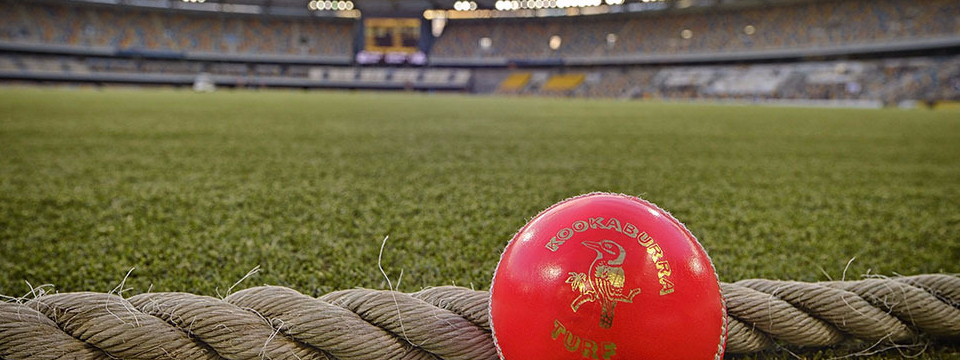
FICA URGES THE GAME TO BUILD ON ADELAIDE TEST MATCH PINK BALL EXPERIMENT

Following the inaugural day/night Test Match in Adelaide last week, FICA Executive Chairman, Tony Irish today made comment after consultation with players and conducting a player survey following the Test Match.

“It was good to see so many fans at the Adelaide Test Match and it was successful as an event, however, the pink ball experiment must be part of a bigger picture, and it alone is not the answer to making Test cricket the best it can be.” Irish said.

“Adelaide has historically been a well supported Test Match, and a social event. Players enjoy playing in front of big crowds, and it was a terrific atmosphere. What we saw in Adelaide is one aspect of a significant amount of work that needs to go into making the entire game compelling for spectators, players, and commercial partners. The structure of bilateral cricket, and of the game itself need to be addressed globally.”

“As representative body of players from 7 of the 10 test playing nations, FICA commends the players for their adaptability with a significant change to the game. We also recognise the amount of work that went into this game. FICA is supportive of innovations that can improve the spectacle and spectator interest, whilst maintaining the essence of the sport.” Irish continued.

“It is important to note however, that the change from the red to pink ball is significant. The players still have concerns around the ball itself, and one must take into account that the Adelaide Oval conditions were tailored to suit the pink ball and help it last. This led to results that were uncharacteristic for an Adelaide Test Match. Furthermore, questions also remain as to the suitability of day/night Test Matches in other parts of the world, where conditions are not as favourable as in Adelaide.”

In a post match player survey of twenty (20) players who played in the Match, some of the key results were:

  •        The pink ball did not show similar signs of wear and tear to the red ball (80%);
  •       The pink ball swung more than the red ball (80%), especially at night;
  •       The ball was not easy to see when batting or fielding at dusk (70%), and to a lesser extent at night (50%);
  •       The day/night conditions affected the length of the match (85%);
  •       Those who played were generally supportive of experimenting with day/night Test matches, but were strongly of the view that the ball still requires improvement.

“In trialling day/night Test matches, we are essentially adding another new format to the international cricket structure which already lacks clear and common direction as to the best interplay between formats, and the best way for players to balance the growing conflict in club versus country commitments.” Irish said.

“We know players value playing for their countries, and playing in events that have meaning and context. We also know how much they value the essence of Test cricket. With the advent of domestic T20 tournaments around the world, there is also now a growing alternative market to international cricket for the worlds best players.” Irish continued.

“The game must address its structure as a whole, and the players should be an integral part of planning and improving it in its entirety moving forward.”

“Cricket will be in the best position to grow if players are properly embraced as partners in the game.”

Share:

Text Info Strip

FICA LAUDS WIPA WICB AGREEMENT

The Federation of International Cricketers’ Associations (FICA) today lauded the West Indies Players Association (WIPA) and the West Indies Cricket Board (WICB) on the signing of their collective bargaining agreement on Thursday.

“Collective bargaining agreements such as this, which bring security and consistency to player arrangements, are critical in dealing with the growing challenge of player free agency”, said FICA Executive Chairman, Tony Irish.

“More and more we are going to see the risks of players considering prioritisation of participation in T20 Leagues ahead of playing cricket for their countries. When one understands that the majority of revenue in just about every country is generated by the country’s national team then it becomes easy to also understand why it is so important to ensure that a country retains not only its top players but also the pipeline of players leading to the top.

“One of the most effective ways that a country can do this is to put in place overarching, clear and consistent player arrangements. This arrangements cover player numbers, standard contract provisions, fair conditions for the release of players to play in other events, professional employment benefits, commercial rights provisions and player welfare and education opportunities. Players will in general feel more secure in a properly regulated professional environment than in one where there is no proper regulation.

“WIPA and WICB have had a difficult relationship historically but they should be commended in having now come together to create a more attractive player environment that can only be good for West Indies Cricket,” Irish said

Share:

Text Info Strip

FICA Calls on ICC Board to direct N. Srinivasan to step aside from ICC functions

FICA

The Federation of International Cricketers’ Associations (FICA) today called on the International Cricket Council (ICC) Board to direct N. Srinivasan to stand aside from all ICC functions.


FICA Executive Chairman Paul Marsh today said it was imperative that the ICC Board acted strongly in response to the situation involving Mr Srinivasan.


“Serious allegations of betting and spot fixing in IPL 2013 have been made against Mr Gurunath Meiyappan as the alleged Team Principal of Chennai Super Kings and these remain the subject of proceedings before the Indian Supreme Court.


“Mr Srinivasan is the Managing Director of Indian Cements Limited (the owner of the Chennai Super Kings) and is also the father-in-law of Mr Meiyappan.

“The Supreme Court order from last Friday noted that Mr Srinivasan had made a written offer through his legal counsel to step aside from his functions as BCCI President until investigations into the allegations against him were completed.


“The Supreme Court has issued an interim order prohibiting any employees of India Cements Limited (other than players or commentators) from performing any duties for the BCCI. FICA understands that the order applies to Mr Srinivasan, as Managing Director of the company.”


Mr Marsh called on the ICC Board to take note of the Supreme Court’s recent orders and apply the same principles to ICC activities.


“While we are pleased that Mr Srinivasan, at the behest of the Supreme Court, has agreed to step down from his duties as BCCI President, we are of the firm belief that he should not be exercising any functions on behalf of the ICC either, while any investigations concerning his conduct or that of his company are pending or unresolved,” he said.


“The cricket world has been told time and again by the ICC that corruption is the game’s biggest issue and that the game has a zero tolerance approach to it.


“For our game to survive we need it to be not only free of corruption but free of any suspicion of corruption.


“The ICC needs to put the reputation of the game and confidence in its procedures first. The players, and other stakeholders in the game, are entitled to expect this from the ICC’s Executive Board.


“Under the current circumstances, the prospect of Mr Srinivasan taking the highest posting in world cricket while these matters are unresolved, is an impossible one,” Mr Marsh said.

Share:

Text Info Strip

FICA RESPONSE TO ICC STRUCTURAL CHANGES

Federation of International Cricketers’ Associations (FICA) Executive Chairman Paul Marsh today issued the following statement in response to the ICC Board decision to approve changes to its governance, competition and financial models: “This is a very sad day for our game,” Marsh said. “Whilst unfortunately the final outcome had an air of inevitability about it once the process became clear, it again highlights how poorly our game is governed.

“Of extreme concern to all involved in FICA is the fact that so many key stakeholders in the game condemned the proposed changes, including players past and present; former ICC office bearers; Transparency International – the body set up to fight global corruption; Lord Woolf – the man responsible for independently reviewing the ICC’s governance; numerous media commentators as well as cricket fans worldwide, yet the ICC Board still approved these changes.

“This should be an indicator to the future for all of us, where self-interest and short-term deal making will override the long-term health of the game and views of its key stakeholders. “FICA and its members will continue to oppose these changes in the interests of the game’s future,” Marsh concluded

Share:

Text Info Strip

FICA RESPONSE TO F&CA WORKING GROUP POSITION PAPER

FICA

Federation of International Cricketers’ Associations (FICA) Executive Chairman Paul Marsh today issued the following statement in response to the position paper of the F&CA Commercial Rights Working Group that was leaked earlier this week.


“After reviewing the working group’s proposal, the FICA Board and our members are extremely concerned about the future of international cricket.

“This proposal is designed to vest control of the game in the three Boards of India, Australia and England. It is not in the best interests of the global game and we have real fears that it will only serve to strengthen the ‘big three’ countries whilst the rest are left to wither on the vine.


“There are a myriad of issues with this proposal. First and foremost, as Board Directors of the ICC, the Chairmen of the BCCI, Cricket Australia and ECB owe fiduciary duties to the ICC that include putting the interests of the ICC ahead of those of their individual Boards, a duty to remain loyal to the ICC and avoid conflicts of interests and to act in good faith to promote the success of the ICC. We seriously question whether all of these duties have been met.


“The proposals relating to scheduling are disturbing. The reassurance to the Boards outside the ‘big three’ that they are guaranteed to earn more in the next rights cycle than they have in the current one ignores the fact they are almost certain to lose more money from a re-shaped Future Tours Programme (FTP) than they will gain from ICC distributions, when the ‘big three’ inevitably pick and choose who, when and where they will play.


“Of significance is the section that offers a guarantee from CA and ECB to play three Tests and five ODIs per cycle to each of the top eight members, yet there is no mention of any such guarantee from the BCCI. Each of the member countries, including Australia and England, rely heavily on Indian tours for sustainability of the game in their country. What chance do the majority of members have of survival if the BCCI decides not to tour their countries on at least a semi-regular basis?

“The result of this is that the gap between the ‘big three’ and the rest will get bigger and bigger, which will undermine the competitiveness of future ICC Events and therefore the value of rights in future cycles. This will affect everyone and it cannot possibly be in the interests of international cricket nor of the health and sustainability of the world game of which the ICC is supposed to be the custodian.


“We also have significant concern with the notion that distributions from ICC events should be based on commercial contribution. The result of this will be the countries that need ICC income most will receive the least, whilst the ‘big three’ will get the lion’s share even though they are already financially healthy because of the value of the rights to their bilateral series. The role of ICC events should be to assist in levelling the financial playing field by distributing the proceeds from these events fairly, rather than further widening the gap between the rich and poor.


“Whilst these are an entirely foreseeable commercial outcomes, for the cricket fan the greater concern is the increasing gulf in quality between the ‘big three’ and the rest. The essence of sport is competition and those in control of the ICC should be doing all they can to promote and provide a level playing field. This proposal will achieve the complete opposite.


“Ironically the proposal espouses the principal of meritocracy. The linking of immunity from Test relegation for BCCI, ECB and CA to an argument that this is necessary ‘solely to protect ICC income’ is plainly wrong, given the fact no Test-based ICC events feature in the forward thinking and therefore all revenues generated from Test cricket are kept by the Boards hosting the respective series.


“Once again we are seeing the result of the poor governance structure and practices of the ICC, on this occasion led by three of its Board members. This proposal is 180 degrees from the structure proposed in the ICC’s own independently commissioned governance review (Woolf Report). It is also clearly unconstitutional.

“The game deserves far better than this and all within FICA call on the other seven ICC Board members to reject this proposal at next week’s Board meeting. The future of the game depends on them doing so,” Marsh concluded.

-ends-


For further comment, please contact:

Paul Marsh – FICA Executive Chairman

(Media enquiries via Eivion Bowen)

Email: ebowen@auscricket.com.au
Phone: +61 425 555 569

Website: www.thefica.com


The Federation of International Cricketers’ Associations (FICA) was established in 1998 to co-ordinate the activities of all national players’ associations which protect the interests of professional cricketers throughout the world. It brings together all of the world’s cricketers, regardless of nationality, religion, political persuasion or race, under an international body focuses on matters of general interest to the game and its players. 

Share: