Text Info Strip

Kyle Simmonds Crowned Overall Division 1 SACA MVP

The 2025/26 domestic cricket season concludes with Western Province all-rounder Kyle Simmonds named Division 1 Overall SACA MVP. Simmonds earned…

Read More

Liam Alder Named Overall SACA MVP for Domestic Division 2

Following the completion of all domestic fixtures, Liam Alder of the Garden Route Badgers finished at the top of the…

Read More

TWELVE YEARS OF RESEARCH-BASED PLAYER SERVICE

Over the past 12 years, the South African Cricketers’ Association (SACA) has cemented its dedication to evidence-based practice through a…

Read More

ICC PLAYER OF THE MONTH NOMINATIONS ANNOUNCED

The International Cricket Council (ICC) today announced the nominees for the inaugural ICC Player of the Month Awards which recognise and celebrate the best performances from both male and female cricketers across all forms of international cricket throughout the year. Fans have been treated to some sensational cricket during the month of January making the inaugural player of the month awards a highly competitive affair and they can now vote on www.icc-cricket.com for their favourite ICC Player of the Month (January).

About the ICC Men’s Player of the Month January Nominees:

Rishabh Pant played two Tests against Australia where he scored a 97 at Sydney to ensure a draw before an unbeaten 89 at Brisbane that led India to a historic series win against arch-rivals Australia. England Captain Joe Root played two Tests against Sri Lanka, where he scored a 228 and 186 and led his team to a 2-0 Test series victory. The third nominee in the category, Ireland’s Paul Stirling played two ODIs v UAE and three ODIs v Afghanistan, where he scored three centuries.

About ICC Women’s Player of the Month January Nominees:

Diana Baig of Pakistan played three ODIs and two T20Is against South Africa, where she led the wicket-takers with nine wickets in the three-match ODI series against South Africa. South Africa’s Shabnim Ismail also played three ODIs and two T20Is against Pakistan and took seven wickets in the victorious ODI series against Pakistan, before taking five wickets in the second T20I against the same opposition. Her compatriot all-rounder Marizanne Kapp who is the third nominee in the category played two ODIs and two T20Is against Pakistan where she made 115 runs at a strike rate of 110.57 and added three wickets in the ODI series against Pakistan.

The ICC Player of the Month voting process:

The three nominees for each of the categories are shortlisted based on on-field performances and overall achievements during the period of that month (the first to the last day of each calendar month).

This shortlist is then voted on by the independent ICC Voting Academy* and fans around the world. The ICC Voting Academy comprising prominent members of the cricket family including senior journalists, former players, and broadcasters and some members of the ICC Hall of Fame.

The Voting Academy will submit their votes by email and will retain a 90% share of the vote. Additionally, fans registered with the ICC will be able to vote via the ICC website once the shortlisted players are announced and will have a 10% share of the vote. Winners will be announced every second Monday of the month on the ICC’s digital channels.

Click here to vote

Share:

Text Info Strip

FICA RESPONDS TO THE ICC ANNOUNCEMENT OF NEW INTERNATIONAL COMPETITION STRUCTURES

The Federation of International Cricketers’ Associations (FICA) Responds to the International Cricket Council (ICC) Announcement of New International Competition Structures

Overall Cricket Structure

FICA acknowledges the amount of work that has been done, and that a step forward has been taken, by the ICC and various country Boards in formulating and agreeing a Test league and ODI league. FICA remains concerned however that, as part of the changes, the new overall cricket structure does not address existing weaknesses and imbalances in the global playing landscape, and the need to ensure an appropriate balance between international cricket and the domestic T20 leagues.

“Whilst some of what ICC has now agreed is positive, notably in regard to the ODI league, we feel that the game has missed a significant opportunity to provide real clarity and consistency to the overall global structure,” said Tony Irish, Executive Chairman of FICA.

“One of international cricket’s biggest challenges is the increasing prioritisation by players of T20 leagues ahead of international cricket and this can only be addressed by appropriate structural change. FICA’s 2016 International Cricket Structure Review (FICA International Cricket Structural Review ), which was shared with the ICC, is based on collective player views, player labour market data and player insights from around the world. It identified key areas which we, and the players, believe needed to be addressed as part of a much needed change in the global structure aimed at ensuring the health and viability of international cricket.”

“The introduction of Test and ODI leagues to create context and sporting narrative was one these but others include, for example, the removal of the inherent conflict for players between international cricket and domestic T20 leagues, balancing all three formats of the game, removing scheduling conflicts by adopting clear internationally recognised scheduling windows, adopting a centralised approach to potential innovations such as day/night and four day Tests and developing a clear pathway and meritocratic opportunity for developing nations. These really should have been addressed in one new structure.”

ODI League

FICA welcomes the introduction of the proposed ODI league and in particular the fact that the number of matches is clearly regulated to ensure the volume of cricket is controlled and that matches without context are not played outside the league structure.

“Although it’s not ideal that teams won’t play all other teams during the cycle the league is otherwise clear in its structure and regulation and it also provides meaningful opportunities to 13 teams,” said Irish. “We will still need to see how effective it is in feeding into the ICC Cricket World Cup.”

Test League

Whilst FICA acknowledges some context has now been introduced into Test cricket it is clear that optimal change has been restricted by the fact that context is being wrapped around existing bilateral scheduling arrangements instead of the other way around. FICA believes that regulation in the Test structure to ensure clarity and consistency doesn’t go far enough.

“The fact that countries will play different numbers of Test matches in a series depending on the opposition will mean that any points system will not be simple and easily understandable,” said Irish. “We will have to see exactly how the points will work but I think it’s a challenge to run a genuine league when some countries will be playing significantly more matches than other countries in the same league table.”

“It is also left up to countries to play Test matches outside the competition structure which is likely to be confusing, and simply adds volume without context. Perhaps some of these non-league matches will be against new Test nations but then it’s a pity that there is no clear pathway for those countries to advance or enter the competition based on merit.”

Four Day Tests

FICA notes that four day Test matches will not be part of the Test league.

“We are not sure of the objective of playing four day Tests right now,” said Irish. “The format doesn’t need trialing as it’s played in most domestic first class competitions. We see the benefit that four day Tests could bring to an overall competition structure but the benefit of change is not clear if it’s not part of a structure. In these circumstances we don’t see the need to tinker with what many treasure as part of the heritage and tradition of the game.”

Conclusion

“Although FICA was involved in conceptual discussions on these leagues neither we, nor the players, have been part of the final development of the competition structures. I think we should have been, especially because the player labour market and player decision-making are significant drivers of what the future of the game will look like.”

“It seems that the agreed structure will be locked-in for some time. We will now have to see whether the changes have gone far enough to sufficiently enhance international cricket.”

Share:

Text Info Strip

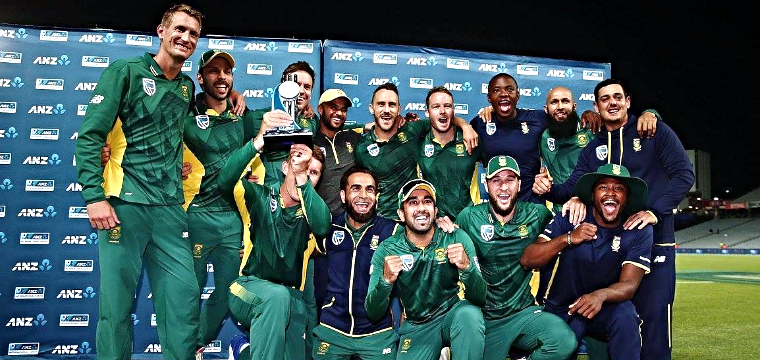
PROTEAS RETAIN NO.1 ODI RANKING

Eighth-ranked Pakistan extends advantage over ninth-ranked West Indies as 30 September 2017 cut-off date for direct qualification for the ICC Cricket World Cup 2019 gets closer

South Africa and Australia have retained the top two positions on the MRF Tyres ICC ODI Team Rankings following the 1 May annual update, but eighth-ranked Pakistan has opened up a nine-point advantage over ninth-ranked the West Indies, which can prove decisive since England plus the next seven highest-ranked sides as on 30 September 2017 will qualify automatically for the ICC Cricket World Cup 2019.

The annual update is carried out to ensure the table continues to reflect teams’ recent form with older results being discarded. As such, the table now reflects all matches from 1 May 2014, with matches played from 1 May 2016 carrying 100 per cent weighting.

Both Pakistan and ninth-ranked West Indies have dropped points following the update – Pakistan slipping from 90 points to 88 points and the West Indies sliding from 83 points to 79 points. However, Pakistan’s pre-update seven-point gap has extended to nine points.

Seventh-ranked Bangladesh and sixth-ranked Sri Lanka have also conceded points.

Bangladesh has surrendered one point and is now on 91 points, but its gap over eighth-ranked Pakistan has increased from two points to three. Sri Lanka, which was sitting pretty on 98 points prior to the annual update, has slid to 93 points to now lead Bangladesh by only two points. However, Sri Lanka leads the West Indies by 14 points.

Meanwhile, number-one ranked South Africa has gained four points following the annual update and is now on 123 points, while world champion and second-ranked Australia has stayed on 118 points.

India, which will defend the ICC Champions Trophy title in the UK in June, has swapped places with ICC Cricket World Cup 2015 finalist New Zealand. Both the sides have gained points following the update but India’s five-point gain against New Zealand’s increase of three means India is now ranked third on 117 points and New Zealand is fourth on 115 points.

England, which will host the ICC Champions Trophy 2017 and the ICC Cricket World Cup 2019, has retained its fifth ranking but has moved up one point to 109.

There is no change to 10th-ranked Afghanistan’s tally of 52 points, but 11th-ranked Zimbabwe has dropped two points and is now on 46 points. Ireland has gained one point and is on 43 points.

The small difference in points in the middle of the table adds a lot of context, entertainment and excitement to the upcoming ICC Champions Trophy and other matches up to 30 September since performances during this period could help sides to qualify directly for the ICC Cricket World Cup 2019 rather than having to progress through the ICC Cricket World Cup Qualifier 2018.

MRF Tyres ICC ODI Team Rankings (as on 1 May, following the annual update)

Rank Team Points
1. South Africa 123 (+4)
2. Australia 118 (-)
3. India 117 (+5)
4. New Zealand 115 (+2)
5. England 109 (+1)
6. Sri Lanka 93 (-5)
7. Bangladesh 91 (-1)
8. Pakistan 88 (-2)
9. West Indies 79 (-4)
10. Afghanistan 52 (-)
11. Zimbabwe 46 (-2)
12. Ireland 43 (+1)

Share:

Text Info Strip

FICA RESPONDS TO PCB STATEMENT REGARDING PSL FINAL IN LAHORE

The Federation of International Cricketers’ Associations (FICA) today responded to a statement issued by the Pakistan Cricket Board (PCB) in which the PCB criticised FICA for its alleged “careless and cavalier approach” to security issues relating to the playing of the PSL final in Lahore, and stated that FICA has done great disservice to the cause of cricket in general and to Pakistan cricket.

FICA relies on advice given by expert security consultants, Eastern Star International (ESI), in relation to security risks to players and teams who may contemplate playing in what may be considered high-risk cricket environments. ESI are highly credible specialist security consultants with many years of experience working in cricket. ESI has supplied security services over several years to a number of cricket boards and international teams around the world and to the International Cricket Council (ICC).

FICA has gone through a similar process to that followed in previous years relating to players playing cricket in Pakistan. It obtained advice from ESI related to security risks to cricketers playing in the PSL final in Lahore.

FICA sent a confidential memorandum to players’ associations and to affiliated cricketers, and their agents, highlighting the advice received from ESI relating to the elevated security risk for them of playing in Pakistan. The elevated risk is in line with advice from government agencies and diplomatic missions of several countries regarding travel by foreigners to Pakistan.

FICA recognises that players play in T20 leagues around the world as individuals and that players make individual choices relating to whether or not they wish to participate in a league or match. FICA’s memorandum to players and player agents accordingly did not advise players not to participate in the PSL final in Lahore, but informed players that they do so at their own risk and that players should check any insurance cover that may apply.

Since the 2009 terrorist attack on the Sri Lankan team in Lahore Pakistan has played bi-lateral home series matches against ICC full member countries in the United Arab Emirates (UAE) for security reasons. The only full member men’s team to tour Pakistan in this time was Zimbabwe in 2015. The ICC declined to send its match officials to Pakistan to officiate in this series for security reasons. A suicide bomber detonated an explosive device outside the stadium in Lahore shortly before the 2nd ODI of the series, killing himself and a policeman.

The PCB is staging all PSL matches, except the planned final in Lahore, in the UAE for security reasons. Several months ago the PCB consulted FICA in relation to provisions of the standard player contract for the PSL. When FICA expressed possible security concerns relating to playing the final in Lahore the PCB was not responsive to FICA on this issue.

“Players around the world from affiliated countries have always looked to FICA to provide them with information relating to security risks of playing in various parts of the world”, said Tony Irish, FICA’s Executive Chairman. “It is our responsibility to provide this information, which we obtain from highly credible security experts, so that players can make informed decisions.”

“We have great sympathy for fans and players in Pakistan who have not been able to consistently watch international teams and high quality foreign players playing cricket in their country for several years. FICA has no vested interest in this matter and is completely independent of the PSL. We consider the PSL a good opportunity for players and we would like to see it succeed. However the safety and security of players is, and will continue to be, a high priority matter for FICA.”

Share:

Text Info Strip

ICC INTRODUCES CHANGES TO CODE OF CONDUCT

The International Cricket Council has introduced changes to the ICC Code of Conduct for Players and Player Support Personnel, effective 22 September 2016.

There has been no change to the list of offences in the Code of Conduct, or the current penalty regime of warnings/fines/suspensions applicable to each offence, but players who have breached the Code will now also accumulate Demerit Points, which can see repeat offenders suspended. Demerit Points will remain with a player for two years, and all players will start with a zero balance from 22 September to coincide with the introduction of these changes.

The new ICC Code of Conduct for Players and Player Support Personnel can be read here, with the changes confined to Article 7 of the Code.

The new DRS playing conditions relating to the LBW ‘Umpire’s Call” will also come into effect on 22 September, with the first match to be played under these regulations the ODI between South Africa and Ireland in Benoni on Sunday.

Share:

Text Info Strip

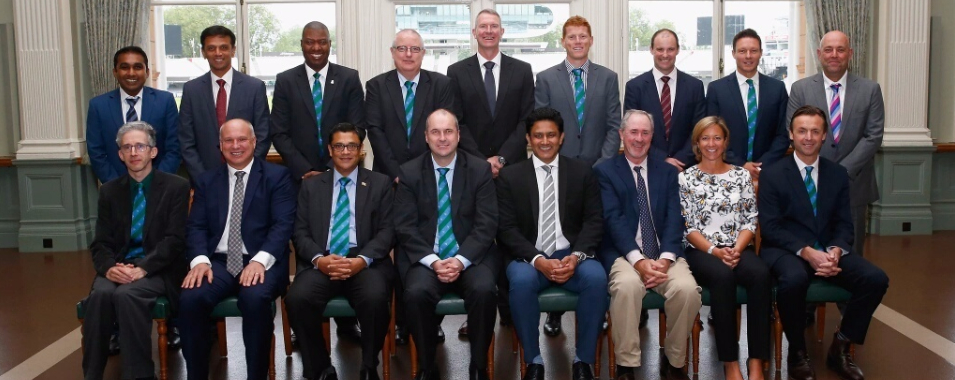
ICC CRICKET COMMITTEE MEETING OUTCOMES


International Cricket Structure


The committee received a presentation on ICC’s plans to bring greater structure and context to international cricket by creating dedicated competitions in each of the game’s three formats, and there was unanimous agreement from committee members that the current structure of international cricket needed to change.

The committee was very supportive of the efforts to widen the audience for Test cricket across all member countries, and acknowledged the success of the inaugural day-night Test between Australia and New Zealand in Adelaide.

It stressed, however, that day-night Test cricket needs to be delivered to a consistently high standard across all member countries if the concept is to be successful, noting that the combination of ball, pitch, lighting levels and environmental conditions needed to allow for an even contest between bat and ball at all proposed day-night Test venues.

The committee also discussed a number of other issues relating to Test cricket, believing a coordinated approach to the marketing of Test cricket was needed, and also expressing concern about the quality of Test pitches, and in particular the common practice of home countries overtly preparing surfaces to suit their own teams.


Use of Technology

The ICC Cricket Committee had a long discussion about the future use of technology in international cricket, and particularly umpiring, after receiving a presentation from the MIT engineers on their testing of the current technologies used as part of the Decision Review System (DRS).

The presentation covered the performance of edge-detection systems (both heat-based and sound-based systems), and ball-tracking with predictive path, highlighting the strengths and weaknesses of each type of technology, and how each could contribute to increasing the number of correct decisions made across international matches.

The presentation was positively received, and the committee believed that the ICC needs to take a more prominent role in the management of the DRS technologies used in international cricket, by firstly establishing a structure and tighter processes to approve new technologies, and then to ensure a more consistent application of the technologies used from match to match.

A detailed report, along with a list of recommended changes to DRS protocols will be finalised over coming weeks and presented to the ICC Chief Executives’ Committee and Board meetings at the end of June.


MCC research into the balance between bat and ball

 MCC sought the committee’s guidance on the desirability of making changes in order to redress the balance between bat and ball. The Committee received a research paper from MCC citing a wealth of scientific and statistical evidence showing bats have become more powerful in recent years, primarily due to having larger ‘sweet-spots’.

The committee’s view was that MCC should strongly consider limiting the dimensions of cricket bats to help achieve a better balance between bat and ball.


Concussion substitute

 The committee considered a proposal from Cricket Australia for a “concussion substitute” to be trialled for two years in domestic first-class cricket.

The committee acknowledged the seriousness of the issue of concussion in cricket, and stressed the need for consistent concussion policy to be implemented in all countries, but its view was that the current Laws and playing conditions allow players to receive the best possible medical treatment, and further change to the regulations in this area is not required at present.


Helmet safety

The committee considered the matter of helmet safety following a presentation on injury surveillance trends by ICC medical consultant Dr Craig Ranson. The committee expressed concerns that there were still too many instances of international cricketers wearing helmets which did not meet the latest British Safety Standard (BSS).

It recommended that the ICC should enforce the wearing of the latest BSS compliant helmets in all international cricket.


Suspect illegal bowling actions

The committee noted considerable progress in policing suspect actions in international cricket and encouraged all countries to continue their efforts to screen bowlers in domestic competitions before they reached international level.


Women’s cricket update

The committee received a report from Clare Connor, the Chair of the ICC Women’s Committee, on the impact of the recent ICC Women’s World Twenry20 in India, which showed the women’s event received greater exposure than ever before and attracted 24.5 million TV viewers in India alone, as well as generating an average audience of 100,000 in the USA on Willow TV.

The Chairman of the ICC Cricket Committee Anil Kumble said: “We have had positive and constructive discussions across a wide range of different issues and I would like to thank all the members for their valuable contributions and input.

“The main thing that came out of the meeting was regarding Test cricket. The new structure was discussed and everybody was positive and forthcoming in supporting that. The committee acknowledged the importance of efforts being made to promote and grow Test cricket, be it through the introduction of meaningful competition structures, better pitches and marketing.

“Our recommendations will now be taken forward to the next ICC Chief Executives’ Committee and the ICC Board meeting in Edinburgh in July.”

Share:

Text Info Strip

MANOHAR ELECTED INDEPENDENT ICC CHAIRMAN


Mr Shashank Manohar has been elected by the Board unanimously and unopposed as the Chairman of the International Cricket Council (ICC) following the ICC Full Council’s approval of constitutional amendments proposed by the Board following its April meeting.

Mr Manohar, who on Tuesday resigned as the President of the Board of Control for Cricket in India (BCCI), is the first elected independent Chairman of the game’s governing body and will commence his two-year term with immediate effect.

According to the election process, ICC directors were each allowed to nominate one candidate, who had to be either a present or past ICC director. Nominees with the support of two or more Full Member directors would have been eligible to contest the election, which was scheduled to have been concluded by 23 May.

However, given that Mr Manohar was the sole nominee for the position and the Board has now unanimously supported his appointment, the independent Audit Committee Chairman, Mr Adnan Zaidi, who has been overseeing the election process, has declared the process complete, and Mr Manohar the successful candidate.

Mr Manohar is a prominent Indian lawyer who served his first stint as the BCCI President from 2008-2011. Following the passing of Mr Jagmohan Dalmiya, Mr Manohar was re-elected as the BCCI President in October 2015 and, by virtue of that position, has held the role of ICC Chairman since then.

Commenting on his election, Mr Manohar said: “It is an honour to be elected as the Chairman of the International Cricket Council and for that I am thankful to all the ICC directors who have put their faith and trust in my abilities. I also take this opportunity to thank all my colleagues in the BCCI who have supported me during my recent time as the BCCI’s President.

“These are exciting times for international cricket as we are presently carrying out a comprehensive review of the 2014 constitutional amendments which is aimed at not only improving governance structures, but cricket structures as well. The ultimate objective is to grow our sport and engage a whole new generation of fans and I look forward to working with all stakeholders to shape the future of cricket, which has a proud history and rich tradition.”

In order to accommodate the new position of an “independent” ICC Chairman, on Monday the Full Council unanimously approved various amendments to the ICC’s constitution. The amendments also included the abolishment of the President’s post with effect from the 2016 ICC Annual Conference in Edinburgh, which has become redundant.


Share:

Text Info Strip

NAGPUR PITCH RECEIVES OFFICIAL WARNING

The International Cricket Council (ICC) today announced that Jamtha Stadium, Nagpur, has been given an official warning under the ICC Pitch Monitoring Process following the third Test between India and South Africa.


The sanction took into consideration the fact that there had been no concerns about the performance of the pitch after any of the other international matches played at this venue.


In reaching the verdict, the ICC agreed with the “poor” rating given to the pitch by Jeff Crowe, the match referee for the Nagpur Test played from 25-27 November, who observed that the pitch did not allow a fair contest between bat and the ball.


The finding was made by ICC General Manager – Cricket, Geoff Allardice, and ICC chief match referee, Ranjan Madugalle, after watching footage of the match, reviewing the post-match reports from Mr Crowe, and considering the response provided by the BCCI.


Share: