Text Info Strip

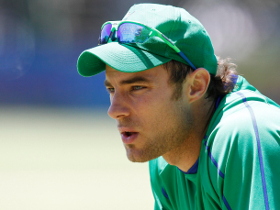
Kyle Simmonds Crowned Overall Division 1 SACA MVP

The 2025/26 domestic cricket season concludes with Western Province all-rounder Kyle Simmonds named Division 1 Overall SACA MVP. Simmonds earned…

Read More

Liam Alder Named Overall SACA MVP for Domestic Division 2

Following the completion of all domestic fixtures, Liam Alder of the Garden Route Badgers finished at the top of the…

Read More

TWELVE YEARS OF RESEARCH-BASED PLAYER SERVICE

Over the past 12 years, the South African Cricketers’ Association (SACA) has cemented its dedication to evidence-based practice through a…

Read More

TWELVE YEARS OF RESEARCH-BASED PLAYER SERVICE

Over the past 12 years, the South African Cricketers’ Association (SACA) has cemented its dedication to evidence-based practice through a partnership with Dr Sharief Hendricks, a Senior Lecturer at the University of Cape Town’s Health through Physical Activity, Lifestyle and Sport Research Centre. Bringing his academic rigour to SACA’s initiatives, Dr Hendricks has authored over 170 peer-reviewed publications and serves as an editor for numerous top-tier academic journals.

Since the inception of this collaboration, SACA and Dr Hendricks have co-published three peer-reviewed journals. This milestone reinforces SACA’s philosophy of actively backing its player development initiatives with relevant research.

Beyond career transitions, SACA’s data-driven approach has been instrumental in addressing the critical issue of athlete mental health. Recognising that the pressure of elite sport can take a severe psychological toll, SACA and Dr Hendricks have published journals on the prevalence of, and risk factors associated with, symptoms of anxiety and depression in professional cricketers. This foundational work includes a systematic scoping review utilising the 12-item General Health Questionnaire to assess mental well-being across athletic populations.

This crucial research, which culminated in comprehensive 2021 and 2024 studies detailing the specific triggers and prevalence of anxiety and depression within the sport, ensures that SACA’s mental health interventions are never based on generic assumptions. Instead, Player Development Managers are equipped with a precise, scientifically grounded understanding of the unique psychological landscape that cricketers navigate, enabling proactive, compassionate, and targeted psychological support.

Another significant practical outcome of the research is the 2023 development of a tailored career-transitioning screening tool for cricketers. Research indicates that the transition out of professional sport is a highly vulnerable period, particularly because a strong athlete identity is often negatively associated with the quality of an athlete’s transition into post-playing life.

To address this vulnerability, the bespoke screening tool identifies critical gaps for intervention as cricketers progress through the various stages of their careers. SACA’s Player Development Managers (SACA PDMs) utilise this tool to allocate resources effectively, ensuring a smoother transition for players as they integrate into professional sport, navigate the middle phase of their careers, and ultimately transition into post-retirement life.

The core objective of SACA’s PDMs extends beyond the statistics on a scorecard. SACA’s goal is to help players make the most of their cricket careers while enjoying success and building a robust dual-career foundation for life after the game.

While the specific screening tools developed for cricketers might require careful adaptation before being introduced into other sporting arenas, the heartbeat of this programme could offer value to the broader sporting ecosystem. By proving that true player protection comes from a model of research-backed, holistic support, which serves as a powerful reminder and a benchmark for athlete welfare: that delivering world-class services means caring for the whole person, not just the athlete.

Share:

Text Info Strip

EDUCATION EASES THE PRESSURE

A new dawn beckons for Robin Peterson, who gives unique insight into how having an education to fall back on actually makes you a better cricketer.

A white Audi is parked in the driveway of Robin Peterson’s immaculate home in a quiet street in Cape Town’s southern suburbs. The house has been renovated, sliding doors open from a modern lounge onto a built-in braai and pool.

Robbie P has come a long way from the dusty streets of Gelvandale in Port Elizabeth. But in some respects he remains firmly rooted to the values of his past.

“Things have changed in the neighbourhood I grew up in. Kids have got a lot more distractions. In my day, it was quite simple. You played cricket in summer. And we were exposed to quite a lot of sports. Hockey. Football. When Wimbledon was on TV kids would be playing tennis in the streets. It was a great childhood.”

Robin remembers playing street cricket against Alviro Petersen, Ashwell Prince, Garnett Kruger, Shafiek Abrahams and even Russell Domingo – all guys who grew up in his neighbourhood. He was even coached for a while by Allister Coetzee, who actually played cricket for Eastern Province in addition to his rugby career.

Robin’s career has had more ups than downs. As an all-rounder, he could always contribute with the bat as well as the ball. And there’s a trademark intensity to his on-field presence that he laughs off and puts down to meticulousness positioning.

Moving on

But a new era dawns. Robin’s time at the Cape Cobras has come to an end. He got married a year ago, and his wife is five months pregnant. Next season he will play for the Knights in Bloemfontein, and take up a contract for the Caribbean Premier League, where he enjoys playing. There’s a particular enjoyment for the game in the West Indies, he will tell you.

“It’s time to move on,” he says, “and I think the timing is working out nicely at the moment. When you get married you want to spend a bit more time with your family. I’m not one to look back and think I wish I was still there. I’m just seeing it as a new start, an opportunity to do something else with my life now.”

Unless you play international cricket for an extended period, or are fortunate enough to score an IPL contract it’s not feasible to rely solely on cricket to fund a middle-class lifestyle. These days, says Robin, after you’ve finished with the morning cricket practice, the afternoon needs to see you “putting some work in on other department of your life.”

Robin believes that young cricketers should not wait until later to start studying. “Find something that you’re passionate about and start studying immediately,” he says. “Don’t just study for the sake of studying. But don’t wait too long either.”

Some cricketers believe that an organic career will evolve from their cricketing career, but “at the end of the day there are only so many coaching positions available, and so many academies that can open. So find something else that interests you and pursue that.”

Branching out

“The biggest thing with cricket,” says Robin, “is that we played from when we were very young. We didn’t need to think about job satisfaction. It was always there, from the outset. But now all of a sudden, at such a late stage in life, you need to find something else that gives you as much enjoyment.”

To this end, Robin has signed up to do a business course through Milpark Business School. “I’ve always wanted to be involved with sports from a business perspective. And you need to empower yourself in that respect. I believe that sportsmen can bring a different angle to the business sphere. We understand pressure. We understand working in a team environment, and having to be innovative to stay ahead of the game. So there’s lots that we can bring to the party.”

“Guys that study at university gain the academic or theoretical knowledge, but we come with the practical life skills. And if we combine that with a qualification, I believe that puts us in a better space. We could be able to walk into a sporting office anywhere in the world. Who knows?”

Robin doesn’t have any concrete plans yet but is confident that if he combines his qualification with the opportunities to network that an international cricketing stint will give him, his career will grow organically from the field to the boardroom.

He has dabbled in property over the past few years, and has spoken to Ashwell Prince about the possibility of doing some larger scale development initiatives. At the same time, he gives talks at Citadel Wealth Management, giving unique sports-infused insights into business topics like Risk Management and Teamwork.

“I find it interesting going into the corporate spaces,” says Robin. “It’s obviously not something we do as cricketers. It’s quite different, a lot more formal and serious, but I guess that’s where you can add value by coming from such a different perspective. Even if it’s just to lighten the mood a little bit,” he laughs.

The role of SACA

“SACA has always played an important role. Now that I’m a bit older and gone through the system, I realise that education is vital. Educated guys know they have something to fall back on and are thus under less pressure to perform. And if you’re not as pressured to perform, you’re going to be relaxed. And if you’re relaxed, you’re probably going to perform a lot better.”

“When you get to this age, you have to take it one season at a time. It’s not about the money so much, it’s about adding value. Once you feel that you’re not really there in your heart, and you stop pushing yourself physically, then it’s going to become difficult, not only for you but also your family. I’ve never been one to play cricket just for the cash.”

We have a feeling that Robbie P will add value wherever he goes next.


Share:

Text Info Strip

RUSTY THERON: TEACHING AND LEARNING

Now studying teaching in Miami, Rusty Theron opens up on some of the teachers and mentors who helped guide him in his own life and career.

How did you end up studying teaching in Miami?

It was a difficult decision. You wonder whether you’re making the worst decision of your life. For me the deciding factor was watching older players holding on for that extra paycheck. That was not really something I wanted to do. Being the guy who doesn’t play at the level he used to; I didn’t want to go out like that. It’s not fair on the franchise and CSA.

I paid for my own studies initially and then Davey Jacobs mentioned that I could apply for a SACA bursary. I wondered whether SACA would help someone studying overseas where it costs almost R200 000, but they came back with a significant contribution which was amazing. And they check in regularly to see how things are going.

SACA’s objective through the Player Plus initiative has always been to educate players and enrich them off the field. As someone who is starting life a little bit later than everyone else, I wanted to get a good degree from a good school so that when I come back to the working world, it would give me more of a step up.

Teaching allows you to go all over the world. It’s a very universal thing. There’ll always be a need for teachers. You also get longer holidays!

Who have been some of the teachers and influencers in your life?

  1. Gary Kirsten

Gary Kirsten gave me confidence in myself.

My greatest cricketing moment was winning against Australia. But I had a shocker against them in Cape Town, going for 42 runs in three overs. I was gutted and I thought it was going to be the end of my career. But Gary backed me for the game at the Wanderers, and Wayne Parnell and I hit 62 off 68 balls. I hit a six off the last ball to win the game. I don’t think it gets better than that, even if you’re a bowler.

I don’t think I’ve ever been filled with more emotion than that. I burst into tears involuntarily, not even realising how I’d come back from what I thought was the end of my career to being Man of the Match the following week.

  1. Davy Jacobs

The person I respect the most is Davy Jacobs, the ex-Warriors captain. He’s just got a very good outlook on life. He’s well directed and has a positive spin, on and off the field. Paddy Upton and Davey Jacobs are two people who have great perspective and that’s everything in life. The way people look at a situation determines where they go from it.

  1. Paddy Upton

Paddy Upton was a pleasure to work with. He was a mediator between Gary and the players, and I spent a lot of time talking to him. He’s quite a philosophical and deep kind of person. His philosophy comes down to: “What is the worst that can happen?”

Eventually I just got a bit of perspective. We seem to make a big deal of things that don’t mean that much in the bigger scheme of things. Even if you lose your job, you’re still a healthy individual.

  1. Russell Domingo

The people I appreciated most were people who were honest with me, encouraging me to take some time to learn about myself. These were the people who could genuinely guide you the most. Russell Domingo was a big part of that, he said: “Look your chance will come.” He always kept talking to me.

When I played my first pro game for the Warriors, Russell was the coach. I think I had a little cry to myself and gave him a hug. I thought: if all I ever do is play this one game, at least I could say I was a pro sportsman. I didn’t take any wickets against the Knights, so it wasn’t the ideal start!

  1. Brett Lee

I’d never really had cricketing heroes, but Brett Lee became one of them. Going to the IPL allowed me to meet up with some amazing people. Playing with Dale and some of the greats of the game. That’s the one thing about the IPL that’s been unparalleled. I first thought I could play pro cricket after I’d played a bit of amateur cricket. But guys like Brett Lee are on another level.

At the end of the day if you surround yourself with a few good people, then you’re better off than having 100 so-called “Friends”. I feel like I’ve learned a lot from life. I pay a lot more attention to people, and I like to observe.


Share:

Text Info Strip

FINDING THE RIGHT FIT

Glen Addicott has always had a passion for what he does. Rather than investing all that passion into his work as a cricketer in an often unpredictable landscape, he found another area into which he could channel his energy.

Four years ago a new challenge in his cricket career seemed logical for Pietermaritzburg-born Glen Addicott. After seven seasons as a regular for KwaZulu-Natal Inland, the top-order batsman had only played a handful of matches for the Dolphins in 2010-11 and 2011-12, so he felt the timing was right for a move to South Western Districts to explore further playing opportunities.

“My former club coach from Maritzburg Varsity, Gary Hampson, had moved down to the area to coach SWD and offered me the chance to join them, which I did,” the 31-year-old says.

As it turned out, ’real life’ caught up quickly for Addicott in the Southern Cape.

“I came down to George in 2012, then in February 2013 married to Jesse Ann and then she fell pregnant. All that meant I became quite keen to settle down. While I was still in Maritzburg I had spent a year studying towards a Bachelor of Business Administration, my degree wasn’t complete. I had also done Level I and Level II coaching courses but that’s not what I wanted to do.”

Fortunately, Addicott had already been introduced to a long-term career option in which he was interested.

“In 2011 I was playing club cricket in England [for Vauxhall Mallards, based close to the east coast of England] and one of my mates was also a personal trainer. He was training a guy with polio and invited me to join them at a CrossFit box – that’s what their ‘gyms’ are called. Being fully fit I thought it would be easy, but the session broke me and from that day I knew I wanted to do CrossFit. Basically, CrossFit is all about functional movement, which comes from a split between gymnastics, weight lifting and cardio work, which could be riding, running or swimming. Also, every day is different and varied and it’s performed at high intensity. It’s one of the fastest growing sports in the world and has its own CrossFit Games.”

To turn that interest into a career, Addicott tapped into the resources available to him, starting with SACA Personal Development Managers, Ruan Schlebusch and Brad Player.

“Ruan helped me draw up contracts, come up with a business plan and enrol in various classes to own a CrossFit box. Brad was also great, and even these days he often pops in for coffee and a chat.”

Addicott also found a willing business partner in his SWD captain, Ross McMillan, with whom he has come a long way.

“Ross and I have known each other for many years,” he says. “We grew up playing cricket against each other [McMillan for Hilton College and Addicott for St Charles College], and then together in numerous teams, such as KwaZulu-Natal Inland and then SWD. Ross has always been business-minded and had a desire to run a business. I, on the other hand, am not naturally that way inclined and so my skills lay in the programming and coaching of classes. We made a great team.

“That said, in June 2015 a great opportunity arose for Ross and he left us, and retired from cricket, to pursue a career in the financial sector [as a Financial Planner with Momentum] – a fantastic move for him and a certain loss for us. Although we miss him, I have learnt some wonderful business skills and thus am very happy with how things are going at CrossFit George.”

Having now gone it alone, how does Addicott look back on the decision to put his kit bag in storage?

“It was a tough decision. Cricket was my life and I didn’t have any other job. However, it was also a pretty easy decision in the sense that I’m still involved in sport and people. The major difference is that when you own your own business it’s 24-7 while with cricket you get lots of down time. So the business side has been a bit of a change.”

However, he confirms that he’s in it for the long run.

“My parents and my wife’s parents have moved down here [no doubt to be closer to their granddaughters, born in 2013 and 2015]. Personally, it was tough in the beginning with early mornings and late evenings for classes but here in George the life is great, there’s very little to complain about. I do miss cricket but I’ve fallen into another passion.”

Share: