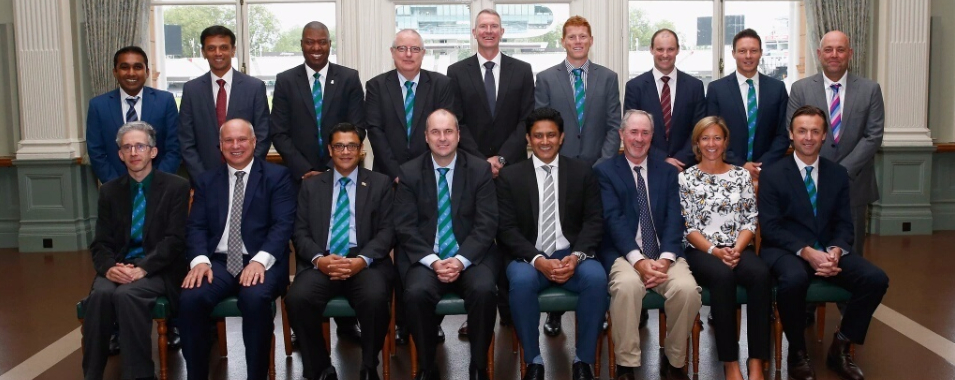
The 2016 ICC Annual Conference concluded on Saturday in Edinburgh with the ICC, IDI and IBC Board meetings, which were held under the chairmanship of Mr Shashank Manohar.
Among the discussions held, decisions made and reports received were:
Significant progress made in the ongoing review of the ICC’s governance structure
The Board noted with satisfaction that significant and positive progress had been made by the working group established to oversee a complete review of the 2014 resolutions and constitutional changes.
The Board was informed that a draft of a new constitution will be prepared in the coming weeks for consideration by the Board at its October meetings.
ICC Chairman Shashank Manohar said: “We have undertaken the responsibility of reviewing the 2014 resolutions and constitutional changes in their entirety as we are committed to following best practice principles of good governance to build, improve and enhance the image and reputation of the ICC by putting in place systems and processes which are fair, transparent and merit-based.
“I am pleased with the work that has been done to date and during this set of meetings and we are looking forward to presenting the amended constitution to the Board for its consideration at the next meeting.”
International cricket structures
In parallel to the discussions around governance structures, the ICC Chief Executives’ Committee held constructive discussions about the structure of international cricket and the establishment of new competitions in all three formats. Members were updated on the progress of the project, and all understood that more detail is needed before any final decisions can be made.
It was proposed that a workshop be scheduled in early September in Dubai to facilitate discussion between Members on this project, and to work through some of this detail.
ICC Chief Executive David Richardson said: “This is an unprecedented opportunity for our sport to introduce a package of bilateral international cricket structures, which are merit and performance based, have context, enhance the value of bilateral international cricket and create a highly competitive environment for cricketers so they can provide more entertainment to spectators.
“The Member countries acknowledge and recognise the importance of international cricket across all its three formats and are committed to ensuring that it continues to grow in relevance and value for cricket fans around the world.
“This is a complex issue on many levels but I am heartened by the progress that has been made to date and during these meetings and look forward to the next meeting in Dubai.”
ICC agrees to support the inclusion of a women’s cricket event in the 2022 Commonwealth Games
Following a presentation by the Commonwealth Games Federation, the Board has decided to submit an application for a women’s cricket event to be included in the 2022 Commonwealth Games in Durban. As well as creating an opportunity to showcase the remarkable progress of female cricket on a global stage, this will provide top female cricketers with an opportunity to feature in an additional high profile competition.
The ICC will now work closely with the Commonwealth Games Federation in order to ensure cricket’s inclusion on the program and to determine the specific tournament structure and qualification process that will be applied.
Mr Manohar said: “The Board has taken a strategic decision to support the inclusion of women’s cricket in the 2022 Commonwealth Games as it will enhance the profile of the sport and create additional exposure and experiences for female cricketers, as well as opportunities to engage with the Commonwealth Games on important social justice issues and initiatives.”
There will be further discussions on cricket’s potential participation in the Olympic Games following further meetings with the International Olympic Committee later in the year.
DRS – Umpire’s Call
During its meetings, the ICC approved a change to the DRS playing condition relating to the LBW “Umpire’s Call”. The size of the zone inside which half the ball needs to hit for a Not Out decision to be reversed to Out will increase, changing to a zone bordered by the outside of off and leg stumps, and the bottom of the bails (formerly the centre of off and leg stumps, and the bottom of the bails).
This amendment will come into effect from 1 October (or from the start of any series using DRS that commences just prior to this date).
No balls
There was discussion about the calling of No balls, and the ICC will arrange a trial over coming months to better understand whether the third umpire could use instant replays to call No balls more accurately. The trial is likely to be staged during one of the upcoming ODI series, and the third umpire will judge No balls within a few seconds of the ball being delivered and communicate this to the on-field umpire. Further details relating to the trial will be announced once finalised.
Helmet Safety
The ICC reiterated its position that the wearing of helmets in international cricket should not be mandatory, but that if a player decides to wear a batting helmet, then it must comply with the new British Standard (BS) – BS7928:2013.
There was concern that there were too many international cricketers not wearing BS compliant helmets, and that this needed to be more tightly regulated by the ICC. It was agreed that Members will educate their players on the benefits of using BS compliant helmets, and the ICC Clothing and Equipment Regulations will be amended to reflect the decision that only BS compliant helmets may be worn when batting in international matches.
“The discretion of wearing a helmet continues to rest with the player, but if a player decides to wear a helmet then it has to be one which complies with the British Standard specifications. This is part of ICC’s duty of care to prevent a player from picking up a serious injury as a result of a misperception that the helmet being worn is safe,” said Mr Richardson.
Other matters
The Chairman of the Anti-Corruption Unit, Sir Ronnie Flanagan, provided an annual update, including the progress made on the implementation of the Integrity Working Party recommendations, which were approved during last year’s ICC Annual Conference in Barbados.
The Board also approved the extension of the ICC Chief Executive’s contract, with Mr Richardson agreeing to continue in the role through to the end of 2019 ICC Annual Conference.
Cricket Scotland thanked
Mr Manohar described the 2016 Annual Conference as a huge success and thanked Cricket Scotland for hosting the summit. “It has been a memorable gathering with many highlights throughout the week as well as being a highly productive period for all of the administrators in many ways. With the overarching aim to make cricket The World’s Favourite Sport, we have addressed and tackled a number of important matters, strengthened old relationships and made new friendships.
“Some of the most significant projects remain work in progress but they are complex and require considerable attention and thought. Even in these areas, we have made big strides and I remain confident and optimistic that we will conclude that work as quickly as possible.
“On behalf of the entire cricket family, I want to thank Cricket Scotland for hosting this year’s Annual Conference in Edinburgh and for being an outstanding host. I wish Cricket Scotland all the very best both on and off the field,” said Mr Manohar.