Text Info Strip

Kyle Simmonds Crowned Overall Division 1 SACA MVP

The 2025/26 domestic cricket season concludes with Western Province all-rounder Kyle Simmonds named Division 1 Overall SACA MVP. Simmonds earned…

Read More

Liam Alder Named Overall SACA MVP for Domestic Division 2

Following the completion of all domestic fixtures, Liam Alder of the Garden Route Badgers finished at the top of the…

Read More

TWELVE YEARS OF RESEARCH-BASED PLAYER SERVICE

Over the past 12 years, the South African Cricketers’ Association (SACA) has cemented its dedication to evidence-based practice through a…

Read More

‘EVERYTHING HAPPENS FOR A REASON’

When Travis Muller’s season ended after one match, he didn’t immediately realise the benefits that could arise from enforced time off…

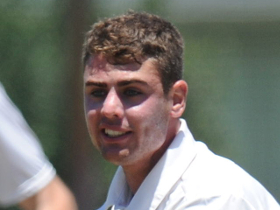
Western Province and Cape Cobras pace bowler Travis Muller was looking forward to a breakthrough season, his second as a contracted player. Now the 23-year-old is spending it doing rehab for a stress fracture in his lower back.
Muller’s injury has brought a halt to his steady rise (and packed schedule) since he captained Wynberg Boys’ High School during his Matric year in 2011. In January 2012 he played Cubs Week and was selected for South Africa U19 in series against Zimbabwe and Pakistan before being drafted straight into the Western Province team for the remainder of the season. As it happened, that 2012 winter proved to be his last proper off-season.
Muller was a regular for the provincial amateur side in 2012/13 before going into a stint at Tavistock CC in England. He then had his most prolific season in 2013/14, cracking the Cape Cobras squad in the midst of playing 16 First Class matches. He then headed overseas again, this time to Horsham CC. Last season was almost as busy, spending time in both the provincial and franchise teams before earning selection to the National Academy for 2015 – which culminated in an Emerging Players tour of Sri Lanka last August.
“It was there that I first felt my back, though it’s probably been building for a while. When we returned I played a match in the Africa T20 Cup and haven’t played since… it hasn’t been fun. At the start we weren’t sure what the problem was – some doctors were saying one thing and others were saying another. Finally, in October, we got clarity from a surgeon and thankfully I didn’t need an operation.”
While Muller recognises that he was required to squeeze a lot of cricket into the past four years, he feels his enthusiasm didn’t help either.
“I wouldn’t say I’ve been a victim of my success; there are a number of things that could have played a part besides over-bowling. Apart from games and training I’ve always done lots of outside training too, so I haven’t always given myself enough time to rest.”
As he really loves being involved in the action, Muller initially found it ‘mentally and physically tough’ to be standing around at the nets with his to-do list reduced to rest and rehab. While he could take charge of the physical side of his rehab – which included swimming, cycling and light core work – the mental side needed external help.
“Brad Player [SACA Player Development Manager based in the Western Cape] has been great. He had a similar injury during his playing days so it’s been good to get his insight. He also sent me to Clinton Gahwiler, a psychologist at the Sports Science Institute, for further support. Brad told me to use this time for myself by concentrating on my future and my health, and then cricket will come after. He also suggested that I consider studying while I’m injured. We did aptitude tests which showed I’m strongly interested in a career in sport, so initially we considered Sports Management.”
As it turned out, they settled on another option that suits Muller even better… in surroundings he’s familiar with.
“I’ve always been interested in studying. I wanted to straight after school, but then I broke into SA U19s and it’s just been cricket since. My other passion is fitness, and we found a two-year diploma in sports conditioning at the Exercise Teachers Academy (ETA) College that will also help me manage my workload when I get back on the field.”
Conveniently, ETA College Cape Town is based at the Western Province Cricket Club – where you will find Muller’s name on the Honours board – and they’ve been flexible about fitting his rehab into his daily schedule there.
“ETA is a nice place to study. The hours aren’t long and it’s been easy to relate to the content. There’s usually an hour when the other members of the class perform physical tasks that I’m not allowed to do yet and that’s when I do my rehab. It’s very convenient.”
Another positive to Muller’s current situation is the quality time he’s been able to spend with his friends and parents.
“It’s actually been good to have weekends and be able to go out and see my friends. A couple of my mates are studying, so it’s been nice to chat to them about what their experiences are like. That said, I’ve been missing cricket and would rather be in bed early on a weekend night looking forward to a match the next day.”
At the time of writing Muller was awaiting the programme for his next phase of rehab, but with the cricket season ending shortly he realises his next match will only come next season.
“I was speaking to [Western Province] coach Faiek Davids recently and he was saying that when pre-season starts I must come in and do my rehab there, with my teammates. He told me not to rush back. It’s great that they’re being so understanding and accommodating.”
While Muller has chalked this season down to one where ‘everything happens for a reason’, with breakthroughs coming in other facets of his life, his on-field goals remain undiminished.
“My long-term goals are to have the longest cricket career I can possibly have, so for now I’ll focus on getting fit and healed. Then I want to get back in the Western Province amateur team, then the Cobras, and finally, if I can, the Proteas.”
Share:

Text Info Strip

SERVICE WITH A SMILE

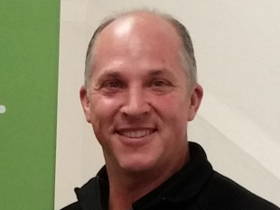
Every good relationship has to be built on trust, which is exactly how Brad Player describes dealing with players as a SACA Personal Development Manager (PDM).

If there’s anyone who has seen how cricket has changed – particularly in the demands on players – it’s the appropriately named Brad Player. For the past three years Player has been the SACA PDM for the Cape Cobras, Western Province and more recently their Academy players, but his involvement in the professional side of the game dates back to 1984. His playing career spanned an impressive three decades, with Player featuring as an all-rounder for Free State, Western Province and Boland before retiring in 2001.
Ruan Schlebusch, SACA’s National Personal Development Manager, jokes that Player has actually retired lots of times (during his subsequent club career) before giving insight into how the 49-year-old became a PDM.
“We were looking for a solid person who would be trusted by players, and Brad’s name kept coming up. While there’s no set formula for recruiting a PDM we look for someone with experience in personal development and proven facilitation skills. There isn’t a high turnover in the position, and word of mouth is useful when shortlisting for a vacancy. We need people who do it for the right reasons, and share the same philosophy as us,” Schlebusch explains.
Player made a seamless transition into the PDM role.
“When I stopped playing professionally I remained in sports,” says Player. “I’ve worked with sports agencies servicing the sports retail market with wholesale equipment, and I also coach at Claremont CC. Those two jobs allow me to have a ‘mobile’ office, so adding the PDM role to my schedule was possible – a role which I enjoy very much.”
Unsurprisingly, he often thinks back to what life was like when he first came into the game compared to the service he and his colleagues now provide.
“I often joke with Ruan about how the programme could have changed my life,” he says. “Of course circumstances are different for each individual – in my case I didn’t really have family support and people to go to for advice and direction in life. When I first started playing I was 17. It was our so-called entry into the professional era, but at that stage I don’t think we quite knew how to do it – it wasn’t as professional as today. For instance, the thought process back then was to resign if you had been working and got a cricket contract. I initially did my national service after school and straight after that got a job at a corporate company, but it boiled down to making a decision about whether I would focus on my cricket.”
Nowadays such decisions aren’t as black and white any more, which is why Player and his fellow PDMs are trained to help them deal with the ‘grey’ areas. Considering the overall PDM group also has a variety of skills – some are psychologists and others are in education – they keep open dialogue among each other to deal with the changing landscape.
“Our PDMs get standardised training through our partnership with the Sports Science Institute, but we also do individualised fine-tuning work with PDMs on certain spheres,” Schlebusch explains. “For example, with Brad we did modules on facilitation but he has an advantage in other areas because he’s a former player. Thanks to the calibre of PDMs we have, communication is very open. Support and training is provided where needed so that everyone can be confident and competent in their jobs. They constantly phone each other, we have a WhatsApp group and we all meet at least once a year.”
While their discussions often focus on the changing landscape for cricketers, the PDMs stick to fundamentals when they deal with the players.
“We cover three areas,” says Player. “We have to understand the players’ needs, provide dual career support by matching it to the individual person, and we also do life skills facilitation.”
With three teams under their watch, which could amount to 30 players, regular contact could be tricky but Player is in a fortunate position at his old stomping ground.
“I used to play with the coaches who are currently involved there [Paul Adams and Faiek Davids] and they allow me to interact with the players at training. This helps me build a good relationship with the players because I see them often. We are required to interact twice a month with each of the players but I generally see them more often.”
Player expands on the realities the players are faced with: “Initially the drive is to succeed in cricket, but our role in working with the individual as a whole means we have to help them look a little further than cricket. Only a small percentage of players make enough money to be able to invest, for instance… and that’s where the PDMs come in. We have to guide the players in the journey they’ll take through cricket, knowing careers can be quite short-lived, so we have to prepare them for that next step. The nice thing about the programme is that it’s a dual highway – you can do both at the same time.”
Ultimately, it’s mutual understanding that determines the success of a PDM-player relationship.
“You have to build a relationship of trust with the players, it’s not just about ticking a box,” says Player. “With some players it takes a long time before they open up to you, and it’s when they do or they get their driver’s licence or finish their degree that you get the satisfaction. The reward for us lies in their success.”

Share: