Text Info Strip

Kyle Simmonds Crowned Overall Division 1 SACA MVP

The 2025/26 domestic cricket season concludes with Western Province all-rounder Kyle Simmonds named Division 1 Overall SACA MVP. Simmonds earned…

Read More

Liam Alder Named Overall SACA MVP for Domestic Division 2

Following the completion of all domestic fixtures, Liam Alder of the Garden Route Badgers finished at the top of the…

Read More

TWELVE YEARS OF RESEARCH-BASED PLAYER SERVICE

Over the past 12 years, the South African Cricketers’ Association (SACA) has cemented its dedication to evidence-based practice through a…

Read More

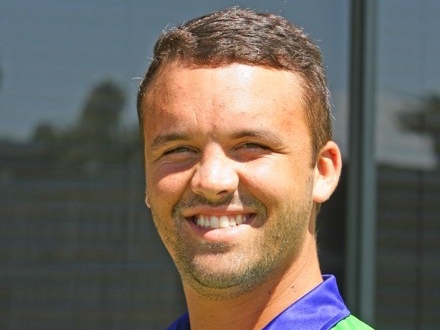
Kyle Simmonds Crowned Overall Division 1 SACA MVP

The 2025/26 domestic cricket season concludes with Western Province all-rounder Kyle Simmonds named Division 1 Overall SACA MVP. Simmonds earned the title after a strong season, finishing with 335,487 MVP points in 13 matches.

Simmonds led an impressive top three, joined by Duan Jansen and Daniel Smith. Throughout the season, Simmonds showcased skills with both bat and ball across all formats, earning 107,677 batting points and 201,809 bowling points, contributing in the field and delivering key moments.

Simmonds’ standout performances in the 4-Day Series helped him secure the SACA MVP title for the format, earning 266,363 MVP points in seven matches. His main strength was red-ball bowling, which earned him 149,089 points, while his batting earned him 98,273 points. He finished ahead of Matthew Boast and Wiaan Mulder, building a lead that lasted all summer.

Titans Duan Jansen won the 1-Day Cup SACA MVP, collecting 121,581 MVP points in nine matches. His strong bowling earned him 70,304 points, with 30,278 from batting and six from match wins. Jansen was a top performer, finishing as the joint leading wicket-taker with 16 wickets. He ranked ahead of Malcolm Nofal and Patrick Kruger.

Matthew de Villiers of the Warriors led the T20 Challenge SACA MVP rankings with 122,051 MVP points in nine matches. He dominated with the bat, scoring 99,051 batting points without bowling. Captaincy, winning, and fielding points added to his total, putting him ahead of Imraan Manack and Eathan Bosch. His steady batting at a high strike rate helped him top the T20 leaderboard and stay competitive throughout the season.

The SACA MVP ranking recognises player achievements by measuring player impact in CSA’s domestic competitions using data analysis led by statistician Andrew Samson. The system calculates points for batting, bowling, and fielding based on match context and opposition strength, so recognition reflects real contributions.

SACA CEO Andrew Breetzke said: “We congratulate Kyle, Duan, and Matthew for winning the SACA MVP in their respective formats. It is a great achievement to be recognised as the most valuable player for the season. This season, players have challenged themselves, and we wish all players a restful off-season.”


Share:

Text Info Strip

Liam Alder Named Overall SACA MVP for Domestic Division 2

Following the completion of all domestic fixtures, Liam Alder of the Garden Route Badgers finished at the top of the SACA MVP overall rankings, identifying him as the most valuable player in the division across all formats.

Alder won the Overall Division 2 SACA MVP title with 360,805 points across 20 matches, providing a consistent baseline for his team. His slow left-arm orthodox bowling earned him 257,542 bowling points, while his contributions with the bat resulted in 65,262 batting points, comprising two half-centuries in the 4-Day Series, where he maintained an average of 35.22. Alder’s total was further supported by 11 winning points and 7 fielding points, marking him as the most statistically active performer in the division this summer.

Emanuel Motswiri of the Limpopo Impalas was named the 1-Day Cup SACA MVP in Division 2. In six matches, Motswiri accumulated 126,878 total MVP points through a campaign based on bowling performance, where he took 16 wickets at an average of 16.81 and an economy rate of 5.85. Motswiri also provided middle-order runs, scoring two half-centuries to earn 24,851 batting points, showcasing his ability to perform in the 50-over format.

The red-ball format of the division was led by all-rounder Ernest Kemm of the Eastern Storm, who won the 4-Day Series SACA MVP title with 309,037 points. Since moving to the Eastern Storm, Kemm has added value to the team environment as a senior player, and his impact is reflected in his second-place finish in the overall rankings with 341,536 points. He ended the season as the division’s leading wicket-taker with 40 wickets, including five five-wicket hauls.

The T20 Knockout MVP went to Alindile Mhletywa of the Eastern Cape Iinyathi, who topped the rankings with 101,912 MVP points after taking 15 wickets at an average of 12.08 during the Iinyathi T20 campaign.

Recognition of these performances is facilitated by the SACA MVP ranking system, which measures player impact in CSA’s domestic competitions. Administered by statistician Andrew Samson, the domestic SACA MVP algorithm provides a data-driven analysis of performance, awarding points for batting, bowling, and fielding metrics based on match context and oppositional strength. Match impact points are also awarded for team wins and Man of the Match performances, ensuring recognition is based on statistical impact and match contributions.

Andrew Breetzke, SACA CEO, commented, “We would like to congratulate Liam, Ernest, Emanuel, and Alindile for winning the SACA MVP in their respective categories. It is a great achievement and an honour to be recognised as the most valuable player of the season. We wish all players a restful off-season after challenging themselves throughout the year.”


Share:

Text Info Strip

Du Preez Crowned Overall Domestic Women’s SACA MVP Winner

The South African Cricketers’ Association (SACA) has announced the winners of the Domestic Women’s SACA MVP awards for the 2025/26 domestic season. Former Proteas captain Mignon du Preez, seasoned all-rounder Nicolien Janse van Rensburg, and emerging talent Alexandra Candler claimed the top honours across the overall and format-specific rankings, marking a season of high-performance cricket in the domestic landscape.

Mignon du Preez finished the season at the summit of the overall SACA MVP rankings with 249,953 total MVP points. Representing the North-West Dragons, the veteran batter’s consistency across both the Pro50 and Pro20 formats secured her the title. Du Preez remains a dominant force in domestic cricket, with her season marked by high-impact half-centuries and a superior points-per-match average. In the Pro50 series, she accumulated 142 runs across four innings at an average of 35.50, including two half-centuries.

Her performance in the CSA Women’s Pro20 Series 2025/26 was particularly noteworthy, where she recorded the most fifties in the competition. A standout moment of her campaign was a 115-run partnership with Lizri de Villiers against the Garden Route Badgers in Oudtshoorn, which ranks as the second-highest partnership of the Pro20 season. Her ability to anchor innings while maintaining a high strike rate provided a significant points cushion over her competitors, reinforcing her status as one of the premier performers in the South African game.

For the second consecutive year, Nicolien Janse van Rensburg has secured the Pro50 Series SACA MVP title, accumulating 147,843 points. The Garden Route Badgers all-rounder was the most valuable player of the Pro50 series and finished as the leading wicket-taker in the competition with 16 wickets. Throughout her Women’s List A career, Janse van Rensburg has maintained a bowling average of 15.97 and a strike rate of 23.95. Her 2025/26 campaign was bolstered by disciplined seam bowling, highlighted by best bowling figures of 5 for 28. Her match-winning influence was evident in her ability to strike regularly while maintaining an economy rate of 4.00, solidifying her reputation as a consistent senior player.

The Pro20 Series T20 MVP title was awarded to Alexandra Candler, who finished the shortest format with 163,266 points. The 22-year-old Dolphins all-rounder enjoyed a breakthrough season, showcasing versatility with both bat and ball. Candler’s T20 campaign was characterised by aggressive batting and breakthroughs with her medium pace, but it was also defined by her ability to build match-winning stands. She was a key contributor in two of the highest partnerships in the CSA Women’s Pro20 Series during the 2025/26 season, demonstrating her value as a tactical middle-order anchor.

The SACA MVP uses an internationally recognised rankings system to measure key influencers in CSA’s domestic competitions. Administered by cricket statistician Andrew Samson, the algorithm provides an objective, data-driven analysis of player performance. Points are awarded based on batting metrics such as runs and strike rates, bowling performance including wickets and economy, and fielding contributions. Match impact bonus points are also awarded for team wins and Man of the Match performances. This system ensures that recognition is based purely on statistical impact and match-winning contributions.

SACA CEO, Andrew Breetzke, commented, “We congratulate Mignon, Nicolien, and Alexandra for winning the title of SACA MVP in their respective categories. It is a great achievement to be recognised as the most valuable player for the season. This season, players have challenged themselves and let their talent shine. We wish all players a restful off-season.


Share:

Text Info Strip

Domestic MVP Spotlight: Mhletywa Crowned T20 Knockout MVP

The South African Cricketers’ Association (SACA) is pleased to announce and congratulate Alindile Mhletywa of the Eastern Cape Iinyathi, as the SACA MVP for the CSA T20 Knockout Challenge.

Mhletywa topped the tournament’s MVP rankings with a total of 101,912 points, edging out teammate Thozama Totana, 89,404 MVP points, and Free States Jacques Snyman on 88,972 MVP points.

His effectiveness with the ball was the driving force behind this impressive score, as his bowling contributions accounted for 74,821 of his total points. As one of the top bowlers in the competition, taking 15 wickets with best figures of 3/23 against Garden Route Badgers and maintaining a strong bowling average of 12.08.

SACA CEO Andrew Breetzke extended his congratulations, stating: “We are proud to celebrate the outstanding achievements of our division two domestic MVP winners. This T20 accolade for Alindile is a testament to his consistent, high-impact contribution, which is precisely what the objective SACA MVP rankings are designed to measure.”

In the Overall Rankings, Ernest Kemm of the Northern Cape Heat holds a commanding position at the top of the rankings. The all-rounder’s excellence across the 4-Day Domestic Series and white-ball cricket has set him apart from the pack, consistently accumulating valuable points in the season so far.

The SACA MVP ranking system is a crucial, internationally recognised statistical tool that objectively measures a player’s genuine performance and impact on the game. The rankings use a sophisticated algorithm, administered by cricket statistician Andrew Samson, that goes beyond numbers to quantify a player’s worth to their team’s success. It measures match-defining contributions in a game by awarding points for batting, bowling, captaining, and fielding achievements, which are weighted by the match context and the contribution’s importance.

This impartial system ensures that the players who truly perform when it matters most, regardless of their specialisation, are justly recognised as the most valuable players in domestic cricket.

The domestic season continues to showcase incredible talent. Stay tuned for the latest updates in the SACA MVP race.

CSA T20 Knockout Challenge SACA MVP Rankings as of 26 November 2025
Overall SACA MVP Rankings as of 26 November 2025
Share:

Text Info Strip

Bosch Powers to Proteas SACA MVP Summit

The South African Cricketers’ Association (SACA) has released the updated Proteas Men’s MVP rankings for the 2025/26 season following the conclusion of the tour to Pakistan.

Using the objective data from the CricViz-powered SACA MVP rankings to highlight the performance of individual players as the squad immediately shifts focus to the demanding Test series in India.

The rise of all-rounder Corbin Bosch, who leads the overall Proteas Men’s MVP with 269.943 MVP points. Bosch’s consistent high-impact performance across all formats, including Test, ODI, and T20I, confirmed his position as the season’s most valuable player thus far.

Looking at the format leaders, Wiaan Mulder remains the top-ranked player in the Test rankings with 154.959 MVP points. His red-ball form, anchored by a record individual score earlier in the season, ensures a strong core for the upcoming Test matches.

In the limited-overs formats, Dewald Brevis dominates the T20 International standings with 165.839 MVP points, reflecting his consistent strike-rate and boundary-hitting prowess in the shortest format.

Meanwhile, Keshav Maharaj is the most consistent performer in the One-Day International format, leading the ODI rankings with 66.483 MVP points for his ability to control the game and take key wickets.

“The Pakistan tour was a good exercise in building depth, and the SACA MVP rankings clearly indicate the resilience and individual capability that emerged,” said Andrew Breetzke, SACA CEO. “For an all-rounder like Corbin Bosch to lead the overall rankings speaks volumes about his individual value.”

The SACA MVP rankings, driven by the analytical partnership with CricViz, move beyond traditional statistics to deliver an objective measure of player influence. This sophisticated model assesses a player’s performance on every ball, factoring in match-defining moments, opposition strength, and the high-pressure context of tournament play, providing an accurate reflection of their objective value.

Share:

Text Info Strip

Subrayen and De Klerk Win 2024/25 SACA MVP

Today, the South African Cricketers’ Association (SACA) announced the SACA Most Valuable Player (SACA MVP) winners for the 2024/2025 domestic cricket season, recognising outstanding individual contributions in Division 1 and Division 2. Dolphins captain Prenelan Subrayen claimed the Division 1 SACA MVP award, while Eastern Cape Iinyathi all-rounder Jade de Klerk secured the Division 2 SACA MVP title.

Division 1 MVP: Prenelan Subrayen (Dolphins)

Prenelan Subrayen led the Division 1 SACA MVP rankings with a remarkable 382,761 MVP points, showcasing consistent performances across both the 4-Day Domestic Series and the CSA One-Day Cup. The Dolphins captain proved pivotal, leading his team to the final of the One-Day Cup competition.

In the 4-Day Series, the experienced spinner was a dominant influence, claiming an impressive 44 wickets in just seven matches. His standout performance against Western Province saw him achieve the best bowling figures in a match for the Division 1 series, taking 10 wickets for 110 runs at an exceptional economy rate of 1.97.

Subrayen also made significant contributions in the One-Day Cup, picking up 15 crucial wickets. His impactful performances throughout the season cemented his place at the top of the rankings, ahead of Western Province all-rounder Kyle Simmonds (375,214 MVP points) and 2022/23 SACA MVP, Beyers Swanepoel (353,715 MVP points).

Division 2 MVP: Jade de Klerk (Eastern Cape Iinyathi)

Jade de Klerk emerged as the Division 2 SACA MVP overall winner after a dominant season for the Eastern Cape Iinyathi. The 26-year-old all-rounder’s exceptional bowling performances in the 4-Day Domestic Series were the cornerstone of his success.

De Klerk was a formidable force with the ball in the longer format, claiming an impressive 44 wickets, including two outstanding ten-wicket hauls in a single innings. His consistent wicket-taking ability saw him maintain a strong position in the overall rankings, ultimately clinching the top spot in the final round. The final overall Division 2 SACA MVP standings saw de Klerk finish ahead of Ernest Kemm (368.413 MVP points) in second position and Sean Whitehead (318.347 MVP points) in third. His dominance extended to the 4-Day rankings, where he also finished as the leading MVP, followed by Ernest Kemm (265.645 MVP points) and Tshepo Ntuli (190.307 MVP points).

The SACA MVP uses an internationally recognised rankings system to objectively measure player contributions across all of CSA’s domestic competitions. The algorithm, developed by SACA and administered by cricket statistician Andrew Samson, awards points based on player performance in various match situations, providing a comprehensive and data-driven assessment of their value.

“Prenelan and Jade’s performances this season highlight the talent and competitive spirit within South African domestic cricket. Their consistent excellence throughout the season has been duly recognised with these SACA MVP awards,” commented Andrew Breetzke, SACA CEO.

Overall SACA MVP Rankings – Division 1
4-Day Series SACA MVP Ranhttps://saca.org.za/player/?c=204kings – Division 1
Overall SACA MVP Rankings – Division 2
4-Day Series SACA MVP Rankings – Division 2
Share:

Text Info Strip

Stubbs Extends SACA MVP Overall Rankings Lead

Tristan Stubbs has further cemented his position at the top of the Proteas Men’s SACA MVP overall rankings after a superb performance in the recently concluded Test series against Bangladesh. The Proteas wrapped up the series with a convincing victory, placing the team in an excellent position in the ICC Test Championship.

Stubbs’ unbeaten 30 in the second innings of the first Test was particularly impressive, highlighting his ability to adapt to different match situations. His maiden Test century and a total of 159 runs in three innings contributed significantly to the team’s success.

With a series tally of 219.399 MVP points, Stubbs has extended his lead over Aiden Markram (168.794) and Kagiso Rabada (145.324), who currently holds the number one spot in the ICC Test Bowler Rankings.

The SACA Most Valuable Player Rankings takes into account expected performance on every ball according to CricViz’s extensive database. The algorithm calculates batting, bowling, and fielding performances as well as match-defining contributions, and it considers the historic performances of the venue where each fixture is being played. Therefore, providing a more accurate reflection of the top performers in the game compared to traditional batting and bowling averages.

Proteas SACA MVP rankings as of 1 November 2024:

PROTEAS SACA MVP – OVERALL RANKINGS
PROTEAS MVP – TEST RANKINGS
Share:

Text Info Strip

Dayyaan Galiem Crowned Division 1 T20 SACA MVP

Titans all-rounder Dayyaan Galiem has been named the Division 1 T20 SACA MVP for the 2024/25 season. The 27-year-old’s consistent performances across all facets of the game earned him 141.697 points in ten matches.

The SACA MVP uses an internationally recognized rankings system to measure the key influencers in CSA’s domestic competitions. The domestic SACA MVP algorithm, developed by SACA and administered by cricket statistician Andrew Samson, identifies the most valuable performers in domestic cricket.

Galiem’s impact was felt throughout the tournament. His ability to contribute with both bat and ball, combined with his fielding prowess, made him a valuable asset to the Titans. The all-rounder’s consistent run-scoring and wicket-taking abilities, coupled with his sharp fielding, propelled him to the top of the T20 MVP standings, finishing 30 points ahead of second-place Western Province, George Linde (111.430) and North West captain Wihan Lubbe (103.266).

The Titans all-rounder finished the competition with a strike rate of 126.11, 12 wickets, and five catches.

“It’s an incredible feeling to be named the SACA MVP. I’m grateful for the opportunity to represent the Titans and contribute to the team’s success. A lot of work has been put into developing my game, and so far, it’s turned out well, which I’m grateful and happy about. I’m excited to continue building on these achievements, but nothing would be possible if it weren’t for the right people guiding me and supporting me,” said Galiem.

SACA rewards MVP winners with prize money for their performances in the Division 1 SACA MVP. The top 30 players in the SACA Overall MVP, the top 10 players in the 4Day Competition, the top 10 in the CSA One-Day Cup, and the top 10 in the CSA T20 Challenge are all eligible for prize money.

Share:

Text Info Strip

SACA Congratulates Britz on Winning Division 2 SACA MVP Rankings

The South African Cricketers’ Association (SACA) would like to congratulate Eastern Storm batter, Christ Britz on winning the inaugural Division 2 Most Valuable Player (MVP) award in the T20 rankings.

Britz’s exceptional performance throughout the CSA T20 Knock-Out Competition was highlighted by two centuries, including an unbeaten 107 against Northern Cape Heat, which propelled him to the top of the MVP rankings. His dominance extended beyond that single innings, as he finished the tournament as the leading run-scorer with a strike rate of 135.98.

The 25-year-old picked up points at an average of 12.712 MVP points, highlighting his consistent performances throughout the competition which earned him a total of 101.694 MVP points, a comfortable lead ahead of all-rounders, Tuskers Sean Gilson (87, 500 MVP points) and Limpopo Impala’s Morne Venter (84.634 MVP points).

The domestic SACA MVP is a unique algorithm developed by SACA and is administered by cricket statistician, Andrew Samson in order to identify the most valuable performers in domestic cricket.

“It’s an incredible feeling to contribute to my team’s success and to be recognized for my efforts. I couldn’t have done it without the support of my teammates. It’s a great milestone for me and for Division 2 to have a SACA MVP” commented Chris Britz.

The formula is designed to recognize players who make a significant contribution to their team’s success throughout the season. Factors such as batting and bowling averages, strike rates, and overall impact on the game are all taken into consideration. The MVP is a combination of statistical performance to determine the most valuable player at the end of the season.

“I would like to congratulate Chris on winning the SACA MVP in the T20 rankings. This achievement reflects his consistent contribution to his team’s success and highlights the hard work and dedication of our cricketers. Cricket is a game of statistics, and we are pleased to introduce the SACA MVP to Division 2″ said Andrew Breetzke, SACA CEO

Division 2 – T20 SACA MVP Rankings
Share:

Text Info Strip

2024/25 SACA MVP season kicks off

The anticipation is building as the domestic cricket season kicks off the start of the 2024/25 domestic SACA MVP race with the Lions taking on the Titans in Johannesburg.

With a host of talented players vying for the coveted title, fans can expect a thrilling campaign filled with exciting matches and high-stakes performances.

“The SACA MVP rankings are a testament to consistent, high-quality performances throughout the season. They reflect each individual player’s ability to contribute to their team’s success in a variety of conditions.

“With fewer matches, each game takes on even greater significance for each team. It will be that much more important for players to perform at our best in every game. Consistency will be key to our success this season,” commented Khaya Zondo, SACA President.

The domestic SACA MVP is a unique algorithm developed by the SACA and is administered by Andrew Samson in order to identify the most effective performers in domestic cricket.

The formula is designed to recognize players who make a significant contribution to their team’s success throughout the season. Factors such as batting and bowling averages, strike rates, and overall impact on the game are all taken into consideration. The MVP is a combination of statistical performance to determine the most valuable player at the end of the season.

Supporters and media alike can immerse themselves in the MVP Rankings on the SACA website and can be viewed by team or format. Fans can also track the rankings after each round of matches to see how their favourite domestic players are performing and gain an objective reflection of the top-performing players after each round of matches.

“We are looking forward to another great season of cricket as the new season gets underway. We would like to wish all the players the best of luck and look forward to a season filled with exciting matches and unforgettable moments” concluded SACA CEO, Andrew Breetzke.

Share:

Text Info Strip

SACA CALLS ON CSA BOARD TO STAND DOWN

South African Cricketers’ Association (SACA) today called on the CSA Board of Directors to stand down following the Notice of 14 October 2020 advising of Government Intervention from the Minister of Sports, Art and Culture (DSAC), Minister Nathi Mthethwa.

The crises that have engulfed the CSA Board of Directors over the past 18 months have culminated in a situation where there is no longer confidence in their ability to govern the organization and provide guidance on resolving many of the crises that remain.  

SACA believes that an interim Board of Directors must be established to stabilize the organization.  This interim Board should include a SACA player’s representative as well as a representative from the remaining stakeholders in the game (sponsors and broadcasters).  Furthermore, the interim Board should appoint an experienced Administrator to assist in the operational work that is required at CSA, ensuring a link between the interim Board and operational staff.

Andrew Breetzke, SACA CEO stated, “Cricket is in an existential crisis, and the intervention of Government will result in the International Cricket Council (ICC) reviewing CSA’s position as an ICC Member, and will furthermore jeopardise the England Tour scheduled for next month.  Players will suffer, development will suffer and the future of the game will be prejudiced.  However, as has been recognised by DSAC and SASCOC, the current Board has no credibility to resolve the crises, and it is clear that the current impasse between Government and CSA will not be resolved until such time as the Board stands down.”

“We therefore implore the CSA Board to stand down and thereby take a decision that will be in the best interests of cricket,” added Breetzke.

“As we have stated previously, CSA is not able to self-correct, and the intervention of Government is further evidence of this.  The current governance structure of CSA must be reviewed, and this has been acknowledged by CSA.  The interim Board must facilitate the implementation of the Nicholson Recommendations through amendments to the MOI, as this will allow for an effective Board of Directors to ultimately take over the responsibility of the governance of the game.  The Fundudzi Forensic Report has identified various failures in governance, failures that have consistently been highlighted by SACA, and this is the opportunity to remedy these for the sake of the game and ensure that experienced personnel are recruited into key executive positions,” concluded Omphile Ramela, SACA President.

Share:

Text Info Strip

CSA AND SACA CONCLUDE INTERIM AGREEMENT

The South African Cricketers’ Association (SACA) and Cricket South Africa (CSA) announced today that an Interim Agreement has been reached and will apply until MOU18 Agreement has been officially finalised.
The short-term arrangement will allow the player contracting process to go ahead for the coming contract year and ensure that players will not be out of contract after 30th April 2018.

CSA and SACA have also committed to negotiating a recognition agreement to regulate the ongoing relationship between them. The two bodies have agreed on the date of 30th June 2018 as the bull’s eye deadline by which MOU18 should be finalised with set dates in May and June for negotiations meetings.

Summary of the key aspects of the Interim Agreement:

1. Player Contracts
An interim increase of 6% will be applied to fund the remuneration of both national and franchise players and this will apply to their standard contract benefits with effect from 1st May 2018. This will not preclude any additional increases, which may apply retrospectively to 1st May 2018, when the MOU18 is finalised.

2. Revenue Share Model
CSA has committed to maintaining a revenue share model with the players, details of which will be finalised as part of the MOU18.

3. Commercial Rights
The collective licensing of player commercial rights to CSA, for use by it and its commercial partners, will be extended by SACA for an interim two-month period until 30th June 2018. CSA and SACA have committed to negotiating a new long term commercial rights agreement to apply from 1st July 2018, the terms of which will be no less favourable to players than those existing in the current commercial agreement under the MOU14.

4. MOU18
It is intended that the MOU18 will establish the longer term financial arrangements necessary to underpin the national and franchise player contracts on a sustainable basis for the next four to five years. It will also deal with a wide range of player matters, relating to their employment and their careers as professional cricketers. Many of these will be similar to the arrangements under the MOU14.

CSA and SACA have set 30th June 2018 as the target deadline by which time the MOU18 should be finalised. In addition, they have agreed to specific dates during May and June for negotiation meetings.

“We are satisfied that this Interim Agreement addresses the uncertainty that has existed amongst players regarding the MOU and their contracts and it ensures that no national or franchise player in the system going forward is left without a contract come 1st May 2018,” said Tony Irish, SACA’s chief executive.

“The Interim Agreement also contains commitments to key issues outside the player contracts and commits the parties to further structured negotiation over a two-month period which aims to finalise the full ambit of player benefits, and other player relevant matters, to apply over the longer, four to five-year term of the MOU18.”

“There is still a long way to go in these negotiations but CSA and SACA have both acted in the best interests of the game by setting a clear platform needed to jointly and constructively get this done within a two-month period,” concluded Thabang Moroe, CSA Acting Chief Executive.

Share:

Text Info Strip

SACA RESPONDS TO CSA ON PLAYERS MOU


The South African Cricketers’ Association (SACA) today responded to statements made by Cricket South Africa (CSA) in a CSA media release late yesterday regarding the players MOU.


The MOU is a comprehensive collective agreement concluded on a four year basis between CSA, SACA and cricket Franchises which regulates critical matters relating to professional cricketers, including the contracts of national and franchise players. The current MOU will expire on 30 April 2018 and a new MOU would ordinarily commence on 1st May 2018 and run for a four year period from that date. Certain key elements of the MOU (which include the financial model underpinning player contracts and benefits) need to be agreed between CSA and SACA prior to player contracts being finalised.


“We are both surprised and disappointed that CSA has seen fit to make a public statement announcing plans relating to the MOU without giving us any proper opportunity to respond to, or to deal with, these first” said Tony Irish, SACA’s chief executive. The suggested plans have caused consternation amongst players and they require a response from SACA. The indication of further possible delays and the unworkability of certain aspects of what is being suggested are particular matters of concern to us. The suggestion also that there have actually been negotiations conducted by SACA officials with CSA on the MOU to date is also not correct. Negotiations on the key elements have yet to start”


“SACA has been doing everything possible from its side for approximately three months to engage with CSA on the MOU and to deal with the key elements to enable player contracts to be finalised well in advance of 30th April 2018, being the date on which the majority of player contracts end. In past MOU’s the key elements have always been agreed by the end of February at the latest to ensure a proper player contracting process can take place well in advance of expiry dates. Unfortunately our attempts to date have been met with very little response from CSA and much of our correspondence has gone unanswered.”


“We have now reached a point where many of our players could be out of contract in less than two weeks. The effect of this runs across the player group from senior players who play for the Proteas to young players seeking to make their way in franchise cricket.”


“The delays have created an environment of uncertainty for players, and also for Franchises who wish to secure their players. This comes at a time when South African cricket needs to do whatever it can to retain its players in the face of competing opportunities afforded to players in the emerging T20 leagues market and also in the UK. A key recommendation of CSA’s National Teams Review Report released last year was the implementation of an effective retention strategy.”


“CSA further announced in yesterday’s release that it is willing to extend existing player contracts. This has caused confusion because it doesn’t cater for what is actually happening on the ground for many players. Some players have already been told that they will no longer be contracted, some will be moving between national and franchise contracts, some will be moving between franchises and some will be first time franchise players. Extensions of contract are simply unworkable for all of these players”


“Although CSA now acknowledges in its media statement that concluding the MOU has become a matter of urgency it goes on to suggest that a new agreement may only be finalised in July. We do not understand why such a long further delay may be necessary. We believe that the new MOU is likely to be substantially similar to the existing one in most respects”


“Whilst SACA does not have an issue with clarifying the relationship between it and CSA we urge CSA to prioritise finalising the key elements of the MOU so that there is a greater degree of certainty and security for players going forward. Our players deserve that.”
“Should an interim arrangement be necessary because finalisation of all the key elements can’t now be done by 30th April, then we believe that this needs to be agreed with SACA, before any further media statements are made, to ensure that it is workable and that it aligns with, and feeds into, the MOU once finalised.”


Share:

Text Info Strip

JON JON SMUTS WINS THE SACA MVP IN FRANCHISE CRICKET

The South African Cricketers’ Association (SACA) congratulates Jon Jon Smuts on winning the 2017/18 SACA MVP (Most Valuable Player) for domestic Franchise Cricket.

The SACA MVP formula calculates player on-field performances, in domestic competitions, taking into account batting, bowling, fielding dismissals and captaining abilities and weighting these in each performance according to the context of the match. The formula is similar to that used by other players associations around the world.

Smuts finished the season on 479.387 points in the overall rankings, 66.974 points ahead of 2017/18 Hollywoodbets all-rounder, Senuran Muthusamy.

Despite spending time away from the domestic competitions following his Proteas call-up for the T20 Series against India, Smuts managed to hold onto his lead at the top of the overall rankings after a stellar season in all three formats.

In addition to winning the SACA MVP, the Warriors captain picked up the top ranking spot in the Momentum One-Day Cup rankings with 154.310 points. He finished third in the Sunfoil Series rankings with 207.482 points and second in the Ram Slam T20 rankings with 117.596 points.

World Sports Betting Cape Cobras captain JP Duminy dominated the Ram Slam T20 rankings early on in the competition and finished with 122.425 points having scored 356 runs, only five runs behind tournament-leading run scorer Reeza Hendricks. It was Duminy’s record-breaking 37 off one over against the VKB Knights in Cape Town which sealed his position at the top of the Ram Slam T20 rankings.

Sunfoil Series winner, Simon Harmer, also enjoyed a consistent and steady climb up the overall rankings this season. The Warriors off-spinner picked up his 20th career five-wicket haul against the VKB Knights in East London to take the lead and finish with 292.399 points in the Sunfoil Series rankings. As the only bowler with four five-wicket hauls and a ten-for in the domestic season, Harmer was a clear winner.

“It’s a great feeling to win the SACA MVP,” said Smuts. “The changes in rankings are followed by franchise players after each round of matches and it’s a good indicator of form and on-field performance as it takes into account key aspects of a match and all disciplines of the game.”

“Congratulations to Jon Jon for winning the SACA MVP this year, and also for finishing first in the Momentum One-Day Cup rankings for the second year in a row”, said Tony Irish, SACA’s chief executive. “To win overall a player has to perform for his franchise in just about every round of matches and in all three of CSA’s domestic competitions through the season.”

“I’d also like to congratulate JP Duminy and Simon Harmer on leading the way in the Ram Slam T20 and the Sunfoil Series respectively. It has been another year of exciting franchise cricket with records being broken, matches and competitions going down to the wire and some outstanding performances from established players and from young players.”

Share:

Text Info Strip

SACA AND CSA REACH AMICABLE AGREEMENT ON PLAYER T20GL COMPENSATION

Cricket South Africa and the South African Cricketers’ Association (SACA) are pleased to announce that amicable agreement has been reached in terms of compensation to be paid to the players who were to play for various franchises in the inaugural 2017 edition of the T20 Global League.

The League was postponed to 2018 in terms of a decision taken by the Board of Directors of CSA at its meeting on 10 October 2017.

Payment will be made in three equal instalments between December 2017 and April 2018.

“I would like to thank SACA for the amicable manner in which this issue was settled in the best interests of South African cricket and the sustainability of its development and international cricket programmes,” commented CSA Acting Chief Executive Thabang Moroe. “The settlement will help bridge the gap between player expectation and the disappointment of having to postpone the league.

“Our players are key stake holders in the game and are also CSA’s most valuable assets which is why we invest heavily in our development programmes to produce our best possible national side.

“We look forward to continuing this positive relationship with our players and their representatives,” concluded Mr. Moroe.

“This was an issue affecting 138 South African and foreign players and we’re very happy that we’ve been able to resolve it for all of them,” said Tony Irish, chief executive of SACA. “The settlement is both fair and responsible and has been well received by the players. I would like to thank Cricket South Africa for its role in ensuring this outcome.”

Share:

Text Info Strip

SACA CONGRATULATES SACA MVP 2016/17 WINNERS

The South African Cricketers’ Association (SACA) today congratulated Warriors all-rounder, Colin Ackermann, on winning the SACA Most Valuable Player (MVP) title in franchise cricket for his performances over the three domestic competitions in the 2016/17 season. Ackermann finished on a total of 435, 207 points.

The SACA MVP domestic rankings lists the top performing franchise players competing in CSA’s domestic competitions. Players earn points, based on an internationally recognised formula used by several players’ associations around the world, for batting, bowling, fielding and for contribution to matches won by their team. Points are weighted across the different formats to ensure that critical performances in each match earn a player the appropriate number of points.

The overall SACA MVP Rankings combine a players’ performance in all three domestic competitions and are an indicator of consistency of performance through the season. Performances in a particular competition are also recognised in the SACA MVP Rankings relating to each of the Sunfoil Series (four days), Momentum One-Day Cup (50 overs) and CSA T20 Challenge (20 overs) competitions.

Following a very good start to the season, Ackermann’s consistency with both bat and ball earned the Warriors all-rounder a total of 1431 runs and 16 wickets in all competitions. Ackermann took the overall SACA MVP title, 34.129 points ahead of VKB Knights paceman Marchant de Lange, who finished second, with Robbie Frylinck from the Hollywoodbets Dolphins rounding out the top three.

“The SACA MVP is something all of us franchise cricketers strive to win because it measures every aspect of the game across the three domestic competitions. It is recognised by players as a measure of consistency throughout the season. I’m proud to have won this award but must also give some credit to my Warriors teammates in helping me to do it” said Ackermann.

The SACA MVP rankings also focus on performances in each particular competition. VKB Knights opening bowler Duanne Olivier, clinched the top spot in the four-day Sunfoil Series rankings, finishing with 52 wickets in 8 matches. Simon Harmer and Marchant de Lange finished in second and third respectively on the Sunfoil rankings.

Jon-Jon Smuts was a runaway winner of the Momentum One-Day Cup rankings. The all-rounder scored 581 runs at an average of 52.81, and picked up 14 wickets in the competition. Multiply Titans openers Aiden Markram and Henry Davids both enjoyed very successful campaigns and ended in 2nd and 3rd place on the Momentum rankings respectively.

Smuts (169.616), finished 36.053 points ahead of 2nd placed Colin Ackermann, and 41.794 points ahead of 3rd placed Hardus Viljoen in the CSA T20 Challenge Rankings. Smuts finished as the leading run-scorer in the competition scoring 371 runs in 11 matches.

“I’d like to congratulate Colin on winning the overall SACA MVP,” said SACA chief executive, Tony Irish. “To achieve the top spot a player has to perform for his franchise pretty much week in and week out throughout the season and he has done exactly that.”

“I would also like to congratulate Jon-Jon and Duanne for leading the way in each of the domestic competitions. There were some pretty impressive individual performances from a number of players this season. Henry Davids’ 673 runs (8 matches) in the Momentum One-Day Cup and Duanne Olivier’s 52 wickets (8 matches) in the Sunfoil Series deserve special mention. Well done also to the entire Titans squad for winning the Momentum One-Day Cup and the CSA T20 Challenge and to the Knights squad for taking the Sunfoil Series.”

Share:

Text Info Strip

NO RESOLUTION OF COBRAS PLAYERS AND COACH DISPUTE

The South African Cricketers’ Association (SACA) today confirmed that the Cape Cobras players’ dispute relating to their grievance against the Cape Cobras coach, Paul Adams, has not been resolved.

The players, SACA and the Franchise had agreed at the conciliation meeting held at the Commission for Conciliation, Mediation and Arbitration (CCMA) on 18 October 2016 to a fourteen (14) day extension period to give them a further opportunity to resolve the issues around the coach.

“SACA and the players are disappointed by the Franchise’s response to our proposals on a process which we believe would have resolved the matter once and for all”, said Tony Irish, chief executive of SACA. “We had proposed a process for an independent cricket person to monitor and assess the coach’s situation on the ground within the team over a three (3) week period and thereafter to make a recommendation as to what should happen with the coaching situation. His recommendation would be accepted by all, and binding on the players, SACA and the Franchise, and it would dispose of the current dispute”, said Irish. “The Franchise has however rejected the proposal out of hand without proposing any alternative, despite having indicated to us that they were in favour of some form of monitoring.”

“It is very obvious that the Franchise team is in disarray and the Cobras are currently rooted to the bottom of the Sunfoil Series log. In addition Alan Dawson, brought in as the convenor of selectors in an to attempt to beef up the structures around the coach, has now resigned citing that he believes it is impossible to work in an environment in which there is a fundamental problem between players and coach. The most frustrating aspect is that it appears that the board of the Franchise simply refuses to acknowledge that there is actually a problem at all, despite everything that has happened, and is now happening, around it”, said Irish.

SACA will seek a certificate of outcome from the CCMA confirming that the dispute has not been resolved. The issuing of this certificate will enable players to embark on lawful and protected industrial action (such as a strike), following proper notice to be given, should the players elect to go this route.”

“Any kind of industrial action is always a very last resort for players and we hope it doesn’t come to that”, said Irish. “However the players have been asking the Franchise to properly address this issue for many months, but to no avail, and have exhausted every constructive process available to them with the Franchise. We will now seek CSA’s assistance and intervention before considering what further steps to take.”

Share:

Text Info Strip

CAPE COBRAS PLAYERS GRIEVANCE REFERRED TO THE CCMA

The South African Cricketers’ Association (SACA) confirmed today that it has referred the Cape Cobras players’ grievance to the Commission for Conciliation Mediation and Arbitration (CCMA).

“The players have exhausted the internal cricket process for dealing with their grievance and now have no option but to refer this to the CCMA”, said SACA chief executive, Tony Irish. “It is the only way that they can deal with it further and keep shining a light on the issue with the franchise. They are not able to seek a binding order from the CCMA but are able to have the grievance conciliated in that forum.”

The grievance relates to a breakdown in the relationship between the majority of the Cobras players and the head coach, Paul Adams. It involves a fundamental loss of confidence by the players in the coach’s ability to lead the coaching of the team arising from his inability to create an effective team culture, poor communication and man management skills, lack of tactical and technical knowledge and disorganisation in running proper practice and training sessions.

“Some people have been quick to point out that the team won trophies under the coach in the period after he took over” said Irish. “According to the players however the coach’s shortcomings back then were compensated for by the role played by senior players at the time and the situation has got progressively worse. It in fact deteriorated to such a point last season that in December 2015 the franchise itself surveyed the players on the issue and the outcome of several of these highlighted the seriousness of the breakdown. The problem wasn’t however addressed by the franchise and in May 2016, when the players heard that the franchise was planning to renew the coach’s contract, 10 out of 17 contracted players most of whom are senior players, raised a formal grievance and thereafter sought the players’ association’s assistance in dealing with it. We also know that players outside of the 10 sympathise with the grievance although have not put their names to it.”

“There is a quick and simple process in cricket for dealing with player grievances, but this was delayed by the franchise and it has now taken more than four months to process this grievance. In the recent mediation process the independent mediator, Paddy Upton, who was nominated by the franchise itself and is an internationally recognised expert on coaching and team dynamics, made a clear recommendation to the parties that the coach should stand down from the team, and be re-deployed in a different capacity if possible. Despite this however, the board of the franchise proceeded to confirm the coach’s re-appointment and stated that Upton’s report was deficient. We and the players concerned strongly disagree with this suggestion of the report’s deficiency. Upton was brought in to get an understanding of the grievance and to assist in resolving it, and he was specifically empowered to use whatever approach he deemed appropriate in doing so. He looked at the documentation, including the surveys, interviewed the individuals he considered relevant and produced a thorough report with a clear recommendation to the parties.”

“The players care about the Cobras team and its ability to perform going forward,” concluded Irish. “They are however extremely frustrated by the way their very legitimate concerns, which were clearly evident over nine months ago, have been dealt with and the length of time it has taken. They want the franchise to address the issue further.”

Share:

Text Info Strip

THE ALL-ROUNDER

Vernon Philander is one of a growing list of Proteas players who’ve enhanced their long-term career prospects without compromising their on-field careers.


In 2014 the 30-year-old Proteas opening bowler and lower order batsman completed a course in project management through GetSmarter, choosing this course because of off-the-field activities he had become involved in…


“I was involved in a couple of projects but at times I was struggling with the planning and management of them, that’s why I signed up for the course,” Philander explains. “I wasn’t always that organised so sometimes running the projects concurrently was a bit of chaos, but the course gave me some good tools in discipline and management.”


The projects Philander refers to are those run through his Vernon Philander Foundation, established in late 2013 to give back to his community.


“Where I come from many children can’t see that there are opportunities beyond what their brothers, sisters, uncles, and so on are involved in,” he says. “The intention is to give these children a better outlook on life and the tools to cope with it – not everything has to be about gangsterism and drugs. The starting point is Ravensmead, where I grew up, and we work closely with an organisation called Second Chance. One of the guys involved in that project was caught up in drugs while the other has been a world champion dancer. They have shown that you can make something out of nothing, and the way they tell their stories really gets across to the children.”


The inspiration behind Philander’s foundation came through his interaction with Gill Taylor, education and training manager at the Sports Science Institute of South Africa. Taylor is also the national manager of the Macsteel Maestros, both of which the SACA Player Plus programme are partnered with.
“She opened up my mind to the fact that you don’t have to be stuck in where you come from,’ Philander adds. ‘Sometimes we get wrapped up in our bubble thinking we’re stuck in the life we’re in, but we can all make a name for ourselves in our lives.”


One of Philander’s big goals is to expand the reach of his foundation, which is why he felt the need to upskill himself. Through discussions with his SACA PDM, Ruan Schlebusch, they identified the UCT Project Management Foundations course as the perfect one for him. However, his schedule with the national team posed challenges when it came to handing in assignments and writing exams.


“The one moment that stands out was when we were playing against Sri Lanka [in July 2014],” Philander remembers. “The internet connection was quite bad so I was struggling to get something in on time. I have to commend GetSmarter, because they were very understanding of my situation and it’s great that we can write exams anywhere in the world. If I had to do a course where I had to go to class, I would have struggled to fit it in.”


Philander is also thankful for SACA’s support during the 10-week course.


“Ruan was brilliant at checking in that I was still enjoying the course and finding it helpful. The SACA Player Plus programme is excellent motivation for us players to take a little time away from cricket to help set ourselves up for the outside world.”


Buoyed by this experience, Philander plans to tackle another course in the near future.
“I’m looking to do a course in property development, which is also an interest of mine through someone I know,” he says. “By the time I’m finished with the cricket side of things I’ll be able to focus on growing that side too.”


Ordinarily Philander would currently be at the tail end of a cricket season, but instead he has spent the past four months recovering from an ankle injury sustained during a warm-up before the second Test against India last November. He admits it’s been frustrating, but it’s also freed up time to explore even more opportunities beyond the game.


“I’ve become involved in a company called PDV Marketing that does artificial grass – it’s helped me broaden my avenues,’ he adds. ‘The business is growing quite rapidly and it’s helped to take my mind off cricket during a tough time when I haven’t been able to what I love. As can be imagined, it would be tough for anybody to not be able to work for four months.”


When not with physios doing rehab or spending time at his foundation, Philander has also been a regular at Parow Golf Club (where he plays off a 7 handicap) and spending time with his nearest and dearest.


“I always find time for golf,” says Philander animatedly. ‘It’s important to find time to do the things you enjoy – life is so busy that you can sometimes forget about yourself. So every now and again I clear a day or so to get on the course. It helps to clear my mind, as does spending time with my girlfriend. We try hard to enhance each other’s lives by pushing each other to be better. We really enjoy hiking and trail running together, and now that I’m mobile again it’s great to be able to do these things with her.”
Ultimately, Philander believes that if you align all the aspects in your life with the things you’re interested in, you’ll be all the better for it.


“You have to learn to be smart about the choices you make in life. If you do so they will no doubt enhance you as a person. My motto is: Don’t waste time in your life.”

Share:

Text Info Strip

BROADENED HORIZONS

In the midst of her busiest international season to date, Proteas Women’s player Trisha Chetty is still finding time for off-the-field objectives – without her form suffering.

Proteas Women’s Team batter and wicketkeeper Trisha Chetty is riding the crest of a wave at the moment. Not only is she part of the national squad currently in India for the ICC Women’s World T20, but her recent form suggests she will be key to the objectives of the team both there and in the future. On top of that, Chetty has also made time for dual career opportunities, by studying online.

“I signed up for the Introduction to Exercise Science course offered by the ,” says Chetty. “It wasn’t a long course – the maximum time you have to complete it is six months, but you can finish it in less.”
Identifying a course suited to her interests and schedule proved easy, with Chetty’s SACA Personal Development Manager Kirsten van Heerden there to guide her through the process of making an informed choice applying for a bursary and supporting her through the duration of the course.

“When I decided to take my studies further, Kirsten was more than helpful to me – from registration straight to the final exam. Sport is what I love and I have an interest in coaching, so it didn’t take us long to identify a suitable course.”

Chetty found, as most professional cricketers have, that the online route fitted perfectly into her schedule.

“Every aspect of the course is online, from assessments to the actual final exam. Online was more convenient for me because we travel and are away from home a lot of the time.”

She does, however, admit to a bit of final exam angst, as the allocated time to finish the course came and went rather quickly. Yet she really enjoyed being able to study whenever and wherever she was. The opportunity to have your studies funded has been a positive spin-off, with the women’s game taking big steps in recent years – including contracted players being registered as SACA members. The majority of the national Women’s squad are now fully contracted players, which apart from the financial benefits has also lead to full SACA Player Plus access – which Chetty is thankful for.

“Thanks to Momentum we have 14 contracted women players. This financial help enables us to focus more on improving our game. The SACA Player Plus Programme helps us plan better for our future after cricket, so now we can relax and focus on our game.” As a result, Chetty hasn’t only called on Van Heerden, who is based in her hometown of Durban, for dual career objectives. Van Heerden, a former Olympic swimmer, is also a qualified sports and performance psychologist so has proved a good sounding board to the 27-year-old whose dual role in the national team necessitates being focused at all times.

“I feel pressure lifted off my shoulders knowing I have something to fall back on after cricket. As a result, it’s helping me concentrate more on my game and I’m able to play freely.”

Chetty did just that in the series leading into the tournament in India, showing some of her best form since making her debut in the green and gold in 2007. She scored a fluent 66 in the successful run chase against England in the second ODI before a plucky 46 in the First T20I in Paarl – which was lost despite her efforts.

Though the West Indies Women ultimately won the ODI series that followed, Chetty put together scores of 47, 51, and 55 in the three matches – the last being a match-winning knock. All the while, she has remained her usual tidy self behind the stumps.

With her course done and dusted, Chetty is left to focus completely on her game at the moment, but she intends to broaden her horizons even more once the World T20 is over.

“I definitely want to do more courses through the Player Plus programme when I get back from the World Cup in India.”

Share:

Text Info Strip

LEARNING THROUGH EXPERIENCE

Arno Jacobs discovered that being mentally prepared to leave the game doesn’t mean you’ll avoid the practical difficulties of doing so, but support remains at hand.

After 17 years on the senior circuit Arno Jacobs knew his playing career was drawing to a close, which is why the erstwhile Warriors batsman and wicketkeeper was not caught off guard when it ended after the 2012/13 season.


Jacobs had played through the change of eras from provincial to franchise cricket, plied his trade overseas and even had a taste of international cricket – playing for Scotland, interestingly. During his career he played in more than 300 matches in the three formats of the game, amassing 13 000 runs. So when he packed away his tog bag for the last time, he was happy to give himself a bit of distance from the game.


“I wanted to get away from the game for a while, but I was perhaps a bit naive. I wanted to become successful in business but lacked experience in the industry I ended up in,” he says.


After taking over ownership of the Port Elizabeth agency of a telecommunications company in June 2013, he had to make the tough decision 18 months later to relinquish the reins – not an easy call with a wife and daughter at home.


“It was a financial disaster, but I kind of had to go through it. Overall it’s not a failure, just an experience. When my business venture didn’t turn out to be a success I looked at different avenues back in cricket. The obvious options were coaching, umpiring or commentary. I explored the commentary angle but the doors didn’t open and I was fine with that.”


In the interim, using the CSA Level II Coaching Certificate he acquired during his cricket career, Jacobs turned to offering private coaching to school kids in the Port Elizabeth area – and this March Arno Jacobs Cricket turned a year old.


“I really enjoy the one-on-one scenario. It’s difficult to give enough attention to individuals in a group set-up, but that also has its merits because players can measure themselves against others.”


The 39-year-old laughs when asked how he related to coaches as a player, admitting he ‘wasn’t the easiest guy to deal with’. He adds, “I was opinionated, which doesn’t always come across as nice but I can now deal with that type of personality as a coach.”


Dealing with different personalities is also an important aspect of another side of the game Jacobs has immersed himself in – umpiring.


“It’s been nice to fit back into a team environment,” he says. “Getting into it is similar to coaching – there are two basic levels which you can complete anywhere in the country. The last level, which allows you to umpire First Class matches, requires a Cricket South Africa invitation so you don’t know when and where you may do it. I’m taking the long-term view. My goal is to umpire internationally, but I know things won’t happen overnight. I’ve been getting good appointments, though. I was invited to the Cubs Week in January [pictured] and am officiating at the academies week this month. I’ve also previously umpired at schools weeks.”


Being on the ‘authority’ side of the game has given Jacobs a new appreciation for umpires and the pressure that’s on them.


“The biggest eye opener is the thorough knowledge of the laws you have to have. The other important aspect of umpiring is managing players on the field – you have to make sure the game doesn’t drift and not allow players to dictate to you while still making sure you’re not overbearing.”


Jacobs believes being an ex-player gives him a unique understanding of the ‘feel’ of a match, which is why he thinks more ex-players turning to umpiring will have a good effect on the game.


“Having played myself, my level of understanding about where players are coming from and my ability to relate to them is a positive. That said, umpiring is not an easy job and it can be lonely, but I would definitely say it’s worthwhile for ex-First Class players. I don’t know why we shy away from it here in South Africa.”


Emerging from the harder parts of transitioning out of the game has been made easier through the support Jacobs has received.


“Melonie Gobel [SACA Personal Development Manager based in the Eastern Cape] has been amazing and I still chat to her now and again. It can be daunting trying to find your way again after cricket and I have huge appreciation for the advice and rational voice she provided in helping my decision-making.”
For her part, Gobel says she is delighted how Jacobs has taken his opportunities and run with them.

“For me, one of the greatest elements of the SACA Player Plus Programme is the ability to network and create opportunities for players – it’s not always about physical assistance. After two years away from the game he came to me and we chatted about umpiring – he knew he wasn’t alone and that we were there to walk beside him. Ultimately, all we gave him was the opportunity of the umpiring course and he has run with it successfully. Over the years he’s been a delight to work with and very mature about looking after his beautiful wife and lovely little daughter.”


In the end, Jacobs even got that break from the game he wanted. Some of his former colleagues have also enabled him to tentatively get back into business, by utilising the BCom Honours degree in Accounting that he obtained at North West University in Potchefstroom in the early stages of his career between 1996 and 2001.


“I’m using it now to a certain degree. I facilitate the odd course, which means I use the theoretical background. I wouldn’t be able to build a career as a chartered accountant because I don’t have the relevant experience, and at my age plus with a family I can’t spare two years to do my articles. However, some of my old cricket friends have been very supportive and thrown some business my way. My knowledge of current systems is building, so something is developing…”

Share:

Text Info Strip

‘EVERYTHING HAPPENS FOR A REASON’

When Travis Muller’s season ended after one match, he didn’t immediately realise the benefits that could arise from enforced time off…

Western Province and Cape Cobras pace bowler Travis Muller was looking forward to a breakthrough season, his second as a contracted player. Now the 23-year-old is spending it doing rehab for a stress fracture in his lower back.
Muller’s injury has brought a halt to his steady rise (and packed schedule) since he captained Wynberg Boys’ High School during his Matric year in 2011. In January 2012 he played Cubs Week and was selected for South Africa U19 in series against Zimbabwe and Pakistan before being drafted straight into the Western Province team for the remainder of the season. As it happened, that 2012 winter proved to be his last proper off-season.
Muller was a regular for the provincial amateur side in 2012/13 before going into a stint at Tavistock CC in England. He then had his most prolific season in 2013/14, cracking the Cape Cobras squad in the midst of playing 16 First Class matches. He then headed overseas again, this time to Horsham CC. Last season was almost as busy, spending time in both the provincial and franchise teams before earning selection to the National Academy for 2015 – which culminated in an Emerging Players tour of Sri Lanka last August.
“It was there that I first felt my back, though it’s probably been building for a while. When we returned I played a match in the Africa T20 Cup and haven’t played since… it hasn’t been fun. At the start we weren’t sure what the problem was – some doctors were saying one thing and others were saying another. Finally, in October, we got clarity from a surgeon and thankfully I didn’t need an operation.”
While Muller recognises that he was required to squeeze a lot of cricket into the past four years, he feels his enthusiasm didn’t help either.
“I wouldn’t say I’ve been a victim of my success; there are a number of things that could have played a part besides over-bowling. Apart from games and training I’ve always done lots of outside training too, so I haven’t always given myself enough time to rest.”
As he really loves being involved in the action, Muller initially found it ‘mentally and physically tough’ to be standing around at the nets with his to-do list reduced to rest and rehab. While he could take charge of the physical side of his rehab – which included swimming, cycling and light core work – the mental side needed external help.
“Brad Player [SACA Player Development Manager based in the Western Cape] has been great. He had a similar injury during his playing days so it’s been good to get his insight. He also sent me to Clinton Gahwiler, a psychologist at the Sports Science Institute, for further support. Brad told me to use this time for myself by concentrating on my future and my health, and then cricket will come after. He also suggested that I consider studying while I’m injured. We did aptitude tests which showed I’m strongly interested in a career in sport, so initially we considered Sports Management.”
As it turned out, they settled on another option that suits Muller even better… in surroundings he’s familiar with.
“I’ve always been interested in studying. I wanted to straight after school, but then I broke into SA U19s and it’s just been cricket since. My other passion is fitness, and we found a two-year diploma in sports conditioning at the Exercise Teachers Academy (ETA) College that will also help me manage my workload when I get back on the field.”
Conveniently, ETA College Cape Town is based at the Western Province Cricket Club – where you will find Muller’s name on the Honours board – and they’ve been flexible about fitting his rehab into his daily schedule there.
“ETA is a nice place to study. The hours aren’t long and it’s been easy to relate to the content. There’s usually an hour when the other members of the class perform physical tasks that I’m not allowed to do yet and that’s when I do my rehab. It’s very convenient.”
Another positive to Muller’s current situation is the quality time he’s been able to spend with his friends and parents.
“It’s actually been good to have weekends and be able to go out and see my friends. A couple of my mates are studying, so it’s been nice to chat to them about what their experiences are like. That said, I’ve been missing cricket and would rather be in bed early on a weekend night looking forward to a match the next day.”
At the time of writing Muller was awaiting the programme for his next phase of rehab, but with the cricket season ending shortly he realises his next match will only come next season.
“I was speaking to [Western Province] coach Faiek Davids recently and he was saying that when pre-season starts I must come in and do my rehab there, with my teammates. He told me not to rush back. It’s great that they’re being so understanding and accommodating.”
While Muller has chalked this season down to one where ‘everything happens for a reason’, with breakthroughs coming in other facets of his life, his on-field goals remain undiminished.
“My long-term goals are to have the longest cricket career I can possibly have, so for now I’ll focus on getting fit and healed. Then I want to get back in the Western Province amateur team, then the Cobras, and finally, if I can, the Proteas.”

Share:

Text Info Strip

SERVICE WITH A SMILE

Every good relationship has to be built on trust, which is exactly how Brad Player describes dealing with players as a SACA Personal Development Manager (PDM).

If there’s anyone who has seen how cricket has changed – particularly in the demands on players – it’s the appropriately named Brad Player. For the past three years Player has been the SACA PDM for the Cape Cobras, Western Province and more recently their Academy players, but his involvement in the professional side of the game dates back to 1984. His playing career spanned an impressive three decades, with Player featuring as an all-rounder for Free State, Western Province and Boland before retiring in 2001.
Ruan Schlebusch, SACA’s National Personal Development Manager, jokes that Player has actually retired lots of times (during his subsequent club career) before giving insight into how the 49-year-old became a PDM.
“We were looking for a solid person who would be trusted by players, and Brad’s name kept coming up. While there’s no set formula for recruiting a PDM we look for someone with experience in personal development and proven facilitation skills. There isn’t a high turnover in the position, and word of mouth is useful when shortlisting for a vacancy. We need people who do it for the right reasons, and share the same philosophy as us,” Schlebusch explains.
Player made a seamless transition into the PDM role.
“When I stopped playing professionally I remained in sports,” says Player. “I’ve worked with sports agencies servicing the sports retail market with wholesale equipment, and I also coach at Claremont CC. Those two jobs allow me to have a ‘mobile’ office, so adding the PDM role to my schedule was possible – a role which I enjoy very much.”
Unsurprisingly, he often thinks back to what life was like when he first came into the game compared to the service he and his colleagues now provide.
“I often joke with Ruan about how the programme could have changed my life,” he says. “Of course circumstances are different for each individual – in my case I didn’t really have family support and people to go to for advice and direction in life. When I first started playing I was 17. It was our so-called entry into the professional era, but at that stage I don’t think we quite knew how to do it – it wasn’t as professional as today. For instance, the thought process back then was to resign if you had been working and got a cricket contract. I initially did my national service after school and straight after that got a job at a corporate company, but it boiled down to making a decision about whether I would focus on my cricket.”
Nowadays such decisions aren’t as black and white any more, which is why Player and his fellow PDMs are trained to help them deal with the ‘grey’ areas. Considering the overall PDM group also has a variety of skills – some are psychologists and others are in education – they keep open dialogue among each other to deal with the changing landscape.
“Our PDMs get standardised training through our partnership with the Sports Science Institute, but we also do individualised fine-tuning work with PDMs on certain spheres,” Schlebusch explains. “For example, with Brad we did modules on facilitation but he has an advantage in other areas because he’s a former player. Thanks to the calibre of PDMs we have, communication is very open. Support and training is provided where needed so that everyone can be confident and competent in their jobs. They constantly phone each other, we have a WhatsApp group and we all meet at least once a year.”
While their discussions often focus on the changing landscape for cricketers, the PDMs stick to fundamentals when they deal with the players.
“We cover three areas,” says Player. “We have to understand the players’ needs, provide dual career support by matching it to the individual person, and we also do life skills facilitation.”
With three teams under their watch, which could amount to 30 players, regular contact could be tricky but Player is in a fortunate position at his old stomping ground.
“I used to play with the coaches who are currently involved there [Paul Adams and Faiek Davids] and they allow me to interact with the players at training. This helps me build a good relationship with the players because I see them often. We are required to interact twice a month with each of the players but I generally see them more often.”
Player expands on the realities the players are faced with: “Initially the drive is to succeed in cricket, but our role in working with the individual as a whole means we have to help them look a little further than cricket. Only a small percentage of players make enough money to be able to invest, for instance… and that’s where the PDMs come in. We have to guide the players in the journey they’ll take through cricket, knowing careers can be quite short-lived, so we have to prepare them for that next step. The nice thing about the programme is that it’s a dual highway – you can do both at the same time.”
Ultimately, it’s mutual understanding that determines the success of a PDM-player relationship.
“You have to build a relationship of trust with the players, it’s not just about ticking a box,” says Player. “With some players it takes a long time before they open up to you, and it’s when they do or they get their driver’s licence or finish their degree that you get the satisfaction. The reward for us lies in their success.”

Share:

Text Info Strip

LAW AND (KEEPING) ORDER

Stephen Cook displayed a calm head and sound judgement in making a century on Test debut, exactly the attributes that has helped him beyond the boundary ropes.

If you thought Stephen Cook looked unflappable while meticulously compiling a century on Test debut against England, consider that the 33-year-old has an LLB degree, captains the Highveld Lions, sits on the SACA Executive Committee and is a family man.

“From an early age my parents instilled in me the importance of academics and being well-rounded,” Cook recalls. “Even as my sporting career started to blossom I was always encouraged to apply my mind to my studies. What helped was that I’ve always been a fairly disciplined person and also my mom and dad are both teachers by profession and helped me a lot too.”

So how did the opening batsman settle on law as a field of study?

“It is an interesting story. After school I was going to enrol at RAU, which is now UJ, to study sports management but then I got included in the national academy [that 2002 intake included Hashim Amla, Ryan McLaren, Rory Kleinveldt, Johan Botha and Alviro Petersen] so I ended up not studying. That was probably the biggest blessing for me as it gave me an extra year to mature and find out what I was really interested in so in 2003 I enrolled to do a BCom Law. I wasn’t 100 percent sure if law was exactly what I wanted to do, so I hedged my bets and did economics and law as my two majors. I finished that degree in three years, then took 2006 off from my studies to go and play club cricket in England for Reading CC. When I returned I decided to do an LLB, which took me a further three years, so I had a double degree at the end of it.”

As it happened, Cook broke the South African first-class record by scoring 390 at the tail-end of his final year in 2009, but studying wasn’t all plain sailing…

“It was hard work at times, I won’t lie. What started as a three year degree ended up as a six year endeavour and over that time the game became more and more professional and the time constraints became even tighter.”

Cook further highlights how the changes in the local game altered his schedule.

“I was fortunate that I started my career before the franchise era. We’d have practices at three in the afternoon, which left me with most of my day to focus on studying, but towards the end guys were clocking in at 9am for gym sessions. Once it changed, I had to be incredibly disciplined with my work. However I also had fellow students willing to help me when I missed lectures.”

Despite other sacrifices, Cook sums up that period as ‘good times’…

“I can remember many an evening where the boys were going out to celebrate but I was holed up in my hotel room studying for an exam or a test the next day. There were also a few moments where I felt I was missing out, but in the end it was all worth it. Studying law offered up some interesting cases so when we were sitting in the change rooms there was always a hive of activity around my case law books with the guys asking a lot of ‘what would happen if…’ questions. The guys embraced it and the coaches always understood that studying was an important part of my life and gave me that flexibility to miss a practice or leave early. There a lot of people to thank, without whom it would have been nearly impossible to complete such a tough degree.”

With his recent elevation to the national team, Cook’s focus right now is on cementing his place with the Proteas, but that doesn’t mean his legal training is going to waste.

“In recent years I’ve been on the SACA Executive Committee, which allows me to use my legal background. I see my role as a player representative and I like to think that because I have lots of experience, and am quite mature and level headed I’m a good problem solver and balance everyone’s interests. One of the main causes I’ve been championing has been setting up a players’ committee so that there’s more involvement from us in terms of scheduling, umpiring and disciplinary procedures… all the side issues that people don’t see every day but play a big role in players’ lives. Other things include making sure all the franchise players are on the same page in terms of playing regulations.”

In addition to all these duties there’s his eight-year marriage to Laura, their toddler Elianna, and captaining the Highveld Lions to consider.

“Mary-Jane Goebel, our PDM [Personal Development Manager] at the Lions, has been excellent during the last few years while I’ve been captain, letting me know about summits and alternative ideas and forwarding articles. She makes guys realise that there’s more to life than just cricket, which is particularly important for the younger guys.

“Being a dad also brings a great perspective to life. If I think about it, the times that I’ve played my best cricket have been when I’ve had other things going on in my life. For instance if I got a duck, I couldn’t dwell on it if I had to go write an exam, likewise now when my daughter smiles at me or shouts ‘dada!’ a low score is quickly pushed to the back of my mind. Sometimes I think players get too happy when they do well and too sad when they don’t, so anything that moderates your mind-set can only be good for you. I’m a big advocate in that.”

Share:

Text Info Strip

FINDING THE RIGHT FIT

Glen Addicott has always had a passion for what he does. Rather than investing all that passion into his work as a cricketer in an often unpredictable landscape, he found another area into which he could channel his energy.

Four years ago a new challenge in his cricket career seemed logical for Pietermaritzburg-born Glen Addicott. After seven seasons as a regular for KwaZulu-Natal Inland, the top-order batsman had only played a handful of matches for the Dolphins in 2010-11 and 2011-12, so he felt the timing was right for a move to South Western Districts to explore further playing opportunities.

“My former club coach from Maritzburg Varsity, Gary Hampson, had moved down to the area to coach SWD and offered me the chance to join them, which I did,” the 31-year-old says.

As it turned out, ’real life’ caught up quickly for Addicott in the Southern Cape.

“I came down to George in 2012, then in February 2013 married to Jesse Ann and then she fell pregnant. All that meant I became quite keen to settle down. While I was still in Maritzburg I had spent a year studying towards a Bachelor of Business Administration, my degree wasn’t complete. I had also done Level I and Level II coaching courses but that’s not what I wanted to do.”

Fortunately, Addicott had already been introduced to a long-term career option in which he was interested.

“In 2011 I was playing club cricket in England [for Vauxhall Mallards, based close to the east coast of England] and one of my mates was also a personal trainer. He was training a guy with polio and invited me to join them at a CrossFit box – that’s what their ‘gyms’ are called. Being fully fit I thought it would be easy, but the session broke me and from that day I knew I wanted to do CrossFit. Basically, CrossFit is all about functional movement, which comes from a split between gymnastics, weight lifting and cardio work, which could be riding, running or swimming. Also, every day is different and varied and it’s performed at high intensity. It’s one of the fastest growing sports in the world and has its own CrossFit Games.”

To turn that interest into a career, Addicott tapped into the resources available to him, starting with SACA Personal Development Managers, Ruan Schlebusch and Brad Player.

“Ruan helped me draw up contracts, come up with a business plan and enrol in various classes to own a CrossFit box. Brad was also great, and even these days he often pops in for coffee and a chat.”

Addicott also found a willing business partner in his SWD captain, Ross McMillan, with whom he has come a long way.

“Ross and I have known each other for many years,” he says. “We grew up playing cricket against each other [McMillan for Hilton College and Addicott for St Charles College], and then together in numerous teams, such as KwaZulu-Natal Inland and then SWD. Ross has always been business-minded and had a desire to run a business. I, on the other hand, am not naturally that way inclined and so my skills lay in the programming and coaching of classes. We made a great team.

“That said, in June 2015 a great opportunity arose for Ross and he left us, and retired from cricket, to pursue a career in the financial sector [as a Financial Planner with Momentum] – a fantastic move for him and a certain loss for us. Although we miss him, I have learnt some wonderful business skills and thus am very happy with how things are going at CrossFit George.”

Having now gone it alone, how does Addicott look back on the decision to put his kit bag in storage?

“It was a tough decision. Cricket was my life and I didn’t have any other job. However, it was also a pretty easy decision in the sense that I’m still involved in sport and people. The major difference is that when you own your own business it’s 24-7 while with cricket you get lots of down time. So the business side has been a bit of a change.”

However, he confirms that he’s in it for the long run.

“My parents and my wife’s parents have moved down here [no doubt to be closer to their granddaughters, born in 2013 and 2015]. Personally, it was tough in the beginning with early mornings and late evenings for classes but here in George the life is great, there’s very little to complain about. I do miss cricket but I’ve fallen into another passion.”

Share:

Text Info Strip

THE ROAD LESS TRAVELLED

Success. Failure. Disappointment. Perseverance. Dreams. These words begin to describe the journey Kevin Bennett has been on to achieve his objectives.

Kevin Bennett has played for Border since making his debut in the 2005-06 season, but has spent a significant portion of that time as a non-contract player. As a result the 34-year-old batsman has doggedly pursued opportunities outside of cricket.

“In 2001 I started studying at Rhodes University and then moved to NMMU [Nelson Mandela Metropolitan University], but it didn’t work out at either. At Rhodes, I was involved in a confrontation and was excluded during my second year. The following year I moved to NMMU where I played hockey and cricket, but in my second year in Port Elizabeth I couldn’t afford to continue my studies. I was living in an expensive flat in Summerstrand and I was paying for my studies, so I ended up going home where I continued my BCom Economics degree through Unisa while working.”

Back home – and with his ‘wild and loose’ persona behind him thanks to his newfound Christian faith – Bennett made his provincial breakthrough and managed to complete his degree, the first in his family to do so. Those efforts did not go unnoticed and culminated in an invitation to another learning institute in 2007.

“My brother Bevan was studying at and playing for the University of the Western Cape and I was invited by Advocate Nick Kock to come and play there too. Nick, who ran a life skills programme called Sport Skills 4 Life Skills, which encourages guys from disadvantaged backgrounds to play cricket and get an education, wanted me to do a post graduate course there and inspire other students to take their studies seriously.”

His time in the Cape ended up being quite busy as he was balancing the demands of doing a post graduate certificate in education whilst lending a hand at two other learning institutions.

“I worked at MSC Business College in Bellville [as he had done in East London] and concurrently lectured at Damelin College in Somerset West.”

Things were about to change.

“My fiancée was still in East London. We wanted to relocate but she struggled to find a job in Cape Town and in the end I decided to move back home. I applied to some schools and got a job at AW Barnes Primary in Parkside. That was in 2010, and I’ve been teaching there ever since. The school is surrounded by Second Creek informal settlement, and because I’m passionate about community development I’ve tried my best to help the kids, and the community, see that there are opportunities out there for them.”

Bennett understands the value of being given an opportunity to succeed. He and his twin brother Bevan do not come from an affluent family, and it was thanks to sports scholarships that they attended Selborne College where Bevan now teaches and coaches cricket. It was with this in mind that Bennett approached SACA to broaden his horizons even more.

“I remember players going to SACA meetings, but my first real involvement was when I approached Melonie Gobel [SACA’s East London-based PDM] to ask if I could do an MBA. She asked me to get the documentation from Mancosa and said that we would take it from there. I had to pay my registration fee and then, if I passed, SACA would cover my tuition fees.”

It is well known that doing a Masters in Business Administration (MBA) course is extremely demanding, so what was Bennett’s experience?

“Everyone said it would be so difficult, and that it would be almost impossible as a husband, father, teacher and a cricketer, but I’ve got through it and all of those things are still intact, and I am still intact. The highlight for me is that I tested my limits and I now know that I have a work ethic I never had before.”

So, no stressful times?

“The last two to three years were very difficult because I haven’t slept much, I’d wake up at three in the morning, study, then go to work, then find ways to train whether it’s a run or hitting some balls before studying some more and going to bed late. My wife Haylee was brilliant because she handled everything to do with our son Micah, who was two when I started studying. There were one or two arguments when I couldn’t fulfil certain responsibilities, like changing nappies, but in a sense the lows turned into highs because making up after an argument actually brought us closer together.”

Bennett is grateful for what cricket has afforded him.

“In cricket you have to manage success and failure. You have to find a happy balance. Personally, it took me some time to get that right. I was speaking to a guy recently who asked me why I chose cricket over hockey. His point was that success is never guaranteed in cricket but I told him the beauty of cricket is that it’s like no other game because it teaches you things that you need in life. It teaches you patience, how to deal with difficult people both within and outside of your team; it teaches you about dealing with people from different backgrounds, especially in the case of a team like Border. It’s such an amazing team because you play with guys who are from rural areas. Some don’t even live in a house but they’re playing cricket. It’s been such an enriching experience watching guys in situations like that still have the fight in them to win no matter where they come from.”

There is no doubt that Bennett himself has put up a similar fight.

Share:

Text Info Strip

DEVELOPING ALL-ROUNDERS

Cricketers’ on-field careers can last only so long, which is why SACA takes its role in developing well-rounded people seriously.

After the establishment of the Player Plus programme in 2008, it was imperative for SACA to find the right partner to help the programme achieve its goals – offering comprehensive personal development, education and support for their members.

Fortunately, a suitable life skills partner was not hard to come by. While the Sports Science Institute of South Africa (SSISA) has been at the forefront of fine-tuning the physical and mental requirements of elite athletes, they had not neglected the fact that performance is influenced by off the field factors too – be it personal, lifestyle or environmental.

As Gill Taylor, the Education, Training and Development Manager of SSISA, says, “Our extensive research shows that the most successful athletes or players globally are those who have a balanced approach, and who take ownership of what they’re doing in all aspects of their life. It’s not about the cricketer, but the person beyond that.”

Through SSISA’s Macsteel Maestros initiative, primarily a CSI programme which focusses on disadvantaged athletes, Taylor and her team of mentors around the country have built up a well of relevant content.

“We deal with three pillars in the life skills landscape. The first pillar is personal growth skills, things like communication, ethics, values, diversity… I sometimes call them the ‘touchy-feely’ aspects. Second is self-management and those are the practical issues in a player’s life like do they have a will and a tax number, or do they understand time-management. We also have a module that deals with taking responsibility, drinking responsibly and substance abuse – those types of things. Then finally, we look at professional skills which includes dealing with media, social networking and nowadays linked to that is a dual career programme.”

Often the main question when trying to engage professional sportsman, especially on topics not directly related to their sport, is ‘how?’.

“When SACA approached us saying they were looking at working more closely with the cricketers, one of the things emphasised was that it had to be a relationship-based programme. It’s no good just saying to a player that if they need a psychologist they should go and see one, they need somebody they can confide in, build a relationship with and with whom they are able to discuss any aspect of their life.”

This is why it was decided that each franchise would have a Personal Development Manager (PDM), who would not only deliver workshops to a team but also engage in one-on-one sessions. In group sessions, topics would also be to-the-point rather than broad.

“Topics range from self-confidence and respecting differences, to conflict-management and teamwork. Many of the team workshops lead from or are followed up by individual sessions. You need to know what the team’s goals are and then create a synergy, like if we’re doing a session on communication it has to be done in a team dynamic.”

Taylor says that their research and feedback has also delivered some interesting insight on the effectiveness of the life skills sessions they’ve conducted over the years.

“The research we did showed that when doing life skills sessions, there’s an increase in critical thinking, which is what creates behavioural changes. Encouragingly, coaches have given feedback that they feel their teams have played better after life skills sessions.”

Taylor explains why a healthy player-PDM relationship is important.

“Initially the players were wary of the PDMs, wondering whether they were there to feed back to their coaches or selectors. Nowadays it’s completely understood that they’re there to meet the players’ needs. There is now a healthy trust relationship between players and PDMs. Players are particularly receptive when they’re injured, have had a change in family situation or nearing retirement but a big focus area for us will also be the other transition period, when players first leave school and are met by things like contracts, free time and female attention.”

The identification of suitable, qualified PDMs is crucial to the success of the programme.

“We were fortunate that when SACA partnered with SSISA we already had a group of experienced PDMs at our disposal. By that time they had already been with us for about eight years so they understood what sportspeople go through. They do this secondary to their other jobs. We usually look at people who’ve been in the field and who are able to view things objectively.”

As they do with players, PDMs are also continuously given opportunities to enhance their skills and knowledge.

“They get training annually. All of them went through an accredited course on career assessment and advice; then every year we give them new modules to work from for life skills training and there is constant liaison between them and myself, and Ruan Schlebusch, the National SACA PDM Manager, with regards to the life skills programmes. What helps is that they bring to us the topical issues which players talk to them about and then we change things accordingly.”

Having worked with other sports bodies, Taylor is greatly encouraged by the benefits cricketers are receiving off the playing field.

“Many sports tend to only do one-off programmes whereas the Player Plus programme engages with players through the PDM-player relationship on an ongoing basis. There is regular evaluation of player needs and appropriate action to cater for it. It’s harder to get through to the players in cases where you engage once-off, so we’re really happy with the partnership we have with SACA. Hopefully other sports will follow their example…”

Share:

Text Info Strip

DUAL CAREER. DUAL SUCCESS.

Can you become a Proteas player while studying? Temba Bavuma provides the answer…

When Temba Bavuma scored his maiden Test century against England in January, all the headlines were about him becoming the first ethnic black South African to do so.

Less heralded was the interesting fact that he proved that chasing dual career objectives need not affect cricket performance – he finished his degree in 2014, the same year he was selected for the Proteas against West Indies.

The seeds for the 25-year-old batsman doing tertiary education were sown during his high school years. Bavuma started Grade 8 in 2003 at SACS in Cape Town, then spent the following year at Fourways High when his family moved to Johannesburg before completing school at St David’s Marist Inanda after receiving a cricket scholarship.

He passed matric in 2007, but he then decided to do post matric in the year he turned 18.

“Doing post matric was mainly from a cricket point of view as I didn’t want to get lost in the system being only 17. [He had only made the SA Schools Colts team in his actual matric year, but then went on to make the Gauteng provincial side before SA Schools and SA Under-19 selection after the 2008 Coca-Cola Khaya Majola Cricket Week] Academically, it basically reinforced all the knowledge that I had. St David’s didn’t actually have post matric, so I just redid subjects and reinforced my marks.”

In so doing, Bavuma achieved three distinctions, one of which set the platform for what he wanted to study.

“When I finished school, I knew the importance of getting a qualification to be able to have a career outside of cricket – my parents always stressed the importance of education. Accounting had always been a favourite subject of mine, so I knew I wanted to go into finance.”

So in 2009, Bavuma registered for a BCom Financial Management degree at University of Johannesburg. Eighteen months later though, he dropped out – the demands of full-time tertiary education not mixing well with his burgeoning cricket career.

“For me it was quite hard initially to find the balance between cricket and studying. With cricket we’re travelling a lot and some days after a game I’d be studying until one or two in the morning… that was quite tough.”

As it turned out, it was his progress in professional cricket that proved pivotal in him finding the right balance.

“In 2012 I became a SACA member and one of the main benefits for me was related to my studies through the Player Plus programme and the financial point of view. SACA awarded me a bursary to restart my studies through Unisa. What also helped was the close contact with my SACA PDM, Mary-Jane Goebel. We spoke frequently, and she would check on my progress and help me with anything I needed. I was motivated in what I was doing but her help was important.”

Bavuma confirms that he’s never regretted his decision to target dual career goals.

“I’ve missed a couple of exams because of cricket and sometimes walked straight onto the field after writing an exam but I’ve always enjoyed studying. It’s had a positive effect on my cricket as it takes my mind off the game. When the Player Plus programme was presented to us I didn’t have an idea of the kind of benefit it would have for me. Looking back now, and particularly having somebody like Mary-Jane to throw ideas at… she’s been like a mentor throughout the process and has really assisted in helping me get through my degree which I finished in 2014.”

A further off-field interest, beyond his regular house music DJ sessions with his friends, is Bavuma’s involvement with a cricket coaching programme at his alma mater and his role in organising the annual Langa All Day Festival of Cricket, held over the festive period.

“Langa is a place I hold close to my heart as it was where I was born and grew up. We [fellow Langa-born professionals Thami Tsolekile, Malusi Siboto, Siya Simetu and Nono Pongolo are also involved] organise the festival as basically a day to unite the community where they can enjoy themselves in sport. This past year we had about 3500 supporters whereas the first edition had about 2000 – so the day is growing thanks to sponsors like Kookaburra, KFC, Score and Cricket South Africa.”

As it is, while Bavuma chases further honours with the Proteas, he is determined to do the same off the field too…

Share:

Text Info Strip

TRADING PLACES

At 33, Warriors bowler Lundi Mbane has worked long and hard at his trade, but has also been preparing for his next one…

Even before Lundi Mbane began his professional cricket career with Border in 2004, he had an introduction to what his long-term career might entail – thanks to his father…

“At an early age my father taught me how to weld, that’s when I started becoming interested in plumbing,” the Mdantsane-born medium-pacer recalls.

However, circumstances meant that Mbane had to wait until 2013 – his 30th year – to get any formal training in that trade.

“I was never good at school and I didn’t have money to go and study straight after it, so it was only in 2013 when I applied for a bursary through the SACA Player Plus programme that I could study plumbing. I did a 45-day course in Mdantsane [through Buffalo City Public FET College at John Knox Bokwe Campus] during the off-season.”

Despite his stated lack of prowess at school and absence of tertiary education, Mbane surprised himself by how well he coped with the course.

“It was quite easy, I think it was because it was something I was used to doing, but I also learnt a lot. It was very helpful because there was some other things about plumbing that I didn’t know from watching my father.”

Enriched by the experience, Mbane enrolled for another course during the 2014 off-season. This time in carpentry.

“My interest in carpentry is from a friend of mine in England [who he met while playing for Shaw CC during the 2012 off-season]. He was doing it and I found it very interesting so I thought when I have time I will try it. The course I did in 2014 was also meant to be 45 days but I finished it in 30 days, I finished my modules quickly.”

It all means that as the 33-year-old approaches the end of his professional playing career, he is in a favourable position to transition into his working life after cricket and be able to look after his fiance and their two children – a nine-year-old daughter and two-year-old son.

In that regard, Mbane encourages all players to use the benefits of the SACA Player Plus programme for life beyond the boundary.

“I would like to see even more players at the Warriors studying, and I’ve been asking them what they are going to do after cricket. I’m trying to set an example.”

Mbane credits Melonie Gobel, SACA’s Eastern Cape-based Personal Development Manager, with helping him on the path to setting an example.

“Over the years I’ve spoken to her a lot and she has really helped me prepare for life after cricket is finished,” he says.

For her part, Gobel can’t speak highly enough of Mbane.

“Lundi comes from very humble beginnings, but he has literally run with the training courses he has done. He has also become involved in coaching in his community and is an incredible role model to the children in Mdantsane.”

On a more practical level, Gobel talks about the support she has provided him with.

“With Lundi specifically we had to look at his financial health, looking at drawing up a will because he has a family and helping him with the practicalities of buying a house – which he has done. Then the trade programme and skills training has set him up incredibly well.”

In turn, Mbane is determined to continue engaging with Gobel around his next career.

“I’ve told her that I want to get some work experience, even if I don’t get paid initially. She has promised that when I’m done with my career she will speak to companies.”

Ultimately Mbane wants to open up his own plumbing business, so with that in mind intends to round off his learning.

“I intend to continue studying because I want to get to a diploma, and then look at starting up my own plumbing company.”

Share:
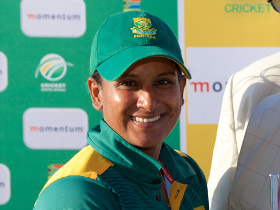
Text Info Strip

REAPING THE BENEFITS

Proteas Women all-rounder Sune Luus discovered that SACA Player Plus access played a big part in 2015 being one of the best years of her life

Thanks to her leg-spinning and game-closing batting, Sune Luus has been playing for the Proteas Women since she was a 16-year-old in high school. Her fortune is that in the intervening four years, she’s witnessed women’s cricket gain prominence, sponsors, fans and access to opportunities – the SACA Player Plus programme being one – like never before.

It helped her out of a quandary when she finished school in 2014…

“After matriculating I was basically in two minds. I was thinking of studying to be a teacher but I was worried that with all the touring and trying to go to class I’d struggle. Then we had a team gathering at the HPC in Pretoria with SACA where it was mentioned I could do a diploma geared towards elite athletes at University of Pretoria. It’s a year course but you can do it over two years which covers first year Sport Science and first year Education,” Luus says.

She immediately put up her hand, and found the subsequent process very easy.

“Applying for a bursary was really easy,” she recalls. “Our PDM Ruan Schlebusch gave me the application form, I filled it in, and he said he would take care of the rest… which he did. He was really helpful, there were no hassles.”

On top of that Luus, who turned 20 on January 5, found her first year in university rewarding, having spent very little time actually at Die Hoerskool Menlopark in her Matric year.

“I think I spent about three months at school in Matric because of how busy we were [thanks to tours to Qatar, Bangladesh and England] so last year was just so amazing being able to walk around campus, meet new people and have long training sessions in the afternoon. Initially, going to university was quite a scary idea, especially when I saw I’d have to wake up early for some 7:30 classes but it was a great journey… one of the best year’ of my life.”

Luus’ time-management will be tested this year though. After only one tour in 2015, the Proteas host England, West Indies, Bangladesh and New Zealand with the World Twenty20 in India in the middle.

“I do quite well on my own, but everybody needs support. My two loving parents are very supportive as is my brother who’s doing an honours in agriculture and knows what I’ll go through. Also, I grew up in a hardworking home, and apart from them my cricket teammates and coaches support me as well while my friends are always sending me SMS’ encouraging me.”

What about the university, will they be accommodating?

“Definitely, the course is geared towards elite athletes so lecturers help us a lot by sending our work via email and then we can send it back. I will also take my work with me wherever I travel.”

Having gone for the two-year option, and all things being well, Luus will end this year with a Higher Certificate in Sports Science [HCert (Sports Science)] with the option of choosing a more focussed degree in the Faculty of Humanities or Education. However, considering Momentum’s sponsorship of Cricket South Africa in 2013 allowed the women’s team to become contracted players, Luus could surely have just focused on cricket for now?

“We don’t get the same kind of money the Proteas men get so we can’t just play cricket, we have to get something behind our names. Also, we have to remember that if we get a long-term injury the contract won’t completely take care of you and somewhere along the line you’re going to have to stop whether you want to have children or age catches up. That said, it’s been awesome getting a contract and does make a difference. For example, after school my dad cut off my phone bill so I’ve been paying that and having money in the bank to pay for other expenses has been really helpful. Getting the bursary from SACA really helped too, because I might not be studying if it wasn’t for them.”

Share:

Text Info Strip

LAYING A PLATFORM

Anybody that has tried to balance their job with studies knows the difficulties involved. No surprise then that it was a long layoff from his work that helped Cape Cobras all-rounder Shaheen Khan make a considerable dent in his studies.

From a cricket perspective, Shaheen Khan had a tough 2015. The 28-year-old started it as an all-rounder in the Cape Cobras lineup, but ended it as a batsman only in the Western Province provincial side. A long-term injury saw to that…

“I injured my back in January and was out for almost 10 months. It was frustrating, but in the end it allowed me to bite off a lot of the studies. Focusing on my studies helped to take my mind off cricket and set a foundation for my future.”

After matriculating from Cravenby Secondary in 2005, Khan was actually a student while playing Cape club cricket before his ‘breakthrough’ season when he moved to play for Gauteng in 2012.

“I started studying before I was a semi-professional or had a contract with the Cobras. I always knew I needed something to fall back on so I could make a life for myself if cricket didn’t work out. So many players think of playing until they’re 35 but you have to ask yourself what you’ve done to make your 36th year successful…”

In order to do so, he started a Business Management degree through Unisa in 2009, but admits that it’s been challenge – not least as his cricket fortunes improved.

“I started it, then stopped in 2012 [a year when he also played club cricket in England for Cleator CC]. Since then it’s been difficult while I’ve been at the Cobras.”

Structure and logistics have often been the challenges.

“I realised that you have to do the bulk of year’s work in the first half of the year, because once the season starts it’s difficult to fit it in when there’s so much training, travelling and playing. There have been away trips where I’ve begged the captain to give me his single room so I can study, or tried to convince the management of a hotel to open the Wifi. However, the coaches at the Cobras have been very lenient and I’ve had other perks like avoiding bus trips and getting to fly instead when I’ve written an exam on the day that the guys travel.”

One of the benefits of SACA Player Plus Khan has made use of since signing for the Cape Cobras is applying for and receiving a bursary for his studies. Another is SACA sourcing and paying for a resource – in his case a tutor for Financial Accounting – to assist players with legitimate problematic modules. By and large, though, he’s more comfortable tackling his studying on his own.

“During my injury last year, I spent a lot of time at home in my room. Before my mid-year exams I spent nine days holed up in there studying and I got eight distinctions. It’s proof what I could achieve when I had that much time.”

That being said, when he wanted to play his part in his family business by adding a further string to his bow during his 2015 injury rehabilitation, SACA was his first point of contact.

“The story behind it is that I needed to up my computer literacy. I’d started up a construction business [named FIRZ Projects] with my father and brother but I only had the basic skills. While they are more hands-on my cricket meant I wasn’t; so I thought it would help I could I do some of the admin things that doesn’t require my active involvement. I approached my SACA Personal Development Manager [Brad Player] for guidance and we decided that I should apply for another Player Plus bursary for online courses from MasterGrade IT.”

As a result, Khan is registered for four Microsoft courses, namely Word, PowerPoint, Outlook and Excel.

“You’re allowed to register for a year before you have to complete the courses, which entail watching videos and then writing tests. I started in late August-early September and have completed Outlook and Excel. I’m starting my third year Unisa subjects this year so before it gets going I want to complete the other two too.”

While his studies are on the right track, a return to full capacity is also in the offing for the rest of Khan’s season.

“I started bowling in the nets during December and didn’t have any reaction so I hope to be bowling in matches by the end of January. If I can contribute as a batsman and a bowler, it will hopefully help me get back into the Cobras team again.”

Perhaps it’s true when they say ‘healthy mind, healthy body’…

Share:

Text Info Strip

“My experience with the Player Plus programme has really been a good one” – JP Duminy

Key Proteas player. SACA President. Husband. Father. JP Duminy has many elements to his life that he needs to balance. Having identified the need for personal development and plan for life after cricket, he recently added ‘student’ to that list too…

At only 31 and a key player in all three formats for the Proteas, JP Duminy could conceivably delay post-cricket thoughts for a few years still. Instead he has decided to lay the foundation for life after cricket during his playing career, to ensure a smooth transition.

“I guess I’m in a stage of my life now where I’m sort of looking at post cricket as well, and that is where the Player Plus programme has come into play and obviously SACA has been a huge influence in that,” says the current SACA President.

As it is, Duminy, being an elegant batsman who can also hit the ball big; a wicket-threatening off-spinner and agile fielder will have opportunities to extend his career post-Proteas if this was the route he wished to take. However, having that option hasn’t stopped him identifying what he wants to pursue in life when he does pack up his kit bag for the last time.

“My passion lies in dealing with people. I’m involved in one or two charities which is something I’d like to pursue further and I’ve also done a sports psychology course – working with sports psychologists has always intrigued me considering the sport I play. So I definitely want to help young cricketers come through from a mental side and it’s definitely something I will look into.”

Duminy didn’t identify these interests entirely on his own…

“I met up with my Personal Development Manager, Ruan Schlebusch, and we went through an array of questions in a questionnaire that identifies what your ambitions are or where your interests lie. That’s where I found that psychology might be something I want to go into… and me playing sport fits in well with me considering sports psychology. Hopefully I can make a great career out of it.”

Duminy took advantage of a SACA Player Plus bursary in 2014 by completing a course in Small Business Management through GetSmarter; the online nature of the course providing the necessary flexibility to fit into his schedule.

“We always have internet access wherever we’re touring so it was easy to access the information, the notes, the study material… I was privileged to be able to do something like that. Also, the great thing about it is that it’s not exam-based. It’s module-based so you have a week to do your module before handing it in – so it’s not studying per se but lots of research work. You don’t have to freak out about exams, which we don’t always get time to fit in in any case.”

Having last made a concerted effort to study in 2001, while completing Matric at Plumstead High School, Duminy is grateful for the support he has received while tackling dual career objectives so many years later.

“We have a huge amount of support from SACA and obviously our PDMs. They obviously identified how crucial it is for guys to be involved in a dual career – so not only looking after cricket but looking after life after cricket too. We’re privileged to have them as a support structure to put that in place for us.”

In the same vein, he is showing that if a national cricketer who spends up to eight months touring can manage to successfully engage in dual career activities, then all professional South African cricketers could be doing the same.

“I would definitely advise fellow cricketers to get involved in the Player Plus programme. My biggest regret is perhaps that I didn’t have these opportunities earlier in my career or be vigilant enough to study straight after school – it’s important for guys who are restricted in their career to have something else to fall back on. Also, I think it benefits you not only off the field but on the field as well. Maybe that’s where we as cricketers get it wrong as we put too much emphasis on cricket on its own and too much pressure on ourselves because we have to perform; but if we have something that takes our mind away from the game, it’s beneficial for us. I believe it’s important for young cricketers especially to get involved in the Player Plus programme – it’s been set up for us, it will benefit us and is being managed around our schedules which is obviously very important. My experience of the Player Plus programme has really been a good one.”

Share:

Text Info Strip

“WORK EXPERIENCE IS KEY” – SHEZI

While a desire to return to the national fold is fuelling his sporting objectives, Cape Cobras bowler Mthokozisi Shezi is mindful of chasing personal development goals too

A cricketer’s off-season is usually spent resting their weary body, catching up with friends and family and setting goals for the season to come. That, or packing in experience by playing club or county cricket in the UK.

However, earlier this year, Cape Cobras left-arm seamer Mthokozisi Shezi gained experience of a different kind during a work placement at Momentum – sponsors of the domestic one-day cup.

SACA approached me about it which I was very happy about and I was glad to accept. I wanted to learn how the corporate world works and see if I’m interested in that side of things,” Shezi says.

SACA Player Plus put Shezi in contact with Rory Gruss, an accredited financial advisor with programme partners Momentum, who put him at ease about what to expect.

“I’d been speaking to Rory so knew I was going to do three days [conveniently at the Momentum offices right next door to PPC Newlands] but I was still very nervous. My girlfriend dressed me up, as she said I needed to look formal.”

Initially, looking the part was all he had going for him.

“I remember on the Monday, the guys I spent time with had two cases to solve and watching three people sit together trying to do so was impressive but I must admit for the first 30 minutes I didn’t know what was going on because they were speaking in ‘work code’. That’s also when I realised how important it is to have real work experience and not just a diploma or a degree.”

As it is, the Pietermaritzburg-born 28-year-old already has the former and is currently working towards the latter.

“When I was still playing for the Dolphins, I completed a three-year diploma in sports management at Varsity College in Durban [after applying for and receiving a SACA Player Plus bursary]. When I finished that I said to myself let me do something corporate. After realising how much I like people and them being taken care of, my research led me to human resources – I’m studying that through Mancosa.”

Back to the work experience, what had Shezi learnt by the end of his three days?

“I was there to absorb… mostly by learning through listening but I also asked basic questions related to savings and shares for example. However, I’m really happy to know my finances are safe, because I’ve seen first hand how much they care. As a result, I’ve upped my investment because I now know where, how and when is being used.”

Buoyed by this year’s work experience, Shezi is already looking for an opportunity to do the same at the end of this season.

“I’m in the second year of my three-year HR degree. I’ll try for honours too, but I will be consulting Brad Player, my SACA Personal Development Manager, because next pre-season I want to do work experience in the HR field too. Instead of going to England I want to invest in doing work experience – I want to learn as much as possible and know that I can confidently walk into a job one day.”

Share:

Text Info Strip

FROM FIRST CLASS TO CLASSROOM

Pursuing your sporting dream as a cricketer has its ups and downs, but one thing is certain, at some point the journey will end. All the more reason to be prepared for it or, like SWD captain Waldo Lategan, be in a position to choose the right moment…

At 26, South Western Districts captain Waldo Lategan is making what might be perceived to be a premature decision to join the ‘real world’, but through the SACA Player Plus programme it’s one he’s been preparing four years for.

“Usually you look at cricket as a career until you’re 30 before you have to start thinking about life after it. As a result, you put lots of pressure on yourself because you feel you have to perform every season to have your contract renewed. So, because I felt that pressure, I thought let me get something behind my name and see if some of that pressure goes away by knowing that I have something to fall back on.”

Contemplating studying, again, was a hurdle in itself. In 2008, fresh out of Oudtshoorn High School where he became SWD’s first ever SA Schools player, Lategan moved to Bloemfontein to study Human Movement Science at University of the Free State and play for the province. By mid-2011 he returned to SWD on a semi-professional playing contract, but without a degree.

“It wasn’t the right thing for me,” he says, but with the guidance of his SACA Personal Development Manager he worked out what a suitable career option would be.

“Ruan Schlebusch was very helpful in this regard when he was still the PDM for SWD. He lit the fire that led to me studying and helped me with the admin and applying for a SACA bursary. I have to give him lots of credit and to Brad Player too who became our PDM after him.

“I signed the SWD contract in April 2011, then I spent the off-season playing club cricket in England [for Marehay CC in Derbyshire] and while there, started studying through Unisa in July 2011. When Ruan and I discussed what to study my thoughts were on how I would end up working with kids… I have a big passion for coaching and kids. That’s how teaching came up as a possible option.”

Four years later, having successfully attained his Bachelor of Education (Intermediary) degree, he’ll be doing just that come January 2016.

“I’m getting married in March 2016, and my fiancé [Steph-Mari Harmse] has a very good job at Netcare Cuyler Hospital in Uitenhage. As soon as I finished my exams earlier this year I sent my CV off to schools there and got offers back from three primary schools. After weighing them up, primarily based on how strong their sport was, I accepted an offer from Handhaaf Primary School. I will be teaching Grade 6 and 7 maths.”

As a bonus for Lategan, he still has some cricket to play…

“Initially I asked the three schools if they would allow me to start in April, after the season ends, but they weren’t willing to – they want teachers for a full year. Also, I can’t take the chance of only looking for jobs then, but in negotiating with Handhaaf and SWD it looks like I’ll still be able to play the limited overs matches on Sundays. This will allow me to see out my contract and start my teaching post simultaneously. We’ve been doing well in the provincial one-day tournament and I want to continue making a contribution to that effort. I also feel responsibility to SWD because for four years they’ve given me a contract and allowed me to take time off when I needed to write exams – I owe them my gratitude too.”

Share:

Text Info Strip

A TRANSITION WELL-MANAGED

A sudden end to your playing career doesn’t mean an abrupt end to your SACA Player Plus access, as Craig Thyssen happily discovered

One Saturday, erstwhile Warriors all-rounder Craig Thyssen was scoring 33 for Walsall CC in an English club match. The next Saturday his 10-year-long career was over…

“I didn’t know it would be my last match,” he says, recalling what followed that fateful match on 21 July 2013.

“On the Monday morning I woke up, had breakfast and went to the gym like a normal day. Afterwards, while I was lying on the couch watching TV I just started having headaches and stuff. I remember there was a clock on the wall, it couldn’t have been more than four metres away but I couldn’t see the time on it… it was so blurry. When I got up my head was sore so I thought it was just a migraine.”

Only it wasn’t… after a week of ‘tunnel vision headaches’, a teammate’s brother advised a brain scan. The result? “They found strokes on the brain.”

“A few weeks earlier I’d hurt my knee and considered flying home but when I told them that at the hospital they said I might have died on the flight… they found a blood clot on my heart too and it would have exploded at altitude! A higher power was looking out for me.”

Following treatment Thyssen did return home, but the remaining blank spot in his left eye ended, at 29, a career that had started as a prodigious schoolboy at Grey High in Port Elizabeth.

As it turns out, he now nurtures talented schoolboys, as Paarl Gym’s first team coach.

“I was lucky, when this happened to me I still had a season – 2013/14 – left on my Warriors contract, so I could still look at what I wanted to do. Melonie Gobel [SACA’s Eastern Cape-based Personal Development Manager] was a massive help in me identifying that I should to go into coaching.”

“With Craig, as with all the players we work with, we really looked holistically after the player and to make sure that they’re ‘okay’,” says Gobel. “Usually we’ll start from a financial perspective by identifying their short-term and long-term goals. We also look at life preparation work, like getting a will in order and other life skills they might identify in one-on-one workshops. More specific to Craig, he now didn’t have a job, so we gave him a CV template to do his own and then fine-tuned it with him. Then we as SACA heard of the coaching job at Paarl Gym and endorsed and motivated for him – he got the job ahead of a number of other candidates.”

To round off their transition support, SACA Player Plus also motivated for Thyssen – and current national bowling coach Charl Langeveldt – to do the CSA Level III coaching course in 2014/15 .

“There was obviously limited space, but he did superbly and got great marks. It shows what a person can do, given the opportunity,” Gobel concludes.

Buoyed by the support, Thyssen has made a successful start to his new career.

“When I arrived in January 2014, the first team was ranked in the 50s I think – remember it’s a rugby school – but we ended the year ranked 10th so I think we’ve done well.”

He has also been unafraid to go straight to the top for some advice…

“[Proteas coach] Russell Domingo was my coach from Under-15 to academy level, and brought me back to the Warriors after two years playing for Free State. He has always been willing to answer any questions I have.”

Besides that, Thyssen can count on first hand experience – three years of SA Schools [2000-02] alongside the likes of AB de Villiers and competing against Brendon McCullum and Alistair Cook on SA Under-19 tours – to nurture the schoolboys under his watch.

“They are always asking me questions about that and my career. The one thing I always tell them is that talent can only take you so far, but you have to work hard if you want to turn professional… and that your career can end when you least expect it.”

Share:

Text Info Strip

Elgar replaces Smith on CSA national contact list

CRICKET SOUTH AFRICA (CSA) on Thursday named Dean Elgar as the replacement for Graeme Smith on its national list of contracted players for the 2014/15 year. Graeme Smith who was on the original list of contracted players announced his retirement from international cricket earlier this week.


“Dean is the obvious replacement and must be excited by the opportunity to emulate the greatness achieved by his recently retired national captain,” commented CSA Chief Executive, Haroon Lorgat.


“He has all the attributes and qualifies as the next player eligible to be awarded a contract in terms of the new methodology we developed together with the South African Cricketers’ Association (SACA).”


“As mentioned before, the Board has also agreed to award multi-year contracts to our top players to secure and recognise their value.”


The seven players awarded two-year contracts are: Hashim Amla, AB de Villiers, JP Duminy, Faf du Plessis, Morne Morkel, Vernon Philander and Dale Steyn.


The other 10 nationally contracted players awarded one-year contracts are: Quinton de Kock, Dean Elgar, Rory Kleinveldt, Ryan McLaren, David Miller, Wayne Parnell, Alviro Petersen, Robin Peterson, Imran Tahir, Lonwabo Tsotsobe.


As previously announced, Jacques Kallis has been awarded a special contract for one year only.


In addition, CSA has announced the 12 Franchise players to receive CSA High Performance Centre (HPC) top-up contracts, also for a one-year period.


“This is investment in our future,” commented CSA selection convener Andrew Hudson.


“We are keen to centrally influence the management and close monitoring of these exciting young players so that we can provide the best chance of developing their careers to the full potential.”


“I am excited by the mix of this group of talented players and it is now up to our programmes to develop these players to one day represent the Proteas as we move into a new era following the retirement of several great players from the Castle Lager Test squad.


“The HPC players will be managed, developed and monitored quarterly to see that they are fulfilling their potential.”


CSA HPC contracted players: Kyle Abbott, Temba Bavuma, Simon Harmer, Beuran Hendricks, Reeza Hendricks, Eddie Leie, Mangaliso Mosehle, Aaron Phangiso, Kagiso Rabada, Rilee Rossouw, Stiaan van Zyl, Khaya Zondo.


CSA Chief Executive also took the opportunity to confirm enhancements to the existing BskyB broadcasting deal that would extend broadcast content into the markets of UK, Ireland and mainland Europe.


“It is really exciting to work with our commercial partners to seek new opportunities and even augment existing deals”


“Their confidence in South African cricket and our future tours programme is truly rewarding.” stated Lorgat.

Share:

Text Info Strip

Miller and De Kock awarded National Contracts

THE Board of Directors of Cricket South Africa (CSA) approved the names of the 17 players proposed by the selection panel for national contracts for the 2014-2015 year. New contracts have been awarded to Quinton de Kock of the bizhub Highveld Lions and David Miller of the Sunfoil Dolphins.


The number of contracted players has been reduced from 22 to 17 in terms of the agreement reached between CSA and the South African Cricketers’ Association (SACA) for the period May 2014 to 2018.


“I am delighted that we recently signed a new Heads of Agreement with SACA,” commented CSA Chief Executive, Haroon Lorgat. “As expected, negotiating player terms that include earnings will always be challenging, but I was really pleased with the positive and mature way in which the negotiations were conducted.


“In addition to the 17 nationally contracted players CSA will also offer 12 top-up contracts for aspiring Franchise players who could be regarded as potential Proteas in the future. This group will only be selected once the Franchises have completed the contracting of their players.”


The Board also approved a request from the Chief Executive to consider multi-year contracts.


“I am pleased to announce a new development with eight of our top players being awarded two-year contracts as we try to reward and secure our major players. They deserve it!”, commented Mr. Lorgat.


The Board of CSA also announced a final one-year contract for Jacques Kallis to recognise his immense contribution to South African cricket over a long period of time and to secure his availability for the ODI squad. This contract does not form part of the 17-man national list as it is a special contract with specific terms.


“We are well aware of the incredible stature of Jacques and his personal desire to play in next year’s ICC World Cup. We want to help him as best as we can,” added Mr Lorgat.


CSA contracted players: Hashim Amla (Nashua Mobile Cape Cobras), Quinton de Kock (bizhub Highveld Lions), AB de Villiers (The Unlimited Titans), JP Duminy (Nashua Mobile Cape Cobras), Faf du Plessis (The Unlimited Titans), Imran Tahir (bizhub Highveld Lions), Rory Kleinveldt (Nashua Mobile Cape Cobras), Ryan McLaren (Chevrolet Knights), David Miller (Sunfoil Dolphins), Morne Morkel (The Unlimited Titans), Wayne Parnell (Chevrolet Warriors), Alviro Petersen (bizhub Highveld Lions), Robin Peterson (Nashua Mobile Cape Cobras), Vernon Philander (Nashua Mobile Cape Cobras), Graeme Smith (Nashua Mobile Cape Cobras), Dale Steyn (Nashua Mobile Cape Cobras), Lonwabo Tsotsobe (bizhub Highveld Lions)


The Board meeting also considered a number of other topics at its scheduled meeting. Mr Lorgat reported on the successful ending and the highly positive outcomes achieved during the RAM SLAM T20 Challenge.


“I want to take this opportunity to congratulate Ram Hand-to-Hand Couriers for their creativity and support which resulted in them winning the Best New Sponsorship award at last week’s Sports Industry Awards 2014.


“Spectator attendance was up by 43 percent and we had a sold-out crowd for the Final.


“The domestic TV audience for the Final match exceeded 400 000 and the total domestic audience over the 21 televised matches was 1.7million. For the first time we had global TV coverage and I believe this must be the reason why Beuran Hendricks – the record wicket-taker for the tournament – landed a lucrative IPL contract.”


The Board was also provided with updated financial reports for the current financial year which ends on 30 April. The Board thanked management for its efforts to reduce the impact of the curtailed India tour by sourcing new revenues and curbing costs.


“Although we will still achieve a surplus for the year, we are estimating this to be around R54m short against what we had budgeted for the year.” said Mr. Lorgat.


The Board also noted completion of the new High Performance Centre in Pretoria, within budget.


“We are really excited and we are naturally looking forward to the opening of this world class facility next month.” concluded Mr. Lorgat.

Share: